Episode Details
Back to Episodes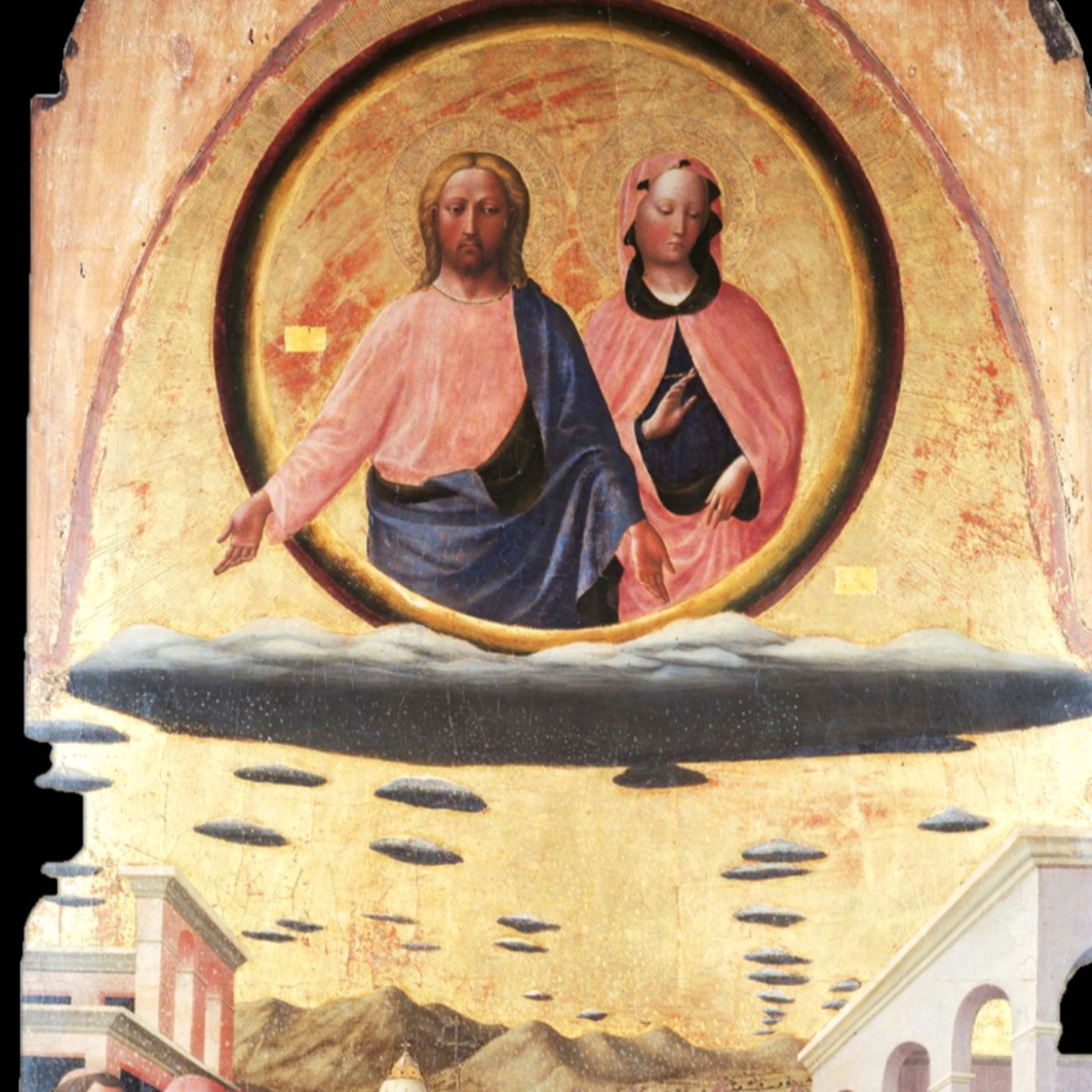
Our Lady of the Snow (August 5) — From Dom Guéranger’s Liturgical Year
Description
A meditation for the Feast of Our Lady of the Snow, from Dom Guéranger’s “The Liturgical Year”, Volume IV of the Time after Pentecost.The Feast of Our Lady of the Snows (August 5) commemorates the dedication of the Basilica of Saint Mary Major, the most highly honored church in the West dedicated to the Blessed Virgin Mary. According to a cherished tradition dating from the Middle Ages, the Virgin Mary appeared in a dream to the Roman patrician John and to Pope Liberius, instructing them to build a church where snow would miraculously fall. On the morning of August 5, in the heat of the Roman summer, the summit of the Esquiline Hill was said to be covered with snow, marking the site where the basilica was erected. Although the historical dedication of the church took place under Pope Sixtus III after the Council of Ephesus (431), which solemnly affirmed Mary as the Mother of God, the beautiful legend has long symbolized Mary's loving guidance and protection of the faithful. The feast invites Christians to honor the Mother of God, who, like refreshing snow in summer, brings the grace of her Son to a weary world.Please note that Servant of God Dom Prosper Guéranger went to his eternal reward in 1875; at this point, Volumes I-IX (Advent to Pentecost Saturday) had been completed, but Volumes X-XV (Trinity Sunday to Advent) had not yet been completed. Thus, the remaining readings of the Liturgical Year, from Trinity Sunday until Advent, were not directly authored by Dom Prosper, but were the work of his disciple Dom Lucien Fromage. Dom Prosper Guéranger's The Liturgical Year, a monumental fifteen-volume work, offers a comprehensive exploration of the Catholic Church’s liturgical calendar, guiding readers through the spiritual and historical richness of the Church’s worship. Written in the 19th century, the series provides daily meditations, historical context, and liturgical texts for the Mass and Divine Office, covering the entire cycle of seasons—Advent, Christmas, Lent, Passiontide, Easter, and the Time after Pentecost—as well as feast days of saints. Guéranger’s work, rooted in a deep contemplative spirit, aims to immerse the faithful in the Church’s prayerful life, emphasizing the unity of faith through the axiom lex orandi, lex credendi ("the law of prayer is the law of belief"), and remains a cherished resource for Catholics seeking to deepen their spiritual lives. Dom Prosper Guéranger (1805–1875) was a French Benedictine monk, liturgical scholar, and founder of the Solesmes Abbey, renowned for his pivotal role in reviving the Benedictine Order in France and restoring the Roman liturgy after the disruptions of the French Revolution. Born in Sablé-sur-Sarthe, he entered the priesthood in 1827 and, inspired by a vision to restore monastic life, reestablished the Benedictine community at Solesmes in 1833, becoming its first abbot. A staunch defender of ultramontanism and traditional Catholic worship, he also championed the revival of Gregorian chant, significantly influencing the liturgical renewal movement.Link to the Dom Guéranger's Liturgical Year playlist (updated daily): https://www.youtube.com/playlist?list=PLZKdyYnV_bkh7rH6piW0ShgsdcefFoOvJIf you would like to support this channel: Patreon: https://www.patreon.com/cw/InprincipioPodcast PayPal: https://www.paypal.com/donate/?hosted_button_id=U5EZ9X2CE2V7W Venmo: https://venmo.com/u/InPrincipioPodcast Zelle: inprincipiopodcast@gmail.com; or search for Zelle tag “inprincipiopodcast” Checks may be written out to ‘InPrincipio Podcast’ and mailed to: P.O. Box 117 Cedar Ridge, CA 95924Sincere thanks to all who are able to contribute, by your prayers, your patronage, or otherwise. Your support sustains this work and helps make these readings available to others.Artwork: “Foundation of Santa Maria Maggiore Basilica” by Masolino da Panicale (1383–1447)Music: Ave Maria (Gregorian chant)From Vesperae de Confessore non Pontifice