Episode Details
Back to Episodes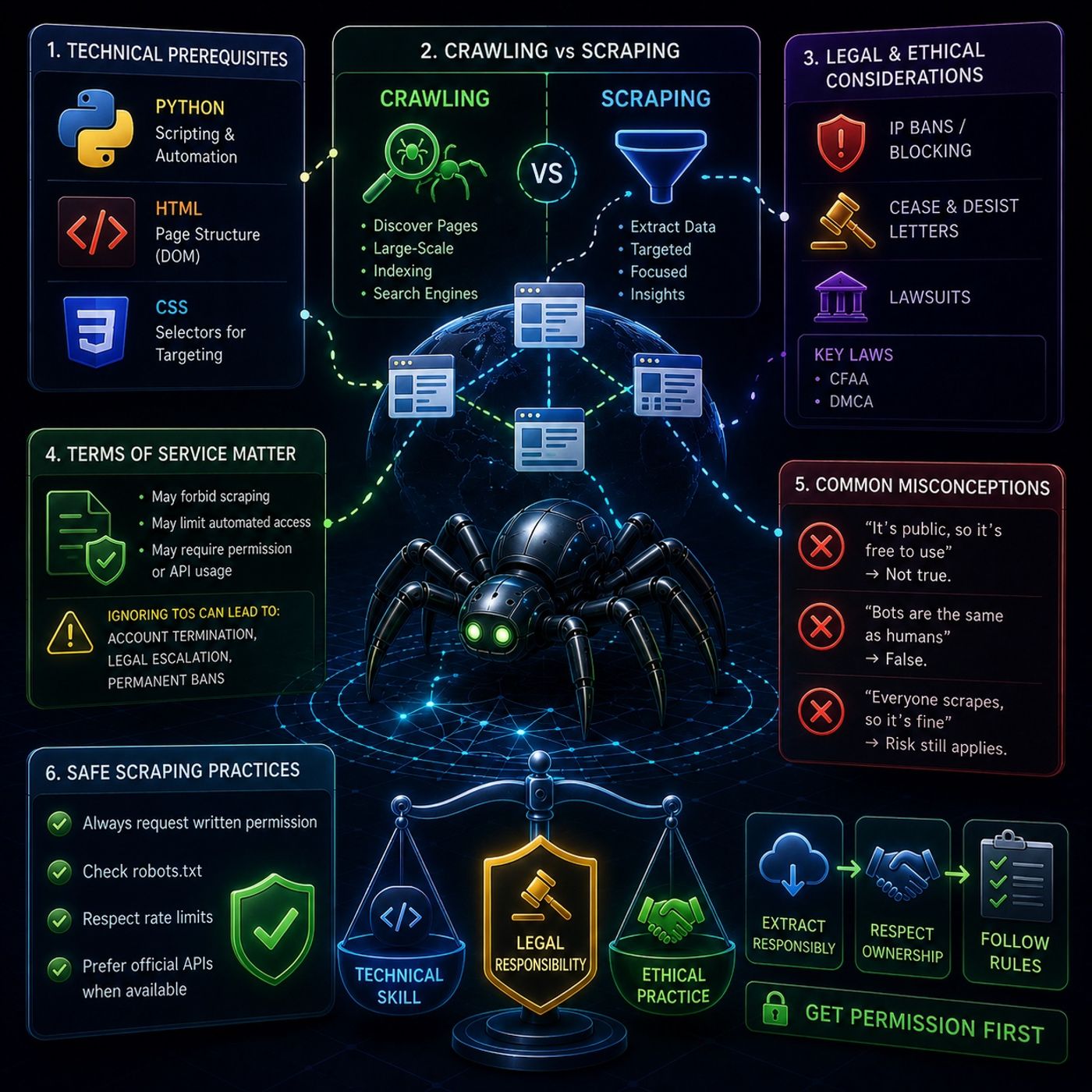
Course 40 - Web Scraping with Python | Episode 25: Core Concepts and Legal Guidelines
Published 3 weeks, 1 day ago
Description
In this lesson, you’ll learn about: the foundations of web scraping with Python and Scrapy, the difference between crawling and scraping, and the legal boundaries you must understand before building any data extraction system1. Technical Prerequisites🔹 What You Need to Know FirstBefore diving into scraping, you should be comfortable with:
Scraping is not just coding—it’s understanding how the web is structured2. Crawling vs Scraping🔹 Understanding the Core Difference🔹 Crawling
Crawling = exploring
Scraping = extracting3. Legal & Ethical Considerations🔹 The Risk Landscape🔹 What Can Go Wrong
Just because you can scrape doesn’t mean you should4. Terms of Service (ToS) MatterEvery website defines rules in its Terms of Service:
Intent does not override legality6. Safe Scraping Practices🔹 How to Stay Compliant
If it’s not your data → get permission first7. Mental ModelThink of scraping as:
You can listen and download our episodes for free on more than 10 different platforms:
https://linktr.ee/cybercode_academy
- Python → scripting & automation
- HTML → page structure (DOM)
- CSS → selectors for targeting elements
Scraping is not just coding—it’s understanding how the web is structured2. Crawling vs Scraping🔹 Understanding the Core Difference🔹 Crawling
- Large-scale page discovery
- Indexing entire websites
- Used by search engines
- Extracts specific data
- Targeted and focused
- Used for analysis, automation, insights
Crawling = exploring
Scraping = extracting3. Legal & Ethical Considerations🔹 The Risk Landscape🔹 What Can Go Wrong
- 🚫 IP bans / blocking
- ⚠️ Cease & desist letters
- ⚖️ Lawsuits
- Computer Fraud and Abuse Act (CFAA)
- Digital Millennium Copyright Act (DMCA)
Just because you can scrape doesn’t mean you should4. Terms of Service (ToS) MatterEvery website defines rules in its Terms of Service:
- May explicitly forbid scraping
- May limit automated access
- May require permission or API usage
- Account termination
- Legal escalation
- Permanent bans
Intent does not override legality6. Safe Scraping Practices🔹 How to Stay Compliant
- ✅ Always request written permission
- ✅ Check robots.txt
- ✅ Respect rate limits
- ✅ Prefer official APIs when available
If it’s not your data → get permission first7. Mental ModelThink of scraping as:
- 🧠 Technical skill → extracting data
- ⚖️ Legal responsibility → respecting ownership
- 🤝 Ethical practice → not abusing systems
- Understand the difference between crawling and scraping
- Respect Terms of Service and laws
- Always seek permission when working with third-party data
You can listen and download our episodes for free on more than 10 different platforms:
https://linktr.ee/cybercode_academy