Episode Details
Back to Episodes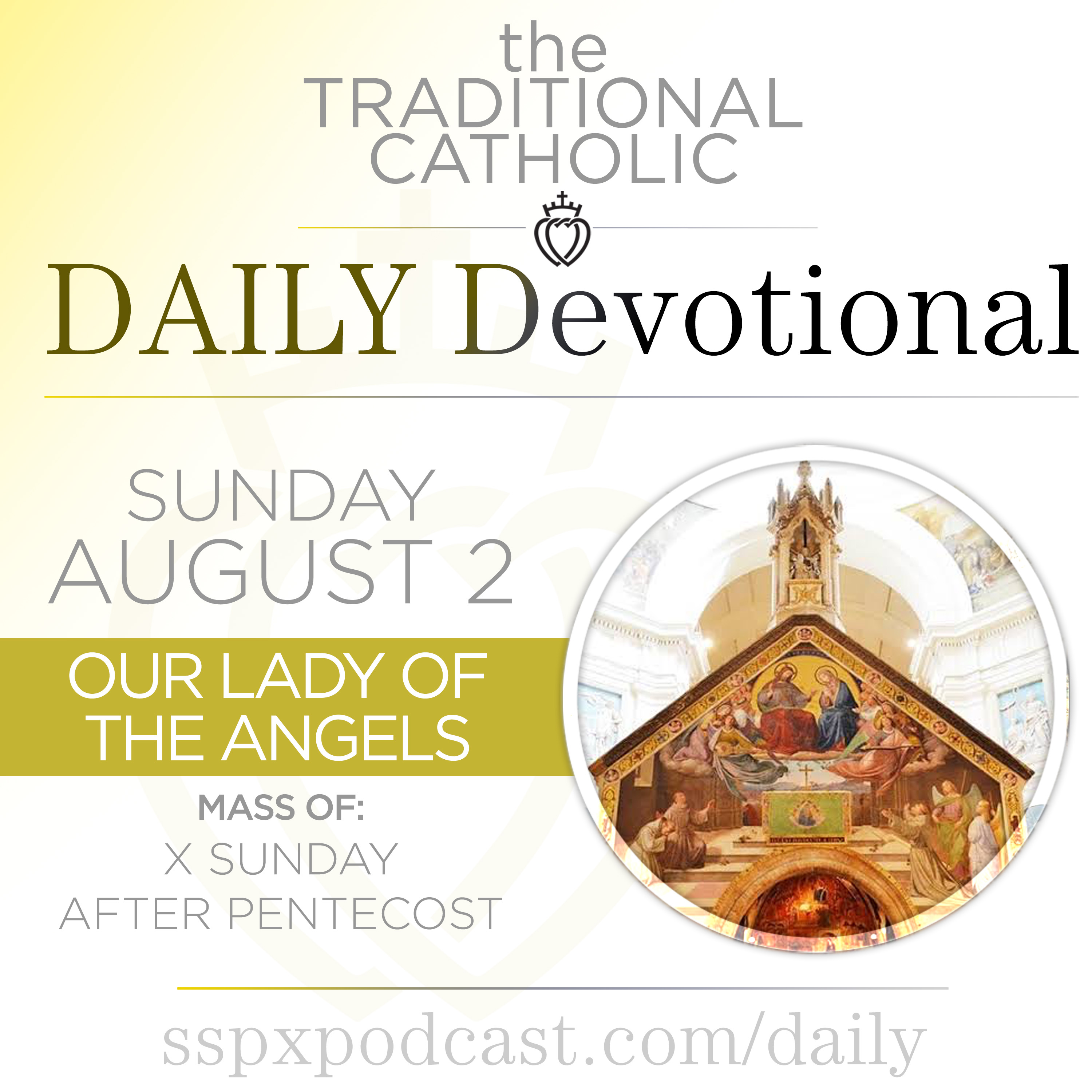
Aug 2 – X Sun of Pentecost / Our Lady of Angels of Portiuncula
Description
Sources Used Today:
- "The Pride of the Pharisee" — From Trinity Sunday to the Assumption
- "We need cement… and a lot of generosity!" (FSSPX.news)
- The Spiritual Life — Archbishop Marcel Lefebvre (Angelus Press)
Please support our new project, the Archbishop Lefebvre Biography Audiobook!
- Learn more:https://www.youtube.com/watch?v=Y-Wp4MQdK2o
- Donate:https://sspx.gifts/audiobook
The Feast of Our Lady of the Angels of the Portiuncula celebrates one of the smallest churches in the world, a tiny chapel that became the heart of the Franciscan movement and one of the most beloved shrines in Christian history.
The Portiuncula, whose name simply means "the little portion," stood just outside the walls of Assisi. By the time Francis of Assisi first discovered it around the year 1205, the little chapel had fallen into disrepair. Its roof leaked, its walls were crumbling, and it had been largely forgotten.
Francis loved it immediately.
At first, he simply repaired the building with his own hands, believing that was what God had asked him to do. Only later did he realize that God was calling him to rebuild something much greater: the Church herself through a life of poverty, joy, and fidelity to the Gospel.
The tiny chapel of Saint Mary of the Angels became the birthplace of the Franciscan Order. It was there that Francis welcomed his first companions. It was there that Saint Clare received her religious habit, beginning the Poor Clares. It was there that Francis gathered his friars for their annual meetings, sometimes with thousands of brothers camping in the surrounding fields because the little chapel was far too small to hold them all.
In many ways, the Portiuncula became Francis' earthly home.
It was also there that one of the Church's best-loved indulgences began. According to Franciscan tradition, while praying in the little chapel, Saint Francis received a vision of Christ and the Blessed Virgin Mary surrounded by angels. He asked not for wealth, influence, or privileges for himself, but for a complete remission of temporal punishment for those who would visit the chapel with sincere repentance and confession. Pope Honorius III granted the request, establishing wh