Episode Details
Back to Episodes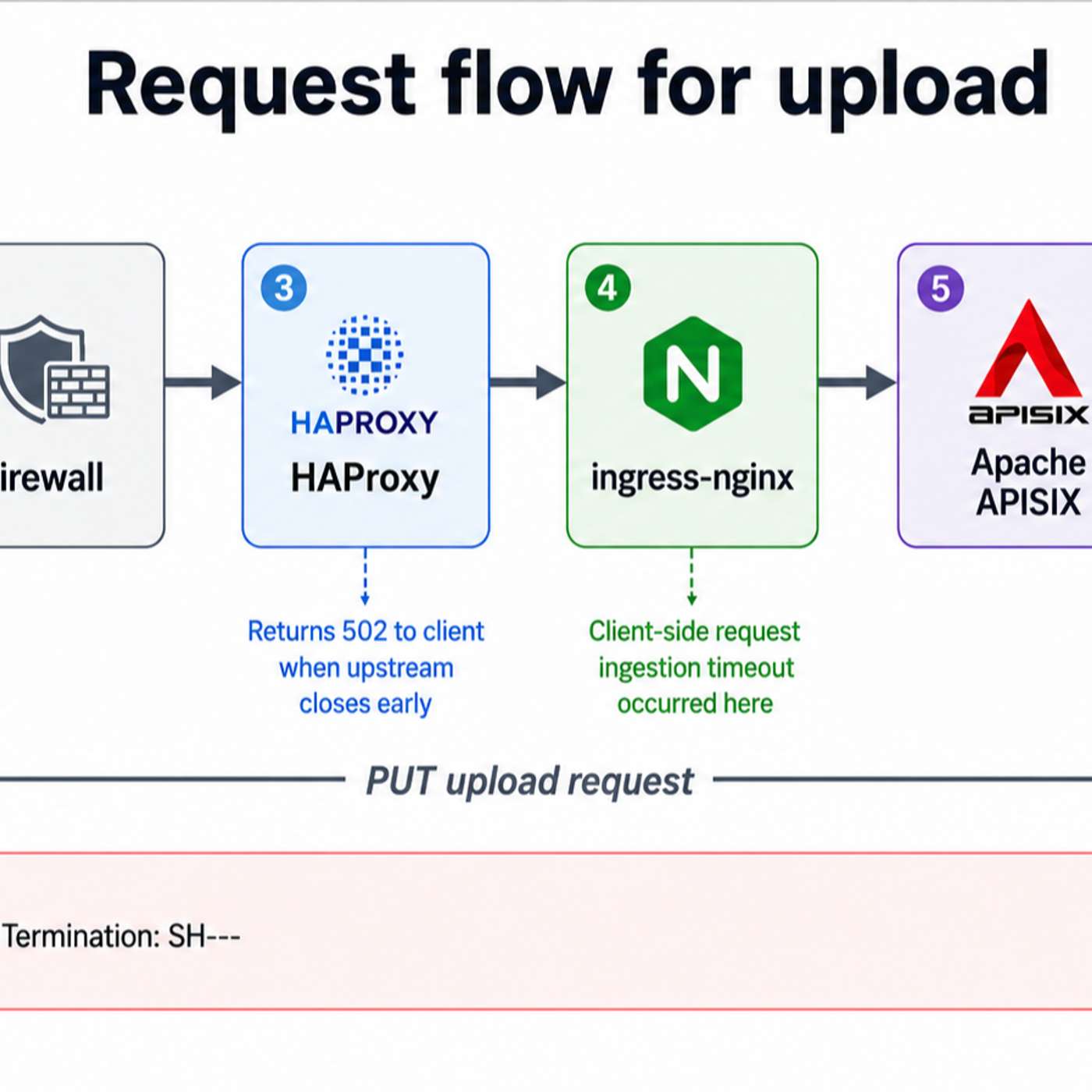
Anatomy of a Silent 502: How Four HAProxy Characters Exposed a K8s Upload Failure
Description
This story was originally published on HackerNoon at: https://hackernoon.com/anatomy-of-a-silent-502-how-four-haproxy-characters-exposed-a-k8s-upload-failure.
A production file-upload incident returned HAProxy 502 errors while ingress-nginx, APISIX, and application logs stayed empty. H
Check more stories related to programming at: https://hackernoon.com/c/programming.
You can also check exclusive content about #kubernetes, #haproxy, #nginx-ingress, #http-client, #production-incident-debugging, #production-file-upload-failure, #502-bad-gateway, #silent-502, and more.
This story was written by: @abhishekpareek. Learn more about this writer by checking @abhishekpareek's about page,
and for more stories, please visit hackernoon.com.
A production file-upload failure returned `502 Bad Gateway` responses from HAProxy, while ingress-nginx, APISIX, and the application showed no matching requests. The key clues were HAProxy’s `SH--` termination state and two unrelated requests failing after exactly `60.132` seconds, pointing to a deterministic server-side timeout rather than random network loss.
The existing 20-minute `proxy_*` timeouts were misleading because they governed traffic from ingress-nginx to APISIX, not requests arriving from HAProxy. Increasing `client_header_timeout` from 60 to 300 seconds on the affected Ingress stopped the failures.
The fix was applied through a targeted `server-snippet` instead of changing the shared ingress controller globally. This reduced the blast radius but introduced a known security tradeoff because custom snippets can be dangerous in multi-tenant environments.
The main lesson: a 502 identifies where the error was reported, not necessarily where it originated. HAProxy termination flags, exact timing patterns, and connection direction often reveal more than the status code itself.