Episode Details
Back to Episodes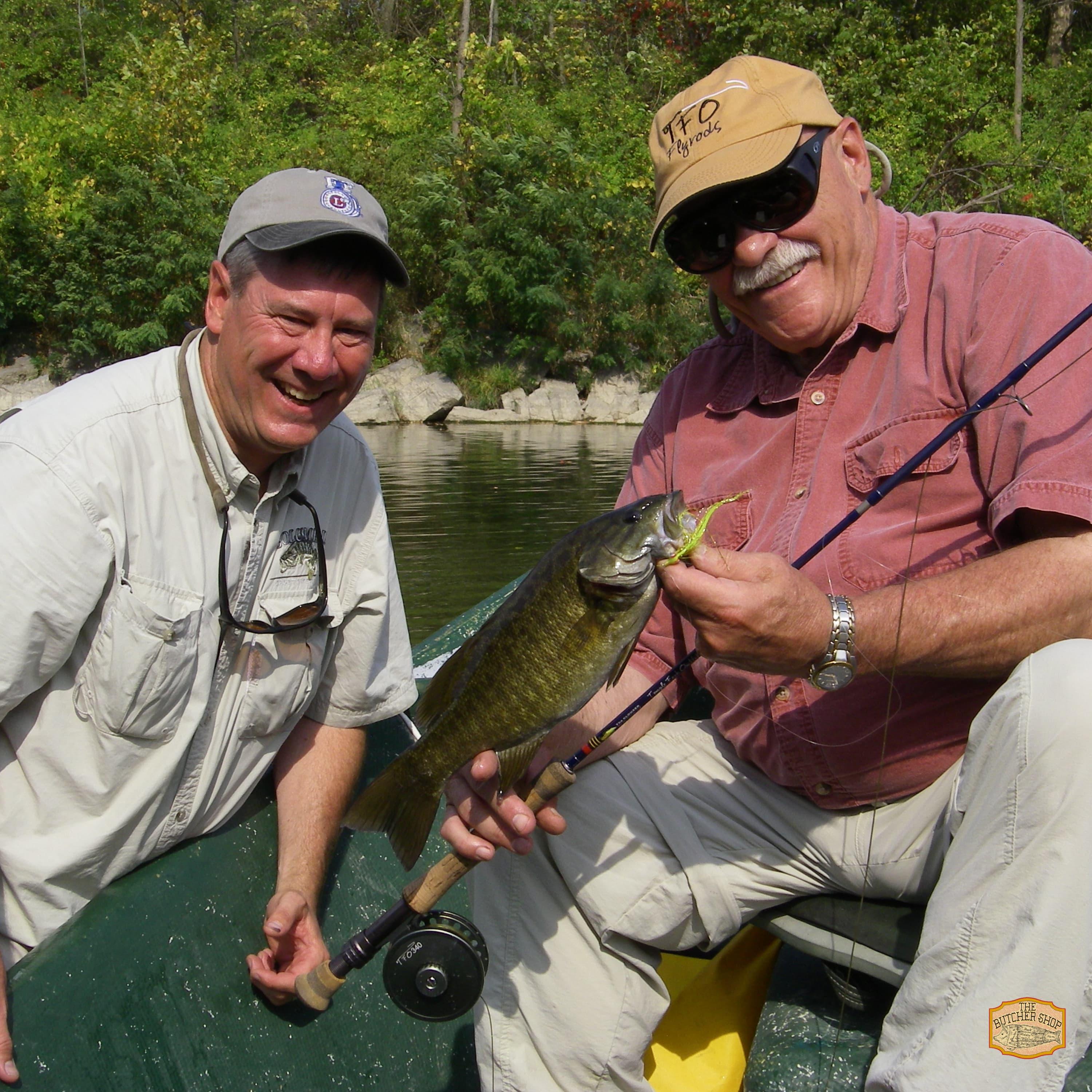
The Science of Streamers (Pt I): Kirk Klingensmith on Jigging and Wrecking Flies
Description
Episode Overview
On this episode of The Butcher Shop fly fishing podcast, host Marvin Cash sits down with Kirk Klingensmith, a retired Corning engineer and lifelong angler, for a physics-driven breakdown of why streamers move the way they do. Klingensmith, who wrote the "physics of fly motion" chapter for Blane Chocklett's Game Changer book, brings a scientist's eye to the vise, translating drag, momentum and weight placement into practical tying and fishing decisions. In Part One of this two-part conversation, he and Cash work through jig flies and wrecking or kicking flies, saving swim flies for a follow-up episode.
The jig fly discussion centers on the Clouser Minnow, where lead-eye placement and hook angle (90-degree versus 60-degree versus 15-degree jig hooks) determine whether a fly dips gently or nose-dives on the pause, and on how bucktail's stiffness contrasts with the collapsing action of flash-bodied flies like the Kreelex. From there the two turn to wrecking and kicking flies such as Blane Chocklett's T-Bone, unpacking how momentum in the tail and drag in the head combine to create the sideways "kick" that triggers strikes from muskies, smallmouth and brown trout alike. Throughout, Klingensmith returns to a central theme: the fly is only one part of a system that includes leader construction, tippet stiffness, fly line selection and retrieve style, all of which anglers can manipulate to fine-tune a streamer's behavior on the retrieve and on the pause.
Key Takeaways
- How lead-eye placement on a Clouser Minnow determines whether the fly dips gently or nose-dives on the pause
- Why bucktail and flash materials like Kreinik Flash create fundamentally different drop behaviors when a jig fly stalls
- When to switch to a full-length tippet leader, as used in Alaska salmon fishing and Euro-nymphing, to amplify a jig fly's drop and sink rate
- How momentum in a fly's tail combines with drag in the head to produce the sideways kick that triggers musky, smallmouth and brown trout strikes
- Why reverse-tied bucktail heads, as used on the T-Bone, stall and flare on the pause to exaggerate a wrecking fly's action
- How retrieve style, fly line choice and tippet stiffness work together as a system to control a streamer's action, not just the fly itself
Techniques & Gear Covered
Klingensmith walks through how lead-eye placement on a Clouser Minnow governs its jigging action and contrasts bucktail's stiffer, slower-collapsing profile with the accelerated drop of flash-bodied flies like the Kreelex, tied with Kreinik Flash. He details how 90-degree, 60-degree and 15-degree jig hooks change the abruptness of the transition between retrieve and pause, and how a full-tippet leader system, borrowed from Alaska salmon fishing and Euro-nymphing with jig streamers, sinks a fly faster and amplifies its drop. On wrecking and kicking flies, he breaks down the reverse-tied bucktail construction behind Blane Chocklett's T-Bone, explaining how a dense, high-drag head stalls on the pause while a lower-drag tail continues forward and kicks sideways, and how material choices such as deer hair, wool, synthetics and foam heads change how a fly suspends or sinks at rest. He also touches on line selection, using sink-tip or full-sinking lines to present a kicking fly low in the water column, and loop knots as the standard connection for preserving that action.
Locations & Species
Klingensmith fishes primarily for smallmouth bass on the Chemung River, a Susquehanna tributary in the Finger Lakes region of New York, running a drift boat and carrying both floating a