Episode Details
Back to EpisodesBYD Finds A Way To Make Solid-State EV Batteries Last Longer
Description
The search for next-generation EV energy storage never stops, as the industry's pursuit of a holy grail keeps driving massive global investment. Earlier this year, wild laboratory breakthroughs promised unbelievable charge times, yet commercial deployment still remains elusive for major legacy automakers. Now, Chinese automotive giant BYD has stepped up with what could possibly be the single hardest engineering breakthrough in solid-state chemistry.
BYD has filed a patent for a new dual-electrolyte cathode structure. This novel approach mixes two distinct inorganic electrolyte classes to directly fix physical degradation inside the cell. While Chinese regulators continue defining standards for solid-state technology, BYD is attempting to write the fundamental architectural blueprint.
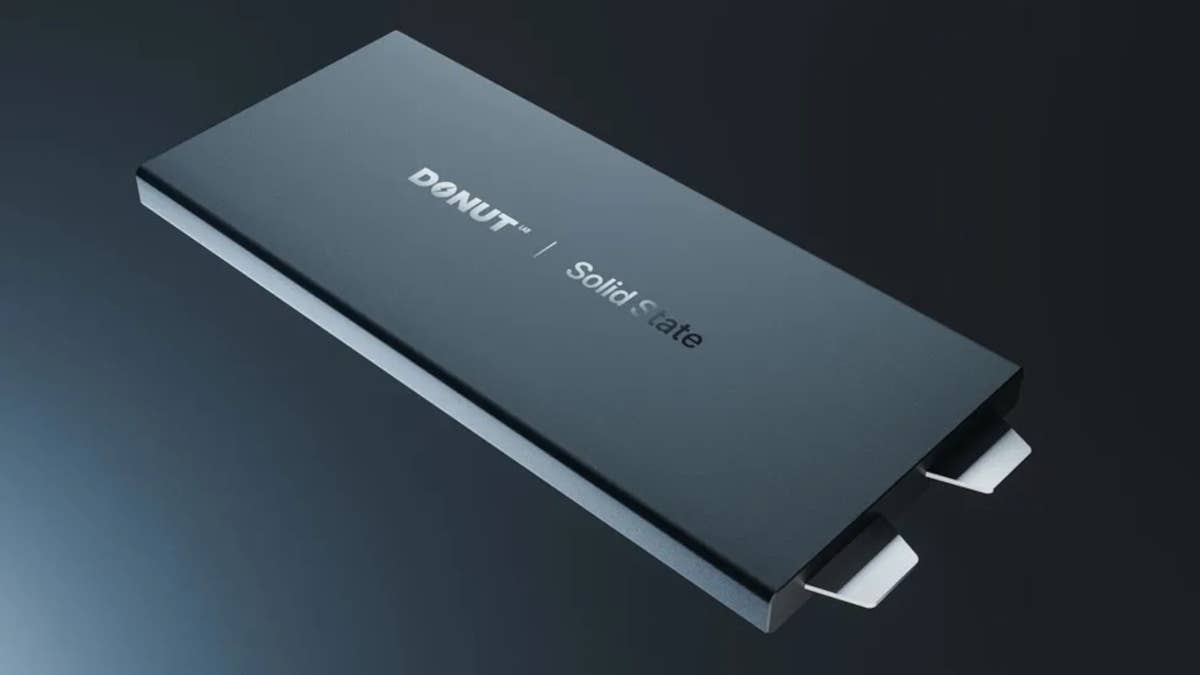
Donut Lab
Inside BYD's Dual-Electrolyte Cathode Architecture
Chinese news agency Sina reports that at the core of BYD’s design is a composite electrode structure that pairs smaller-particle halide electrolytes with larger-particle sulfide electrolytes. These two distinct electrolyte systems are blended directly alongside the cathode active material. By strategically engineering particle sizes and chemistries, BYD aims to eliminate microscopic gaps that open up as active materials expand and contract during charge cycles.
This dual-electrolyte approach directly tackles solid-solid interface degradation, an issue BYD Group Chief Scientist Lian Yubo noted is currently in an intensive stage of tackling. Unlike traditional liquid lithium-ion cells where fluid seamlessly coats active particles, solid-state designs struggle when solid materials lose physical contact over repeated cycling. Mixing rigid halide particles with flexible sulfide matrices seeks to preserve vital contact points under constant electrical stress.
The new filing builds upon an expanding research foundation, following earlier BYD disclosures covering dual-layer cathode coatings and fiber-reinforced inorganic membranes. Furthermore, BYD Lithium Battery CTO Sun Huajun previously stated that active cathode material density in their architecture has crossed 85 percent. Still, the patent publication lacks vehicle production validation or real-world testing data, keeping it strictly in the development stage for now.
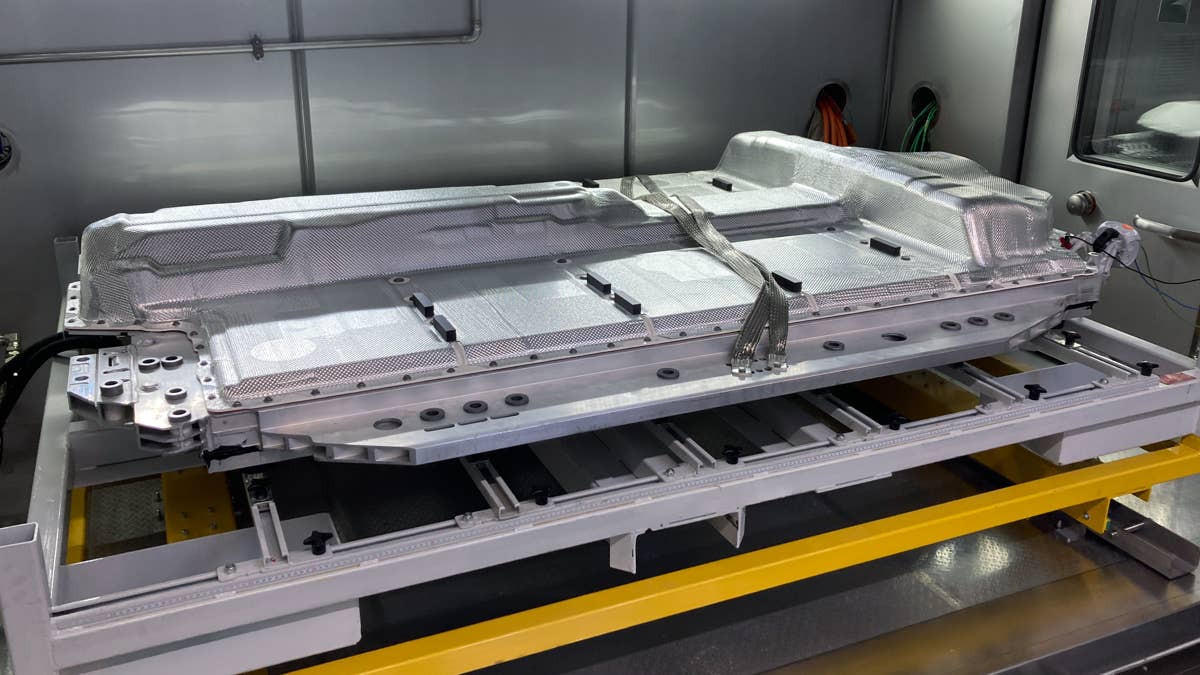
BMW
BYD's Next-Gen Strategy
Patents sit in a grey zone between genuine scientific breakthroughs and corporate territory flagging. BYD is dropping serious technical breadcrumbs to signal to competitors that it intends to lead the EV market into its next era. Combining halide’s exceptional high-voltage stability with sulfide’s superior ionic conductivity sounds brilliant on paper, but mass-producing complex multi-particle electrodes