Episode Details
Back to Episodes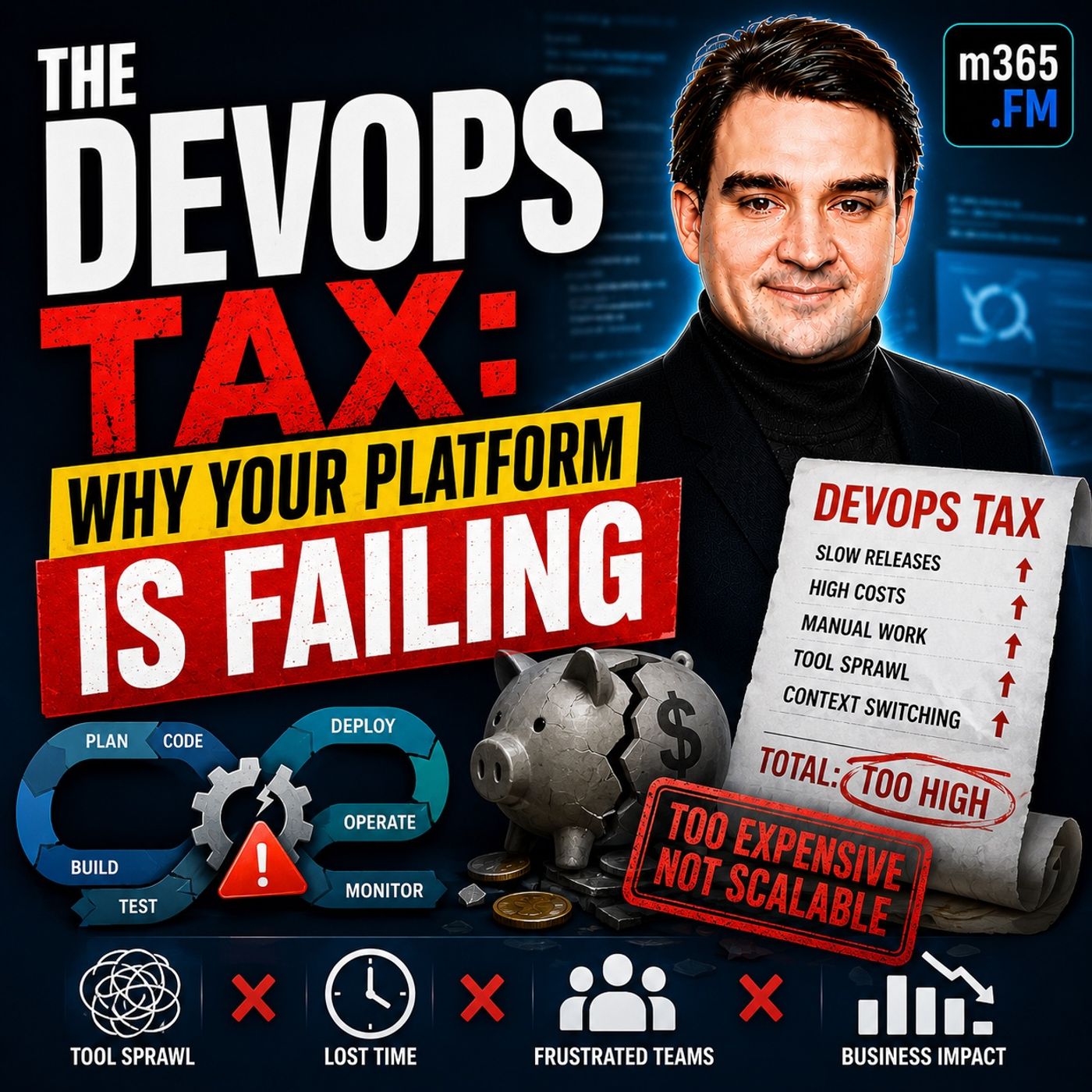
The DevOps Tax: Why Your Platform is Failing
Season 2
Published 2 weeks, 1 day ago
Description
Welcome to another episode of Knowledge Nuggets with Mirko Peters. Today we're exploring The DevOps Tax—the hidden cost that silently reduces engineering productivity, increases cognitive overload, and prevents organizations from delivering software at scale. DevOps began with a simple but powerful vision: "You build it, you run it." Small, autonomous teams would own their applications from development through production, eliminating handoffs between developers and operations. For many organizations, this approach initially delivered faster releases and better accountability. But as companies grew, so did the complexity. Developers were expected to become experts in Kubernetes, cloud networking, Infrastructure as Code, observability, security, compliance, cost optimization, and CI/CD—all while still building business features. Instead of accelerating innovation, many teams found themselves spending more time managing infrastructure than delivering customer value. In this episode, we'll examine why the DevOps model struggles at enterprise scale, what the DevOps Tax really costs organizations, and how Platform Engineering, Golden Paths, Infrastructure as Code, Policy as Code, and AI-ready governance provide a practical path forward.
WHAT IS THE DEVOPS TAX?
The DevOps Tax isn't a software licensing cost or another cloud bill. It's the hidden productivity cost created when developers spend the majority of their time solving infrastructure problems instead of building products. Modern developers are expected to understand:
WHY DEVOPS BREAKS AT SCALE
DevOps works remarkably well for small teams. When ten or fifteen engineers own an application, everyone understands the architecture, infrastructure decisions are shared, and feedback loops remain short. Enterprise organizations are different. As hundreds of teams emerge, every group begins selecting its own tools:
THE COGNITIVE LOAD CRISIS
One of the central themes of the session is cognitive load. Developers already need to understand complex business domains. Adding infrastructure decisions on top dramatically increases the amount of mental effort required before writing any business logic. The presentation introduces the concept of Concepts to Ship (CTS). A traditional DevOps environment often requires developers to understand fifteen to twenty different infrastructure concepts before deploying a service. These include:
WHAT IS THE DEVOPS TAX?
The DevOps Tax isn't a software licensing cost or another cloud bill. It's the hidden productivity cost created when developers spend the majority of their time solving infrastructure problems instead of building products. Modern developers are expected to understand:
- Kubernetes
- Containers
- Cloud platforms
- Networking
- RBAC
- CI/CD
- Infrastructure as Code
- Monitoring
- Distributed tracing
- Security
- Compliance
- Cost optimization
- Disaster recovery
WHY DEVOPS BREAKS AT SCALE
DevOps works remarkably well for small teams. When ten or fifteen engineers own an application, everyone understands the architecture, infrastructure decisions are shared, and feedback loops remain short. Enterprise organizations are different. As hundreds of teams emerge, every group begins selecting its own tools:
- Different CI/CD platforms
- Different monitoring stacks
- Different Infrastructure as Code frameworks
- Different deployment approaches
- Different security models
THE COGNITIVE LOAD CRISIS
One of the central themes of the session is cognitive load. Developers already need to understand complex business domains. Adding infrastructure decisions on top dramatically increases the amount of mental effort required before writing any business logic. The presentation introduces the concept of Concepts to Ship (CTS). A traditional DevOps environment often requires developers to understand fifteen to twenty different infrastructure concepts before deploying a service. These include:
- Kubernetes networking
- Service meshes
- RBAC
- Storage