Episode Details
Back to Episodes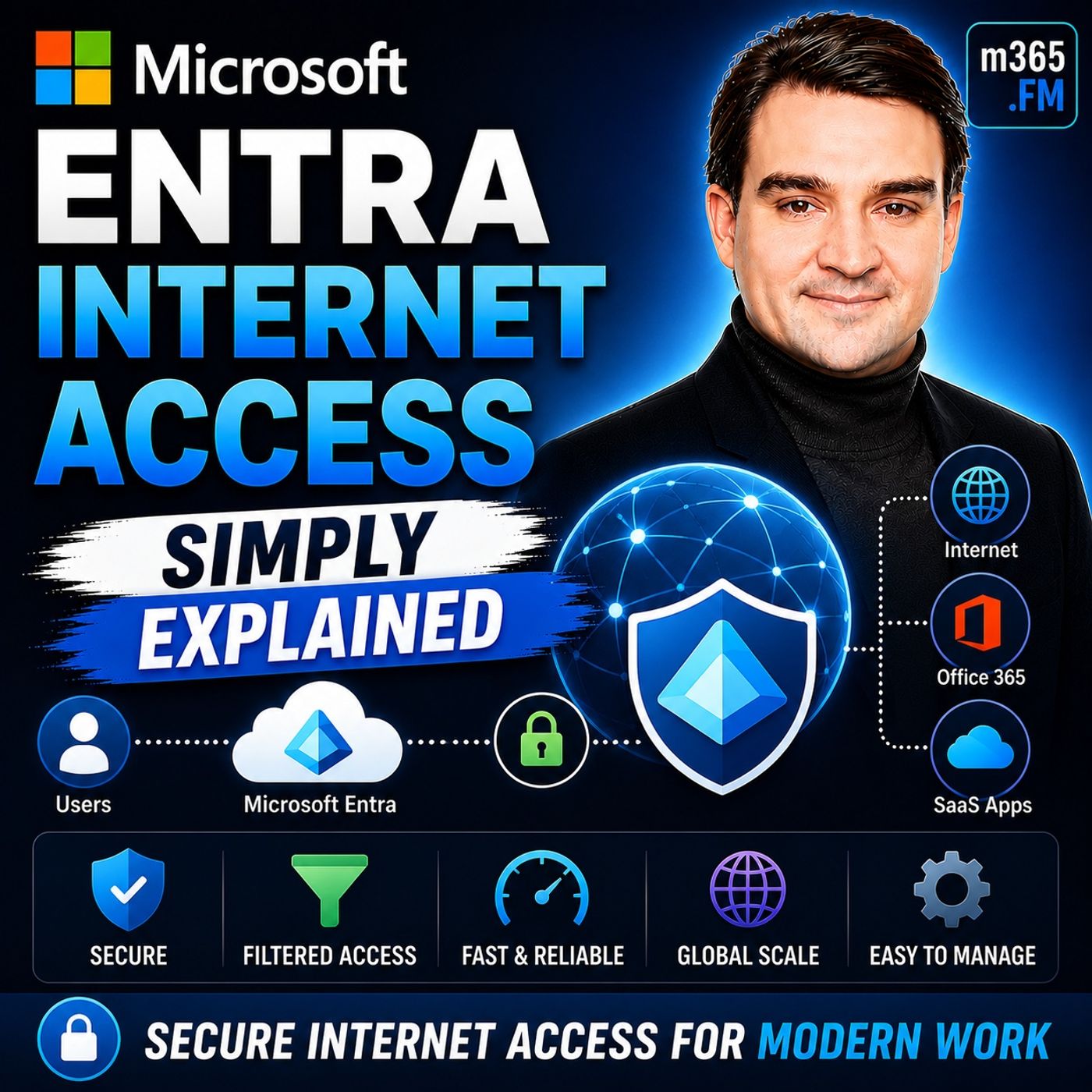
Microsoft Entra Private Access - Simply Explained
Season 3
Published 2 weeks, 2 days ago
Description
Welcome to another episode of Knowledge Nuggets with Mirko Peters. Today we're exploring Microsoft Entra Internet Access, Microsoft's modern cloud-native approach to secure internet connectivity that replaces traditional VPNs with identity-driven Zero Trust security. For decades, organizations relied on VPNs to give remote employees access to corporate resources. That model worked when applications lived inside company data centers and employees worked primarily from the office. Today's reality is completely different. Employees work from home, coffee shops, hotels, and airports while applications are spread across Microsoft 365, SaaS platforms, and cloud services. The traditional idea of "connecting to the corporate network" no longer fits the modern workplace. Microsoft Entra Internet Access addresses this challenge by shifting security away from network trust and toward identity trust. Instead of giving users broad access simply because they're connected through a VPN, every internet request is evaluated based on the user's identity, device health, location, and security posture. In this episode, we'll explore how Entra Internet Access works, its role within Microsoft Global Secure Access, its integration with Conditional Access, and why it's becoming a key component of Microsoft's Zero Trust strategy.
WHY TRADITIONAL VPNS ARE NO LONGER ENOUGH
Traditional VPNs were designed for a world where applications, users, and data all existed within the corporate network. When employees connected remotely, the VPN simply extended the corporate network to their device. While this model worked for many years, it introduces significant problems in today's cloud-first world. Once connected, users often receive broad access to internal resources far beyond what they actually need. File servers, databases, legacy applications, and internal systems become reachable simply because the user is "inside" the network. VPNs also generate ongoing operational challenges. Connection failures, certificate issues, client updates, forgotten credentials, and performance problems generate a continuous stream of help desk tickets for IT departments. More importantly, VPNs generally trust the connection after authentication. Once users successfully authenticate, they're typically trusted throughout the session regardless of changing device health or security risks. Modern cybersecurity requires continuous verification rather than one-time authentication. This shift forms the foundation of Microsoft's Zero Trust security model.
FROM NETWORK TRUST TO IDENTITY TRUST
Modern security no longer focuses on protecting a network perimeter. Instead, it focuses on protecting identities. This philosophy is known as Zero Trust, built around one simple principle: Never trust. Always verify. Every request is evaluated independently using multiple security signals. Microsoft Entra ID becomes the central identity platform that continuously evaluates:
WHAT IS MICROSOFT ENTRA INTERNET ACCESS?
Microsoft Entra Internet Access is Microsoft's cloud-native Secure Web Gateway (SWG). Instead of routing traffic through traditional VPN appliances, internet traffic passes through Microsoft's Global Secure Access platform where it can be authenticated, inspected, filtered, and authorized. Every request is evaluated using identity-driven security policies before reaching its destinatio
WHY TRADITIONAL VPNS ARE NO LONGER ENOUGH
Traditional VPNs were designed for a world where applications, users, and data all existed within the corporate network. When employees connected remotely, the VPN simply extended the corporate network to their device. While this model worked for many years, it introduces significant problems in today's cloud-first world. Once connected, users often receive broad access to internal resources far beyond what they actually need. File servers, databases, legacy applications, and internal systems become reachable simply because the user is "inside" the network. VPNs also generate ongoing operational challenges. Connection failures, certificate issues, client updates, forgotten credentials, and performance problems generate a continuous stream of help desk tickets for IT departments. More importantly, VPNs generally trust the connection after authentication. Once users successfully authenticate, they're typically trusted throughout the session regardless of changing device health or security risks. Modern cybersecurity requires continuous verification rather than one-time authentication. This shift forms the foundation of Microsoft's Zero Trust security model.
FROM NETWORK TRUST TO IDENTITY TRUST
Modern security no longer focuses on protecting a network perimeter. Instead, it focuses on protecting identities. This philosophy is known as Zero Trust, built around one simple principle: Never trust. Always verify. Every request is evaluated independently using multiple security signals. Microsoft Entra ID becomes the central identity platform that continuously evaluates:
- User identity
- Device compliance
- Geographic location
- Sign-in risk
- User risk
- Authentication strength
- Conditional Access policies
WHAT IS MICROSOFT ENTRA INTERNET ACCESS?
Microsoft Entra Internet Access is Microsoft's cloud-native Secure Web Gateway (SWG). Instead of routing traffic through traditional VPN appliances, internet traffic passes through Microsoft's Global Secure Access platform where it can be authenticated, inspected, filtered, and authorized. Every request is evaluated using identity-driven security policies before reaching its destinatio