Episode Details
Back to Episodes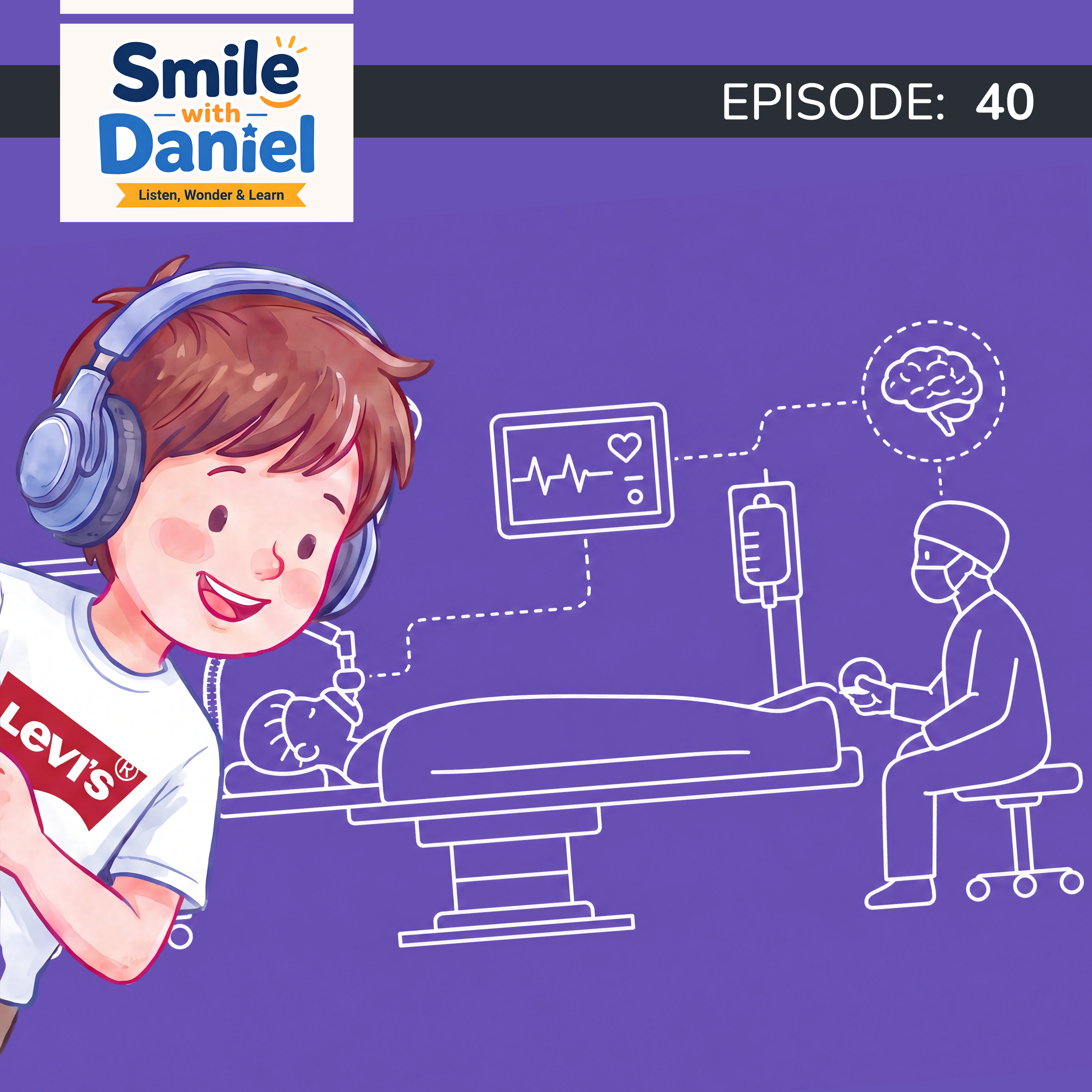
How Does Anesthesia Work?
Description
Daniel's friend had surgery last week. One second the doctor was counting down. The next second he was waking up. Hours had passed. He remembered none of it.
Daniel wants to know what actually happened in between.
The answer starts with a correction most people need. General anesthesia is not ordinary sleep. Sleep is a natural, reversible brain state. Anesthesia is a drug-controlled state designed to make you unconscious, unaware of the operation, and unable to remember it afterward. For most people, the experience feels like an instant jump from before the surgery to after it. No time. No memory connecting the two moments.
Researchers think some people may still have dream-like internal experiences during anesthesia -- but usually none of it becomes part of the story they remember afterward. The gap is a memory gap, not necessarily a gap in all experience.
Anesthesia is often several medicines working together. Some keep you unconscious and prevent memories. Others control pain. Muscle relaxants are sometimes used when the surgery requires it. The exact combination depends on the patient and the procedure. Throughout the operation, an anesthesia professional monitors breathing, oxygen level, heart rate, blood pressure, and safety -- continuously. Their entire focus is keeping you in the right state and bringing you back out of it safely.
Here is how the drugs are thought to work. Many anesthetics disrupt the organized communication that normally links distant brain regions. Sensory areas may still respond, but the brain becomes much less able to integrate those signals into awareness of the outside world. Scientists think that disruption is an important part of losing consciousness -- though probably not the entire explanation. Consciousness may depend partly on distant parts of the brain sharing and combining information. Anesthesia disrupts that.
And here is the part Daniel could not get past.
General anesthesia entered public surgical practice on October 16, 1846, when a dentist named William Morton administered ether while a surgeon removed a tumor from a patient's neck. The patient showed no sign of feeling the operation's pain. It was considered a miracle. Nearly two hundred years later, modern anesthesia has become remarkably safe and precise.
And scientists still do not fully understand exactly how these drugs cause conscious awareness to disappear and return.
Because that question is connected to what consciousness actually is -- which remains one of the deepest open questions in all of science. Anesthesia has become one of the most useful windows researchers have into that mystery.
Medicine and philosophy meeting in an operating room.
What you will find in this episode:
- Why anesthesia is not ordinary sleep -- and what it actually is
- What the experience of having no memory of hours feels like -- and what that may or may not tell us about experience during that time
- How several medicines work together during a procedure
- What anesthesia professionals monitor throughout the operation
- How anesthetics disrupt communication across brain regions -- and why that matters
- The 1846 public demonstration that changed surgery forever
- Why nearly two hundred years of use has not fully answered the deepest question
- Daniel's closing observation -- and Mom's best line in the episode
Clear, careful, and the kind of episode that changes what you think about every operation that has ever been performed.
Listen, wonder, and learn.
Find us @smilewithDaniel everywhere.