Episode Details
Back to Episodes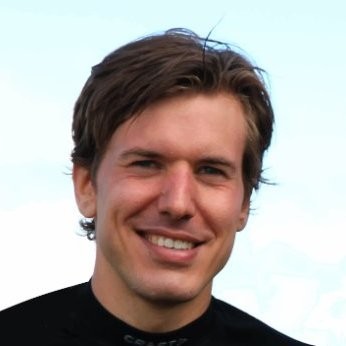
Aging Athlete Heart Health
Description
Professional Supplements for Wise Athletes (click to see the huge "always on" discount)
Guido Claessen, PhD
Guido Claessen is a Belgian sports cardiologist, physician-scientist (MD, PhD), and academic specializing in sports cardiology, exercise physiology, and advanced cardiovascular imaging. His research focuses on how intensive exercise affects the heart, distinguishing normal athletic adaptations from heart disease, and improving the diagnosis and treatment of cardiovascular conditions.
Summary
Sports cardiologist Guido Claessen — principal investigator on the Pro@Heart and Master@Heart studies out of KU Leuven and University of Hasselt — joins Joe to untangle one of the most uncomfortable questions in masters endurance sport: can you exercise too much for your heart? His answer is nuanced. The benefits of exercise are enormous and not in dispute: athletes live at least as long as the general population, probably longer, with far better quality of life. The benefit curve is steep early — the biggest gains come from going from sedentary to even an hour a week — and continues deepening to roughly three to six hours weekly before it plateaus. Past that point, Claessen argues, you're training for love of the sport, not for extra protection on the heart.
The harder material is what his own coronary-CT data revealed. Lifelong athletes in Master@Heart carried more coronary plaque than even very healthy active controls — the opposite of what his team expected. But the story doesn't end there: compared with a typical sedentary population, athletes' plaque skews toward the calcified, stable, rupture-resistant kind, which may be relatively protective. And the single most important caveat threaded through the whole conversation is that nobody yet knows whether that extra plaque actually translates into more heart attacks — the outcome data isn't in. Claessen closes with the practical throughline for older athletes: fitness is not a free pass. Screen the hidden risk factors — Lp(a), ApoB, home blood pressure — treat what needs treating, and don't fear the statin conversation, because the alternatives are now excellent. The takeaway isn't do less; it's do it with your eyes open.
Key learnings
- Don't fear exercise — the longevity case is settled. Even very high training loads are associated with living at least as long as the general population, with major quality-of-life gains on top. There is no signal pointing toward becoming sedentary.
- "Risk" is not one thing. Atrial fibrillation is more common in endurance athletes but it's a manageable nuisance, not sudden cardiac death. Disaggregating AFib from coronary disease from sudden death dissolves a lot of needless fear.
- The benefit curve plateaus around 3–6 hours/week. The steepest gains come early; beyond the plateau, extra volume is a hobby choice, not added heart protection.
- The athlete's heart is built by duration, not intensity. Counterintuitively, cumulative training volume — not how hard you go — drives cardiac enlargement. Tour-level pros trained less intensively than masters athletes yet had larger hearts.
- Lifelong athletes carry more coronary plaque — but more of the stable kind. More plaque than healthy controls (a surprise), yet compared with sedentary people it's more calcified and rupture-resistant.
- The crucial unknown: more plaque ≠ proven more events. Whether higher plaque burden in high-volume athletes leads to more heart attacks is genuinely undetermined; longitudinal follow-up is ongoing. This is the load-bearing uncertainty of the whole epi