Episode Details
Back to Episodes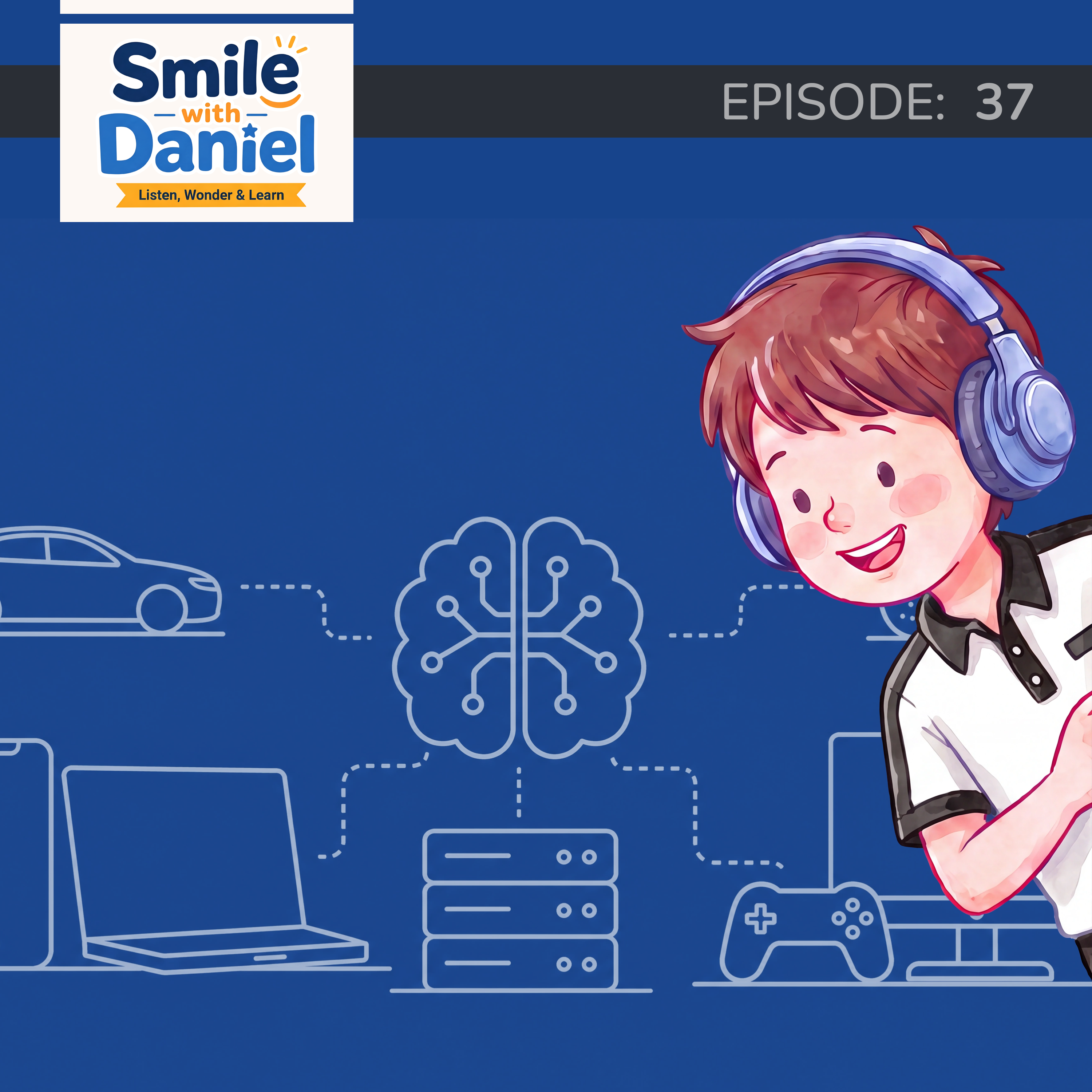
Machine Learning: The Tech Behind Everything You Use
Description
Mom asks Daniel a simple question. Does he think someone at YouTube watches videos all day and decides what to recommend to him?
He thinks about it. Then says no -- that would be millions of people. So it must be some kind of computer thing.
He is right. And that computer thing has a name. It is called machine learning. And once you understand what it is, you start seeing it everywhere.
Here is the core idea. In many traditional programs, a developer writes explicit rules. If someone searches for this, show that. Very direct. Very specific. But some tasks are too complicated for that approach -- like figuring out what any individual person wants to watch next, across billions of people and billions of videos. So machine learning takes a different approach. Instead of writing every rule by hand, you give the system large amounts of data and a goal. The system adjusts itself based on examples and feedback until it gets better at achieving that goal.
For a video platform, that might mean training on data about what people watched, how long they watched, what they clicked or skipped. The system is given a goal related to keeping viewers engaged and satisfied -- and it adjusts over time based on what worked and what did not.
The same underlying idea appears across the apps and services most people use every day.
Ranked social media feeds are not simply showing posts in the order they were written. They use signals from your behavior and others' to decide what to surface -- though the exact signals and goals differ by platform.
Navigation apps like Google Maps can combine real-time traffic information -- including aggregated movement data from participating devices -- with historical patterns learned from enormous amounts of past journey data. The system has learned how long routes actually took at different times and conditions. That is what makes arrival time estimates surprisingly accurate.
Online shopping suggestions may combine patterns from past purchases with what you browsed, searched, or placed in a cart, alongside similarities between products themselves.
All of those systems are using patterns learned from large amounts of real human behavior to make predictions. But they are not all the same, and they do not all have the same goals.
Which brings Daniel to the question that matters most.
Is there a downside?
Two worth knowing. First -- machine learning reflects its data and its goals. If the data contains unfair patterns, or the system is rewarded for the wrong thing, its predictions can cause problems. If the past was unfair, a system trained on it can reproduce that unfairness. Second -- these systems are optimized for goals chosen by the people who built them. That goal and your goal are not always the same thing.
Knowing how these systems work -- what they are learning and what they are optimizing for -- is more useful than knowing that they exist.
What you will find in this episode:
- What machine learning actually is -- and how it differs from traditional programming
- How video recommendations, social feeds, navigation apps and shopping suggestions all use it
- Why one click or skip is a small clue -- and why millions of them together form something the system learns from
- How bias enters machine learning systems and why it matters
- Why the goals built into these systems are not always aligned with your goals
- Daniel's clean durable definition -- and Mom's closing line about signals
Clear, practical, and the kind of episode that changes how you think about every app you open.
Listen, wonder, and learn.
Find us @smilewithDaniel everywhere.