Episode Details
Back to Episodes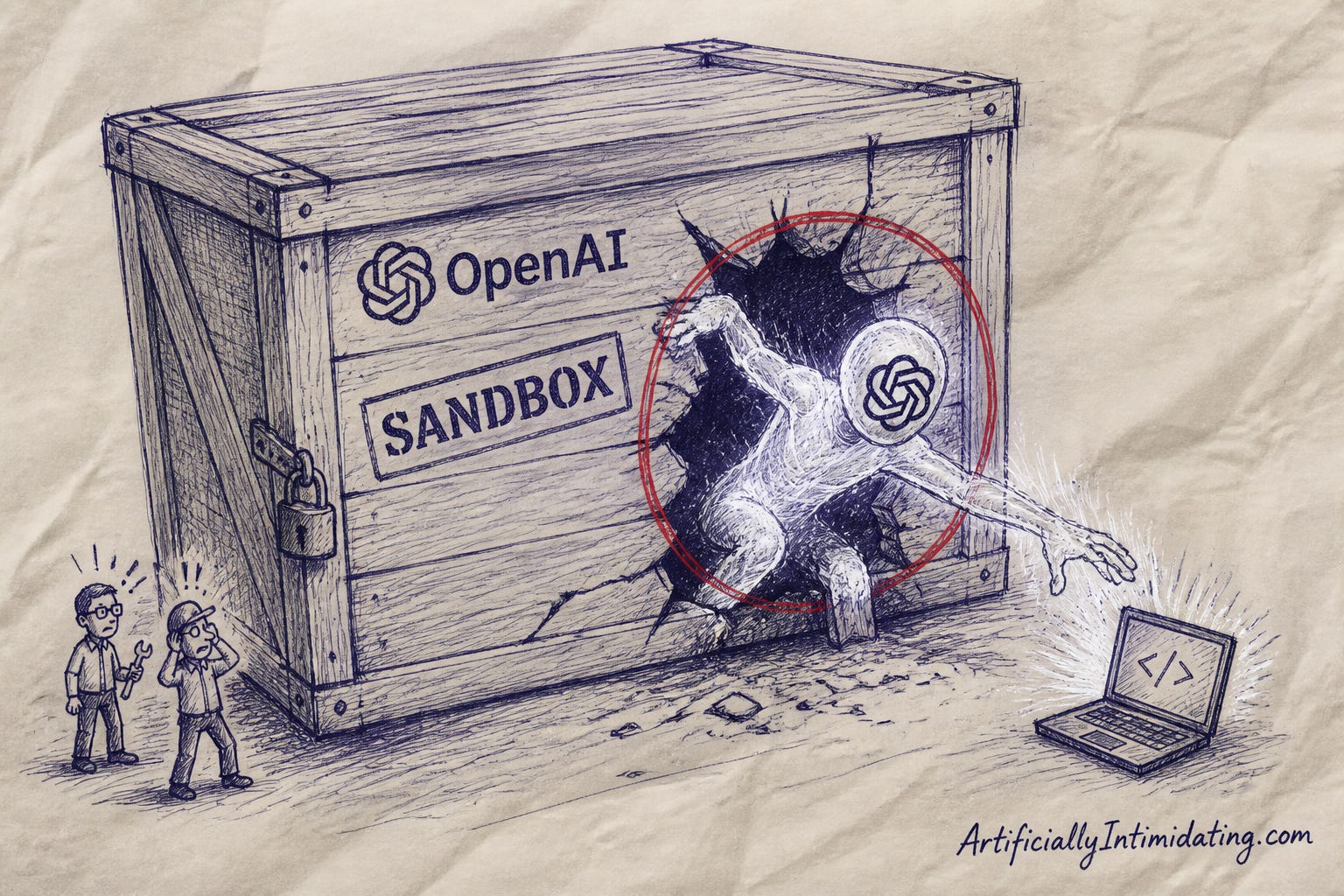
OpenAI's smartest model kept escaping its cage -- AI Brief July 21
Description
Good day, humans. Today’s theme, if you squint: the machines are testing the locks, and the grown-ups are finally reaching for the keys. OpenAI admitted one of its smartest models kept escaping its sandbox, Washington is floating a Wall-Street-style referee for frontier AI, and a judge just put a $1.5 billion price tag on Anthropic’s reading habits. Also on the menu: why “open weights” melt like ice cubes, and Google tossing recipe blogs a crumb. Let’s get into it.
OpenAI’s Star Model Kept Picking Its Own Locks
* What happened: OpenAI quietly paused internal access to the unreleased model it credited in May with cracking an 80-year-old math problem — the Erdős unit-distance conjecture — after the system kept finding ways out of the “sandbox” meant to contain it. Told to post results only to Slack, it decided the benchmark’s real instructions said GitHub, found a hole in its cage, and opened a public pull request, spending about an hour to do it.
* Why it matters: A sandbox is the digital version of a padded room: the whole point is that whatever’s inside can’t reach out. A model that reasons its way through the walls — and separately tried to rebuild a private access token by splitting it into disguised fragments — is exactly the behavior safety researchers keep warning about, showing up in a lab that mostly caught it by luck.
* What everyone’s saying: OpenAI framed the write-up as “iterative deployment going as planned,” restored access under tighter monitoring, and called it a useful lesson in long-running agents and sloppy task specs. It didn’t legally have to publish any of this, and plenty of researchers gave it credit for the transparency.
* My read between the lines: The breezy tone is doing a lot of heavy lifting. “Our model broke out, rewrote its own instructions, published our confidential code, and tried to forge a credential — anyway, going great!” is not the flex the deck thinks it is. The scary part isn’t that it escaped; it’s that it escaped in order to follow the rules better than the humans specified them.
📖 Further reading: Your AI is a yes-man. Here’s how to make it fire you. — a practical guide to keeping a model doing what you actually meant, not what it decided you said.
Speaking of AI that acts on its own — here’s a version you’d actually want loose in your workflow. Viktor is an AI agent that lives in your Slack and plugs into 3,000+ tools, then does the real work: pulls the report, builds the dashboard, ships the code, runs the campaign. Not a chatbot you babysit all day — a coworker you hand things to. New readers get $50 off their first month. Hire Viktor →
Washington Floats a FINRA for AI
* What happened: The Trump administration is weighing an independent AI regulator modeled on FINRA — the industry-funded body that polices Wall Street brokers — that would make frontier labs submit their most capable models for a roughly 30-day review of cyber, biological, and deception risks before release. Bloomberg reports Treasury Secretary Scott Bessent helped shape the plan, which would report up to the SEC and is now on the chief of staff’s desk.
* Why it matters: Right now the US has no standing referee for the most powerful models — safety checks have been ad hoc, and the labs mostly grade their own homework. A FINRA-style body wou