Episode Details
Back to Episodes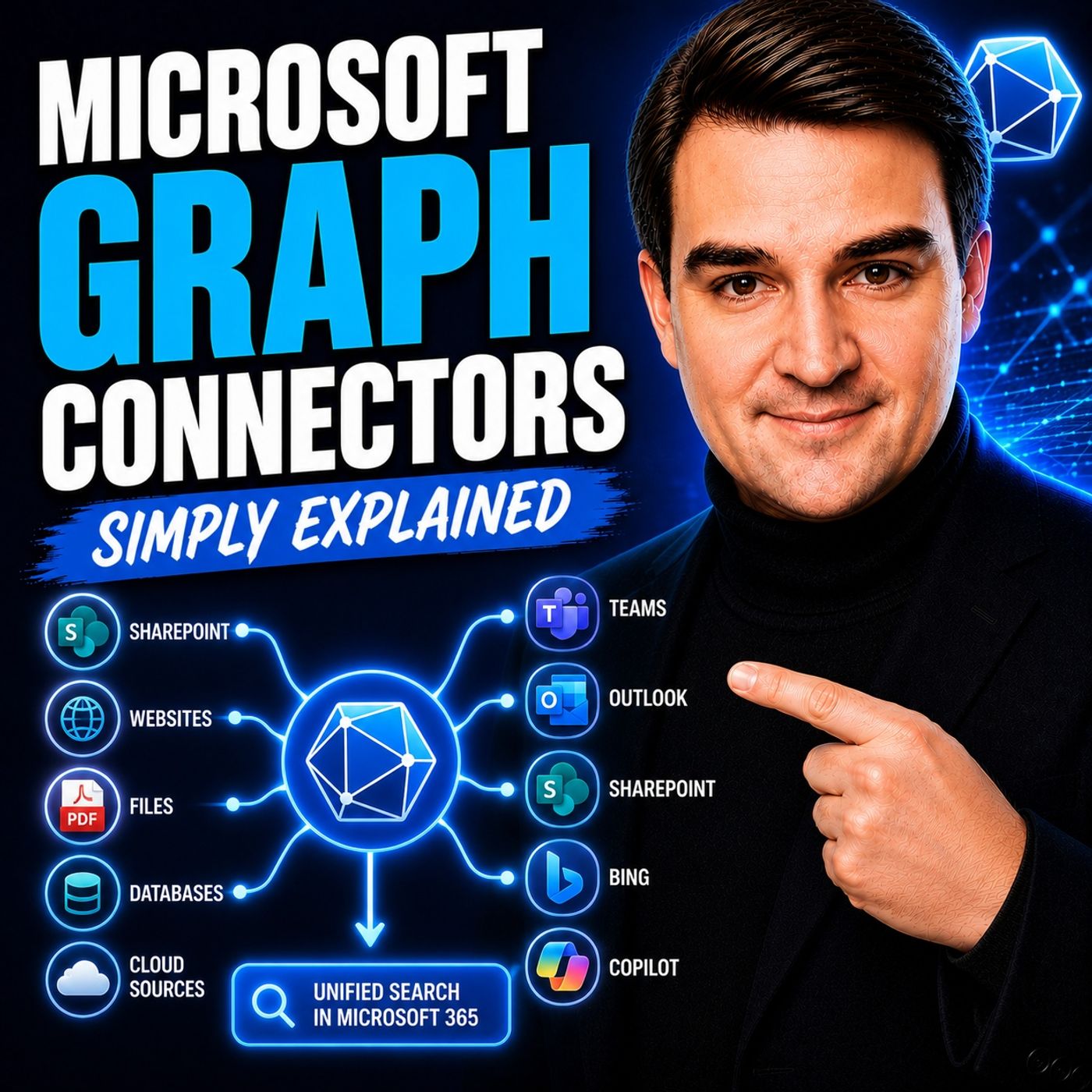
Microsoft Graph Connectors - Simply Explained
Season 3
Published 2 weeks, 6 days ago
Description
Welcome to another episode of Knowledge Nuggets with Mirko Peters. In this episode, we're exploring Microsoft Graph Connectors, now increasingly referred to as Microsoft Copilot Connectors. While Microsoft 365 Copilot can search emails, Teams chats, SharePoint, and OneDrive out of the box, most organizations store critical business information in systems like Salesforce, ServiceNow, Jira, Confluence, SAP, GitHub, and many other third-party platforms. You'll learn how Graph Connectors bridge that gap, the difference between Synced and Federated Connectors, how Microsoft Graph indexes external content, how security permissions are preserved, and how these connectors dramatically expand what Copilot can understand across your organization.
WHY GRAPH CONNECTORS MATTER
Modern organizations rarely keep all their business data inside Microsoft 365. Customer information often lives in Salesforce, IT tickets are managed in ServiceNow, documentation resides in Confluence, source code is stored in GitHub, and project information may be spread across Jira, Google Drive, Dropbox, or countless other business applications. Without Graph Connectors, Microsoft 365 Copilot can only answer questions using Microsoft 365 content. This creates major knowledge gaps because some of the most valuable business information exists outside Microsoft's ecosystem. Graph Connectors eliminate these blind spots by making external business content searchable through Microsoft Graph, allowing Copilot to generate answers using data from multiple systems instead of only Microsoft 365.
WHAT ARE MICROSOFT GRAPH CONNECTORS?
A Microsoft Graph Connector imports external business content into the Microsoft Graph, Microsoft's unified data and intelligence platform that powers Microsoft Search and Microsoft 365 Copilot. Think of Microsoft Graph as a centralized knowledge index. Once external data enters this index, Copilot can search, summarize, reference, and reason over that information just as naturally as it does with SharePoint documents or Outlook emails. Although Graph Connectors have existed for years to power Microsoft Search, they have become significantly more valuable with the arrival of Microsoft 365 Copilot because AI can now understand and combine information across multiple connected systems instead of simply returning search results.
SYNCED VS FEDERATED CONNECTORS
Microsoft currently supports two different connector models. Synced Connectors copy external data into Microsoft Graph. The information is indexed, semantically processed, and stored inside Microsoft 365. This approach provides fast search, semantic understanding, and broad availability across Microsoft Search and Copilot. Synced connectors work particularly well for relatively static information such as:
SECURITY AND PERMISSIONS
One of the biggest strengths of Microsoft Graph Connectors is that they preserve existing security permissions. Every indexed item contains an Access Control List (ACL) that defines exactly which users are allowed to view that content. If a user doesn't have permission inside the original system, Copilot won't expose
WHY GRAPH CONNECTORS MATTER
Modern organizations rarely keep all their business data inside Microsoft 365. Customer information often lives in Salesforce, IT tickets are managed in ServiceNow, documentation resides in Confluence, source code is stored in GitHub, and project information may be spread across Jira, Google Drive, Dropbox, or countless other business applications. Without Graph Connectors, Microsoft 365 Copilot can only answer questions using Microsoft 365 content. This creates major knowledge gaps because some of the most valuable business information exists outside Microsoft's ecosystem. Graph Connectors eliminate these blind spots by making external business content searchable through Microsoft Graph, allowing Copilot to generate answers using data from multiple systems instead of only Microsoft 365.
WHAT ARE MICROSOFT GRAPH CONNECTORS?
A Microsoft Graph Connector imports external business content into the Microsoft Graph, Microsoft's unified data and intelligence platform that powers Microsoft Search and Microsoft 365 Copilot. Think of Microsoft Graph as a centralized knowledge index. Once external data enters this index, Copilot can search, summarize, reference, and reason over that information just as naturally as it does with SharePoint documents or Outlook emails. Although Graph Connectors have existed for years to power Microsoft Search, they have become significantly more valuable with the arrival of Microsoft 365 Copilot because AI can now understand and combine information across multiple connected systems instead of simply returning search results.
SYNCED VS FEDERATED CONNECTORS
Microsoft currently supports two different connector models. Synced Connectors copy external data into Microsoft Graph. The information is indexed, semantically processed, and stored inside Microsoft 365. This approach provides fast search, semantic understanding, and broad availability across Microsoft Search and Copilot. Synced connectors work particularly well for relatively static information such as:
- HR documentation
- Knowledge bases
- Company policies
- Wikis
- Archived contracts
- Reference documentation
- Support tickets
- CRM records
- Inventory systems
- Live project status
- Current pricing
- Operational dashboards
SECURITY AND PERMISSIONS
One of the biggest strengths of Microsoft Graph Connectors is that they preserve existing security permissions. Every indexed item contains an Access Control List (ACL) that defines exactly which users are allowed to view that content. If a user doesn't have permission inside the original system, Copilot won't expose