Episode Details
Back to Episodes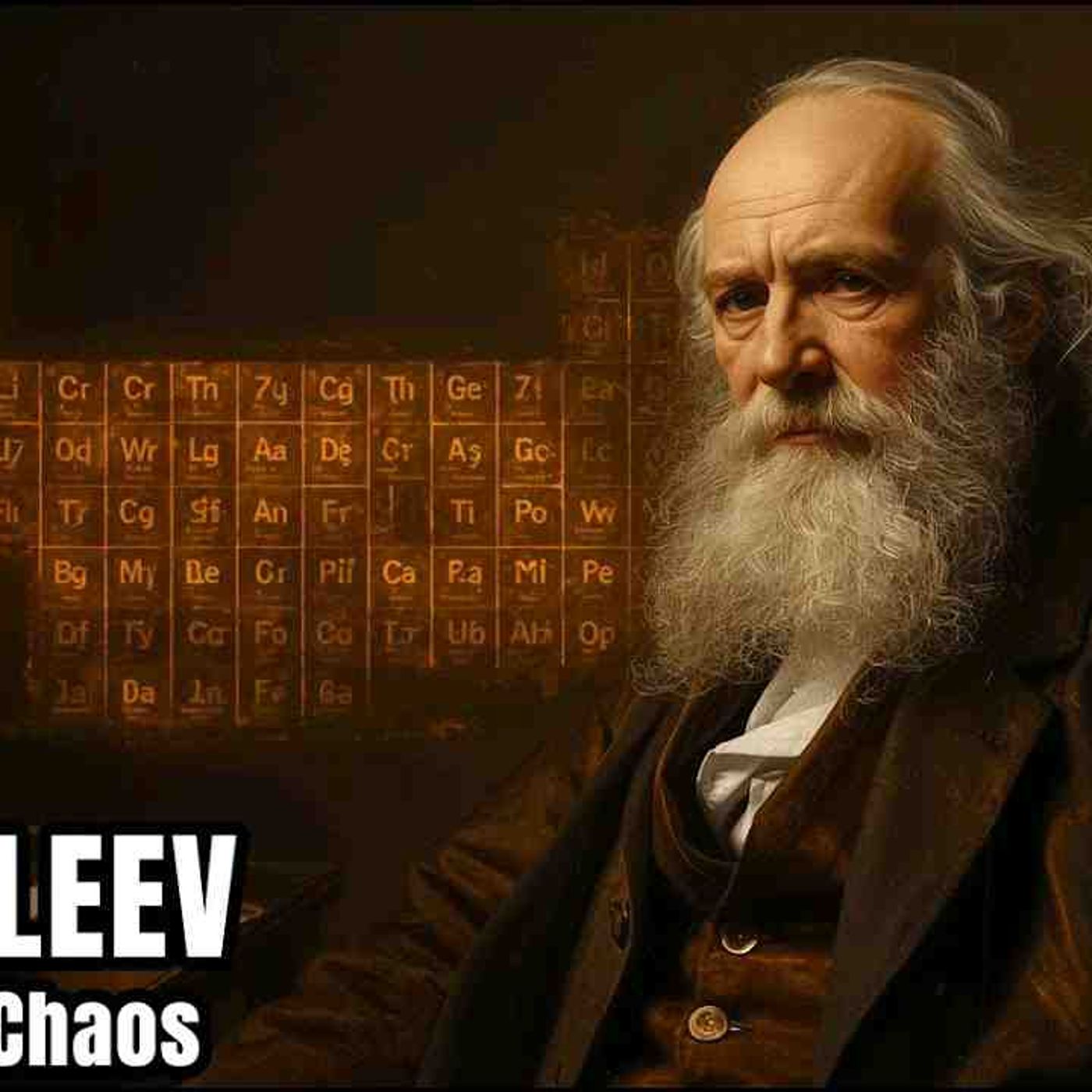
Mendeleev_s Dream_ The Periodic Tables. Secret Origin
Season 2
Episode 14
Published 3 days, 13 hours ago
Description
Exhausted after three days of relentless work, a Russian chemist laid his head on his desk and fell asleep. In his dream, the answer to a lifetime of questions simply appeared—a table where all the elements fell perfectly into place. But is this one of science's most romantic origin stories, or the greatest myth ever told about a discovery?
In this episode, we uncover the secret origin of the periodic table and the truth behind Mendeleev's famous dream. The story is legendary: on February 17, 1869, after days of sleepless work, Dmitri Mendeleev wrote the 63 known elements on separate cards and fell asleep at his desk. When he awoke, he claimed, "I saw in a dream a table where all the elements fell into place as required. Immediately on awakening, I wrote it down on a piece of paper" [citation:5]. That dream would become the template upon which modern chemistry is founded, changing how we understand the building blocks of our world [citation:2][citation:3][citation:4].
But the full story is far more complex. Mendeleev was neither the first nor the only scientist to suggest such a classification. In 1864, German scholar Julius Lothar Meyer published his own table of 28 elements, and in 1866, English chemist John Alexander Newlands arranged elements in a table by their properties [citation:1][citation:8]. What made Mendeleev's table revolutionary was not just its arrangement, but its predictive power: he left gaps in his chart, marking them with question marks, and boldly predicted the existence of elements yet to be discovered—gallium in 1875, scandium in 1879, and germanium in 1886—which fit exactly into his table [citation:5][citation:8].
However, historians now question whether the dream ever actually happened. Mendeleev never mentioned it in his diary or letters to friends [citation:1]. The story originated from his friend, geologist Professor Inostrantsev, who told students about the dream as an example of the "psychological impact of intensive work of the brain on human mind" [citation:1]. When asked directly by a reporter about the table's origin, Mendeleev simply said he had been thinking about it for twenty-five years [citation:1].
Whether dream or decades of painstaking work, the periodic table remains one of science's greatest achievements—a testament to human curiosity and the relentless search for order in the chaos of nature. Let this story of discovery, persistence, and mystery gently guide you into a deep and restful sleep.
In this episode, we uncover the secret origin of the periodic table and the truth behind Mendeleev's famous dream. The story is legendary: on February 17, 1869, after days of sleepless work, Dmitri Mendeleev wrote the 63 known elements on separate cards and fell asleep at his desk. When he awoke, he claimed, "I saw in a dream a table where all the elements fell into place as required. Immediately on awakening, I wrote it down on a piece of paper" [citation:5]. That dream would become the template upon which modern chemistry is founded, changing how we understand the building blocks of our world [citation:2][citation:3][citation:4].
But the full story is far more complex. Mendeleev was neither the first nor the only scientist to suggest such a classification. In 1864, German scholar Julius Lothar Meyer published his own table of 28 elements, and in 1866, English chemist John Alexander Newlands arranged elements in a table by their properties [citation:1][citation:8]. What made Mendeleev's table revolutionary was not just its arrangement, but its predictive power: he left gaps in his chart, marking them with question marks, and boldly predicted the existence of elements yet to be discovered—gallium in 1875, scandium in 1879, and germanium in 1886—which fit exactly into his table [citation:5][citation:8].
However, historians now question whether the dream ever actually happened. Mendeleev never mentioned it in his diary or letters to friends [citation:1]. The story originated from his friend, geologist Professor Inostrantsev, who told students about the dream as an example of the "psychological impact of intensive work of the brain on human mind" [citation:1]. When asked directly by a reporter about the table's origin, Mendeleev simply said he had been thinking about it for twenty-five years [citation:1].
Whether dream or decades of painstaking work, the periodic table remains one of science's greatest achievements—a testament to human curiosity and the relentless search for order in the chaos of nature. Let this story of discovery, persistence, and mystery gently guide you into a deep and restful sleep.