Episode Details
Back to Episodes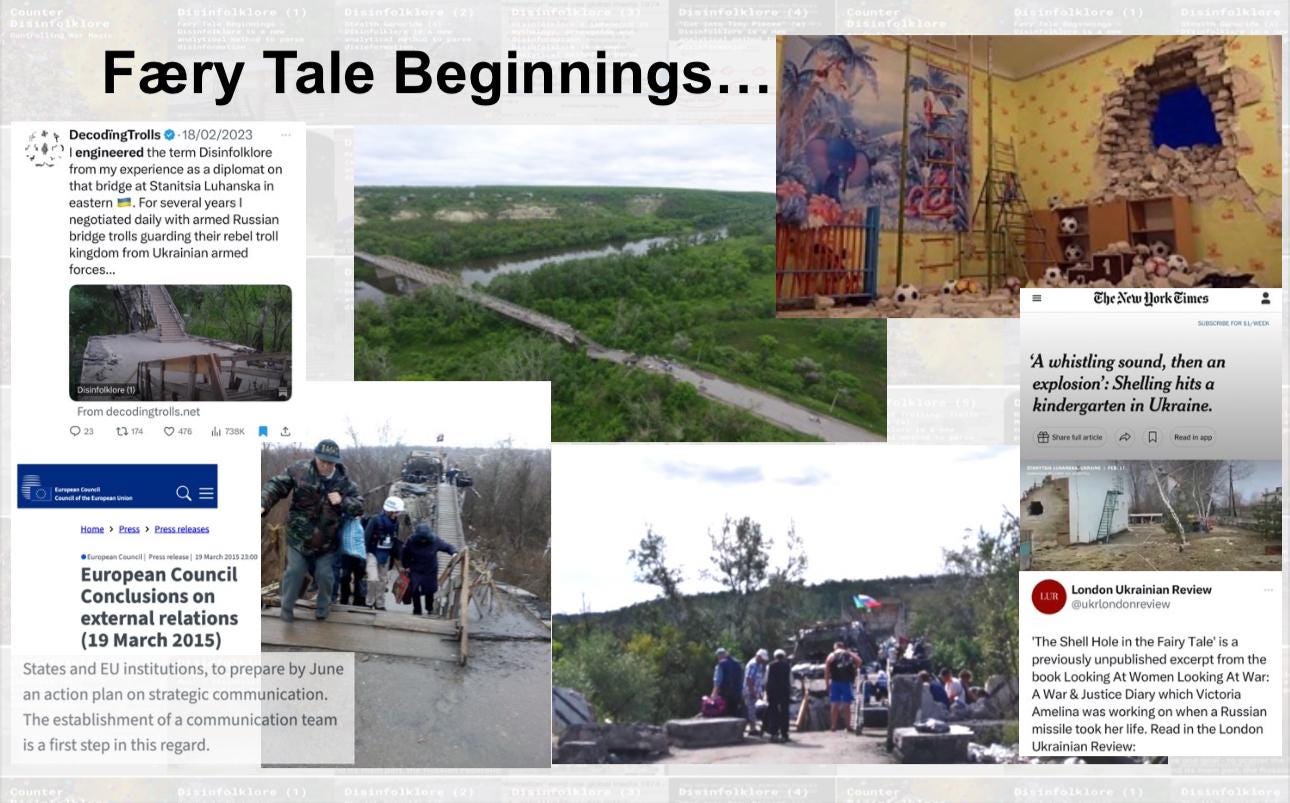
Podcast | Færy Tale Beginnings - the Training Data Set
Description
This is episode three, where I’m keeping a grip on where we are. This is episode three of a series I started four weeks ago. As some of us might remember, there were technical issues in the second week. I’m going through the piece which I delivered, the paper I delivered at the Pirate Party Security Conference at the time of the Munich conference in Munich last February. And the words from the United States Vice President at that conference are continuing to resonate with new policies being released all the time. Most recently, the attempt to sanction several senior European Union officials for so-called free speech crimes. So this is the Disinfolklore universe that I had an intimation we were moving towards, and it’s provoked into being by such actions as we have seen today.
I’m also aware of my promise to Iona about six weeks ago that we would deal with truth, and I’m moving towards that as well. It’ll be a few more episodes where I move towards that point.
But last week we saw the continued reference to the territorial integrity of Ukraine. Some of us might remember in the prehistoric past — which when I looked back on my writing over the past few months was actually only a month ago, believe it or not — five weeks ago, I got the first intimation that this new round of so-called capitulation or peace talks was beginning and the pressure was on. My first intimation of it, some of us will remember picking this data point up on our timelines, was when the United States had attempted to take the term “territorial integrity” out of the annual United Nations resolution in support of Ukraine’s war of independence and against Russia’s aggression.
At the time, that stood out to me like a sore thumb. The reference to sovereignty without the reference to territorial integrity. And the sound RT, RIT, is in both those terms — territorial and integrity. It’s also in sovereignty, but it’s disguised as the REIGN element — reign, reine in French — originating from this idea of straight, straightness, truth, and the rod which, for instance, President Zelensky held in his right hand when he was inaugurated as president in the Verkhovna Rada. And the current English king who is sovereign — there’s only one sovereign on the island of Britain, and that is the king — he also holds a rod, a straight rod in his right hand when he was inaugurated as monarch.
These are very old Indo-European rites and they are integrated into our language and the way we as Indo-European communities govern ourselves, going right back to Mykhailivka village in Zaporizhzhia, where the Yamna community — who spread Indo-European languages, religions, and forms of governance into the area between Ireland and India — lived between 4100 BCE and 3500 BCE.
So when I see today the President of the European Commission, the President of France, and Indo-European civilisation’s greatest leaders, particularly in Europe, referencing in almost identical terms the term sovereignty and digital sovereignty, it pleases me enormously. We’re moving forward towards the relationship between these concepts and trying to define what is rightful and what is truthful, which is what we try to do every day in real time on our timelines.
I am a great admirer of postmodern philosophy. I studied as a postgraduate at Georgetown. But I am also a little old-fashioned insofar as I do believe there is truth, and truth is not merely a mobile army of metaphors. It can be, but it’s not merely that. There is truth — when we sit on a chair, we’re sitting on the chair.
As we previously discussed about emptiness with Wendy — the idea of emptiness, that ultimately nothing does matter. However, in conventional reality, we have elaborated and established certain rules, certain regulations, and certain rights. And in that conventional reality that we’re living in, for me the preeminent rights are those established after World War II: the legal order, the international leg