Episode Details
Back to Episodes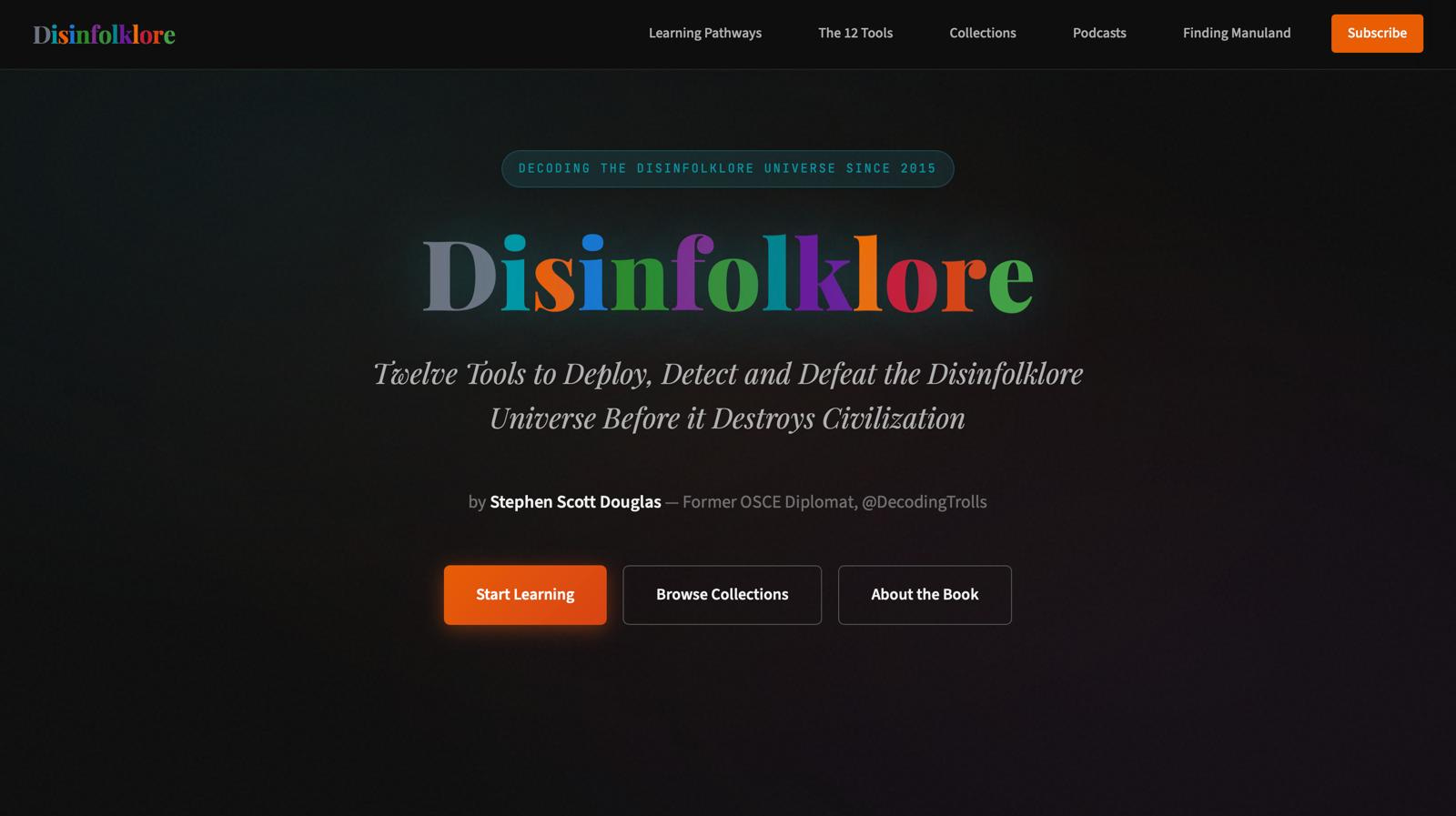
Podcast | Battling Archetypes: Why Disinfolklore?
Description
Ukraine as a Character
Why is disinfolklore an appropriate moniker? In disinfolklore, we look at characters in the stories we’re served up. Ukraine is a damsel in distress who must be rescued by Donald—this is how he’s trying to archetype Ukraine. We know it’s obviously false. Ukraine is a damsel in distress who must be rescued by Russia because of the coup and all of these trolls. Or Ukraine is a damsel in distress who must submit.
We go back to coercive control. We go back to the people many of us might have met in our lives who come from the perspective of realpolitik. They say, oh yes, isn’t it awful what Russia is doing? But honestly, it’s time to just—you know, Ukraine just needs to give up Donbas and everything will be fine, and we’ll be able to get back to our cappuccinos and whatever.
I’m going through a thorough reorganisation of my work and approach to teaching. Watch this space. Here’s a sneak preview of part of my new homepage, and of what is coming:
What’s going on there is Ukraine is being archetyped as a character. Ukraine is a country of 42 million people, a very complex concept. It’s a geographical space. It’s a historical context. If we take the disinfolklore lens, then it’s quite natural for us to see anything in a meme as a character.
Abstract Concepts as Characters
Obviously when we’re looking at Netflix or a story in the news or any art or play, we have characters manifesting as individual humans. What the disinfolklore analytical method allows us to do is perceive how abstract concepts take on the characteristics of characters, of personalities.
This is one of the main means by which Russia’s disinfolklore manipulates us—because we don’t notice it. We’re not looking for it. We’re not looking for the energy of character in an abstract concept like Ukraine. Putler then can talk about Ukraine as a corpse, as a dead corpse, as a dead woman who is worthy of becoming a victim, as in that song by Red Mould which I’ve talked about before—*Sleeping Beauty in the Coffin*. International lawyers use it as evidence of Putler’s intention to genocide Ukraine, because he quoted this disgusting lyric which I’m not going to repeat here—*Sleeping Beauty in a Coffin, I Walked Up and XXXX her…*
This archetyping through characters is a phenomenon that very few other so-called disinformation researchers, or people watching propaganda, or people interpreting data have noticed. I’ve not only noticed it—I’ve tried to think about it, work it out, and articulate what is going on.
It’s quite natural, if you look at disinfolklore as a narrative form, to see how Ukraine is being archetyped as a particular character with characteristics.
Don’t Poke the Bear
Russia does it when it calls itself a bear and promotes this troll. I first came across this with an American senior officer, a colonel, who once in eastern Ukraine just mentioned to me about the bear—“don’t poke the bear.” That was the first time I came across this meme.
What this actually is, is archetyping Russia as the strong bear, which you can’t do anything about when it pokes you—you can’t poke it back. If it pokes you, then it’s your fault for poking it. It’s a really complicated, psychologically manipulative set of mental routines it sets off in our minds. That is concealed by the use of a bear, which we think of—well, those of us who didn’t grow up in Central and Eastern Europe with bears running around, or in Pennsylvania where bears are actually running around. Those who grew up in bourgeois Western Europe haven’t come across bears except in fairy tales and folk tales.
That for me was a clue of how Russia uses character in stories. Donald uses the same trick, and many propagandists use the same trick. It’s also a means of critiquing what they do. Russia is the implacable bear—better get over it, Ukraine.
Stereotypes versus Arc