Episode Details
Back to Episodes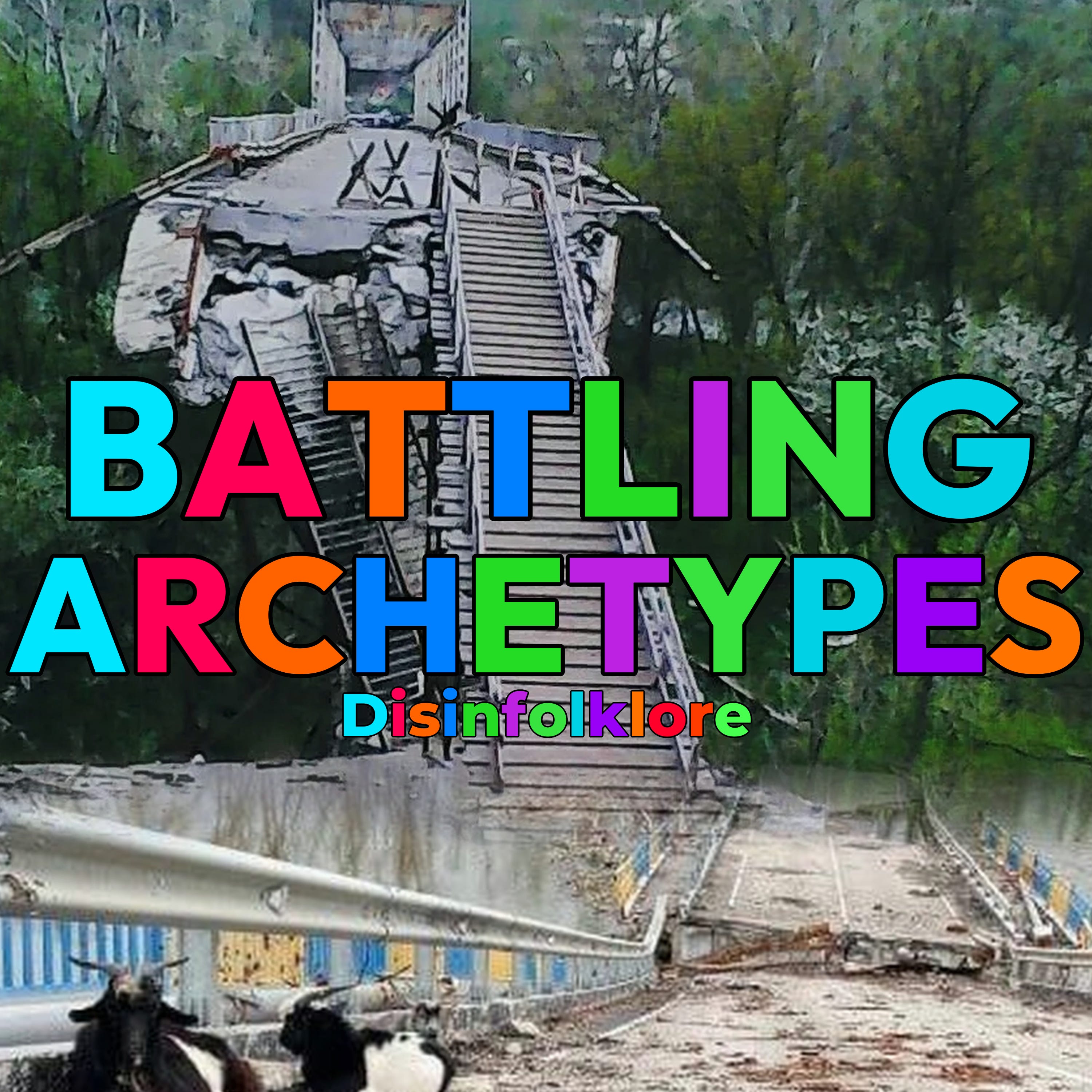
Podcast | The Creature of Moral Ambivalence and The Grandmother at the Checkpoint
Description
Some of you may remember that two weeks ago I started a new series, looking at trolling and trolls. I am interspersing each week: one week on archetypal analysis of what I call the Luhansk archive, and then I move into the trolling.
Trolling as Emotion-Moving Activity
Just to remind everyone how I conceive of trolling: it is an emotion-moving activity of body, speech, and mind. I arrived at that definition through the story I am telling you tonight, and that I told you last time — that trolling is about movement, and what binds the use of artillery in eastern Ukraine, which I witnessed a lot, with Donald’s trolling about Iran, or anything else on the internet, with indeed President Zelenskyy’s trolling about his ceasefire offer this week and Ukraine’s great response to that. What binds all of these uses of the term trolling — which do describe the phenomena I have described — is movement, and the movement of emotions.
What unites an artillery barrage with a tweet, or with the kind of way you might communicate with your pet cat, or the way someone you love communicates with you when they are trying to persuade you to do something that initially you did not want to do, but it is in your interests — this is all about a movement of emotions, and there is an activity which moves the emotions. I just wanted to fix you on that as we go through this.
The Journey from Factiva to Eastern Ukraine
What I am doing is bringing you on the journey I went on, which is: how do you link that aspect with the use of trolling as a term — trolls and trolling — for a phenomenon that most of us did not have any awareness of before, say, 2010? I did not have any awareness of trolling before about 2018 as a signifier. I remember the moment I received an email from a friend who just mentioned, oh, they were on YouTube trolling some people. I did not know what he was talking about at the time. I do remember that.
What that signifier describes has been around forever, and I can say that with certainty because I have looked into what it means. The meaning which I deduce from the Dow Jones Factiva database of the uses of the term trolling and trolls — 65,000 uses of those terms in the world’s largest database of media, 33,000 media sources — that was my starting point. My friend used this term, it intrigued me, and I did not know what he was talking about, but I was seeing it a lot around. I wanted to see how this term has been used over time.
That led me on this journey. It was my insight in eastern Ukraine that actually the meaning of this phenomenon — that has a meaning in early computer culture from California, and also with the advent particularly of Facebook and Twitter around 2008, this explosion of the use of trolls and trolling in the media around the world — what united those uses with what I was seeing in eastern Ukraine was the fact that there was a troll: as a person, as a metaphor to describe a person, or as a metaphor to describe a tweet, or what I now understand as any emotion-moving activity. The activity could be a flick of your eyebrow. It could be a tweet by the President of the United States. It could be a piece of legislation. All of these phenomena are united by the fact that they are emotion-moving activity, and they do move others’ emotions.
Two Springs: Fishing and Folklore
Last time I spoke about this, I was talking about looking at the term, how it arose in the Oxford English Dictionary, and how it went from fishing — from the discourse of fishing. It was used as a metaphor to talk about how you troll for souls. That was some of the earliest uses. Then in 2006, the Oxford English Dictionary, the definitive account of the English language, used the term from computer culture for the first time — trolling for bait, in the sense that my friend used it. That was a proposed amendment in 2006.
There are these two spri