Episode Details
Back to Episodes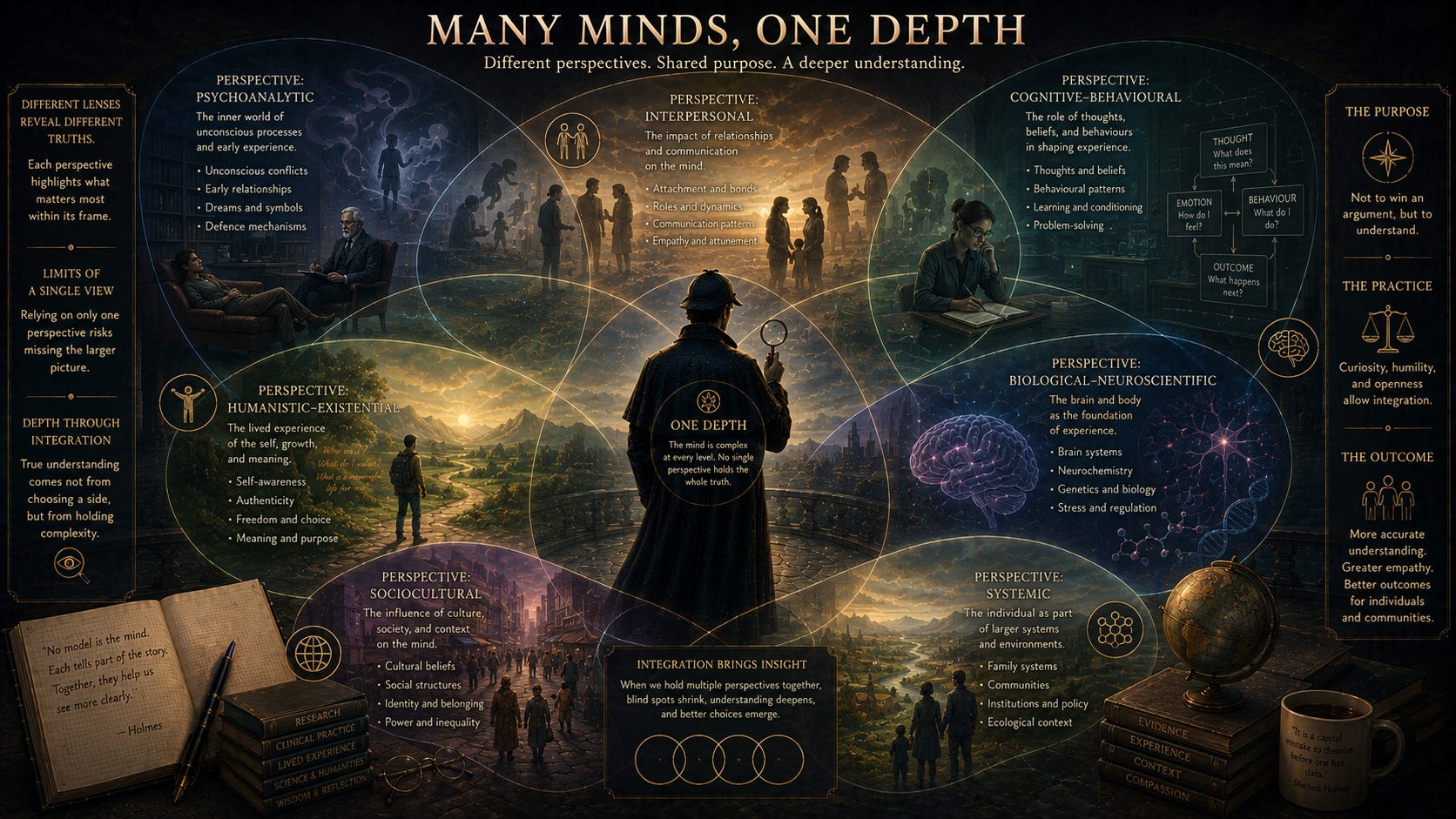
PSYCH 060: Other Psychodynamic Schools
Description
This chapter explores the evolution of psychodynamic thought beyond classical psychoanalysis, highlighting a range of schools that expand, refine, and sometimes challenge Freud’s original ideas.
These approaches share a common foundation - the importance of unconscious processes, early relationships, and internal conflict - but diverge in how they conceptualise the structure and dynamics of the mind.
Object relations theory shifts focus from drives to relationships, emphasising how internalised representations of others shape emotional life. Self psychology highlights the development of the self and the need for empathic attunement. Interpersonal and relational approaches place greater emphasis on real-world interactions and the co-constructed nature of experience between individuals.
A key theme is movement away from a one-person psychology towards a two-person psychology. The therapist is no longer a neutral observer, but an active participant in the therapeutic process. The relationship itself becomes the medium of change.
These schools also place increasing emphasis on development, attachment, and the role of trauma in shaping psychological structure. The mind is seen not as a static system of drives, but as a dynamic, relationally constructed entity.
Clinically, this plurality offers flexibility. Different models provide different lenses, allowing the clinician to adapt their understanding to the individual rather than forcing the individual into a single theoretical framework.
Key Takeaways
* Psychodynamic theory has evolved into multiple schools with distinct emphases.
* Object relations focuses on internalised relationships.
* Self psychology emphasises the development and cohesion of the self.
* Interpersonal and relational models highlight real and co-constructed interactions.
* The therapist–patient relationship is central to change.
* Modern approaches emphasise development, attachment, and trauma.
* Multiple frameworks allow more nuanced clinical understanding.
This is a public episode. If you'd like to discuss this with other subscribers or get access to bonus episodes, visit drmanaankarray.substack.com/subscribe