Episode Details
Back to Episodes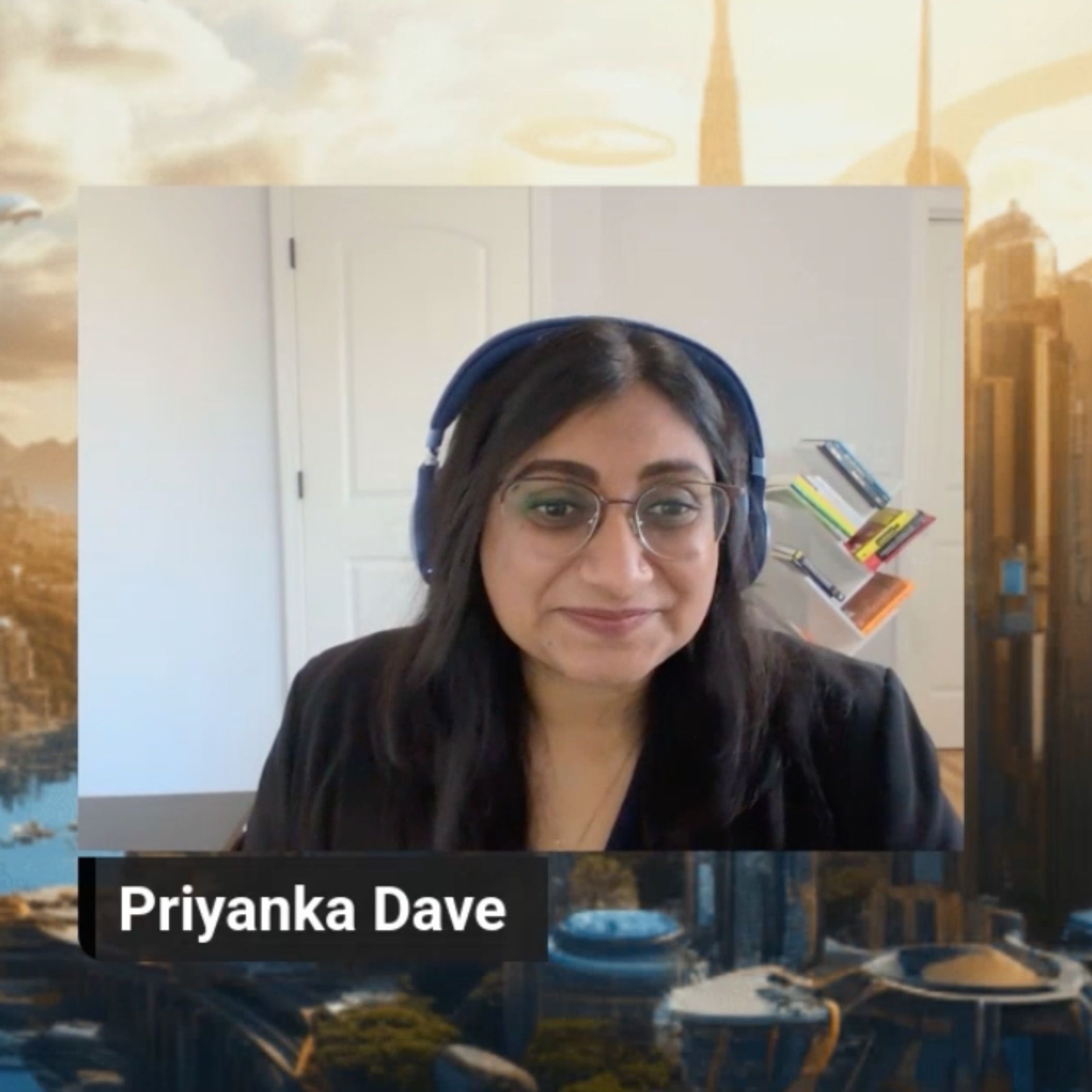
Your Team Is Already Using AI. They Just Won't Tell You. | Priyanka Dave, PhD | PODCAST EPISODE | An Analog Brain In A Digital Age With Marco Ciappelli
Description
PODCAST EPISODE | An Analog Brain In A Digital Age With Marco Ciappelli
Every organization has a policy on AI. Most of them are unwritten, unspoken, and enforced by silence. Priyanka Dave — behavioral scientist, dual PhD, and the person responsible for teaching an entire university system how to work with these tools — explains what actually happens inside a company that refuses to say the word out loud.
📺 Watch | 🎙️ Listen | marcociappelli.com
This conversation sat in my queue for months.
I recorded it back when the show still went by another name, filed it under soon, and then buried it under travel, deadlines, and the small avalanche of everything else. So: my apologies to Priyanka Dave, who deserved better timing. What I did before publishing was listen to the whole thing again, half expecting it to have gone stale — AI conversations have the shelf life of fresh milk — and it hadn't. Not one line. That is either a compliment to her or an indictment of the rest of us. Possibly both.
Here is what has held up.
Priyanka Dave is a behavioral scientist with two doctorates and the unglamorous job of teaching a large public institution how to actually use these tools. Her diagnosis is not about the technology. It is about what happens when nobody in charge will say anything about it. An organization that stays quiet on AI does not prevent its people from using AI. It only stops hearing about it. Employees keep working the way they were already working — with a chatbot open in the next tab — and they simply stop mentioning it. The tool doesn't go away. The conversation does.
I cover cybersecurity for a living, so I recognized this immediately. It's shadow IT with a better vocabulary. And shadow IT was never a technology failure — it was a communication failure that grew teeth. The same thing is happening now, except the data walking out the door isn't on a USB stick. It's being pasted into a text box by someone who was never told where the line is, because nobody in the building was willing to draw one.
The schools got there first, and got it wrong first. Ban it, some of them announced, and the students used it anyway — badly, secretly, without a shred of judgment about when the machine is confidently wrong. Prohibition didn't produce abstinence. It produced amateurs. It always does.
So Priyanka's answer is education, and here I pushed, because education has a recursion problem. If the leader is supposed to model good AI use, who taught the leader? I asked her: who educates the educator? Her answer was refreshingly unromantic. Nobody, mostly. Budgets get cut, leadership development is the first line item to go, and the executives left standing are quietly teaching themselves at night so they don't look foolish in the morning. The people expected to be the role models are improvising just like everyone else — they're only better dressed while doing it.
And this is where the real cost lands. She cited the research: people leave organizations that offer them nowhere to grow. Nobody wants to miss the train. If your company won't teach you the thing that everyone agrees is coming, you will go somewhere that will — and you will take your best years with you. The company that avoided the awkward conversation about AI doesn't just end up with a hidden problem. It ends up with a smaller team.
Her three tips for leaders are almost embarrassingly simple, which is how you know they're good. Ask your people what excites them about AI. Then ask what scares them. Then use the thing yourself, out loud, where everyone can see you double-check its work.
Which brings me to the word I've been chewing on since we hung up: sensemaking. Priyanka listed it among the capabilities leaders need. I called it common sense, and she let me get away with it. It means not pres