Episode Details
Back to Episodes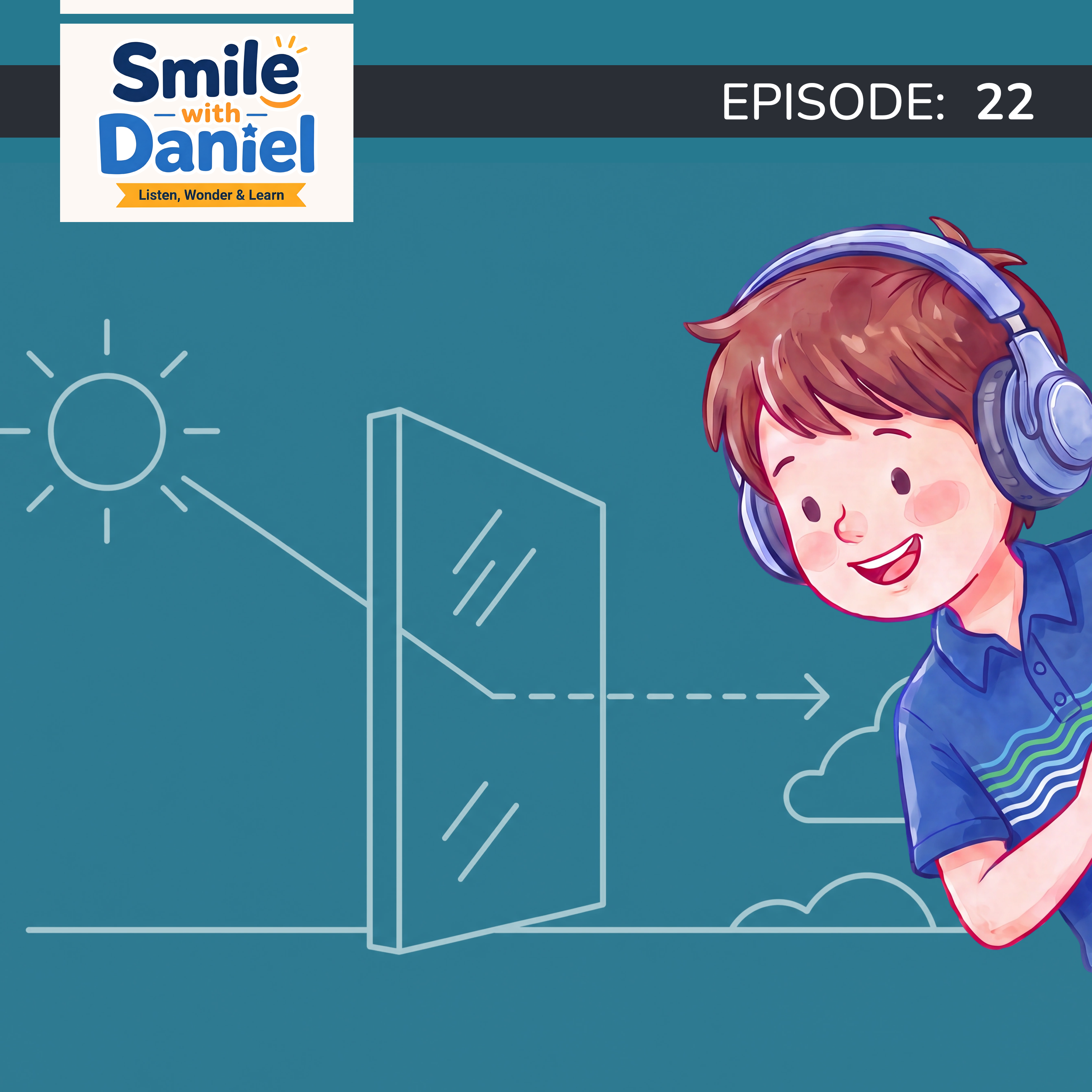
Why Is Glass Transparent?
Description
Daniel is tapping on a window and wondering why he can see straight through it.
The wall next to it is solid. The glass is solid. So why does one block light and the other doesn't?
His first guess is thickness. Thicker wall, less light gets through. Reasonable. Wrong.
You can have glass ten centimeters thick and see straight through it. You can have paper thinner than your fingernail that blocks light completely. Thickness has nothing to do with it. The answer goes all the way down to what's happening inside the material at the atomic level — and it comes down to one thing: whether the electrons can absorb the light.
Here's how it works. Light is made of tiny packets of energy called photons. When a photon hits a material, one of three things happens — it gets absorbed, it gets reflected, or it passes straight through. What determines which one? The electrons inside the atoms.
Electrons sit at specific energy levels — think of them like rows of seats in a stadium. To jump from a lower row to a higher one, an electron needs exactly the right amount of energy. When a photon arrives, it's offering that energy. If it's the right amount, the electron takes it, jumps up, and the photon disappears. The light gets absorbed.
In a wall, the electrons can absorb visible light photons easily. In glass, the energy gap between levels is so large that visible light photons don't carry enough energy to get an electron all the way up. So the electron ignores the photon. The photon keeps moving. Straight through.
Glass isn't passively letting light through. The light passes through because the electrons simply can't absorb it.
But then Daniel asks about stained glass — those red and blue and yellow windows in churches. And that leads to the part about how adding tiny amounts of different metals during manufacturing changes which photons get absorbed and which ones pass through. Different metals absorb different colors. The rest get through. Which photons the metal decides to eat, as Daniel puts it.
And then there's the twist. Glass isn't transparent to everything.
Ordinary window glass blocks most of the ultraviolet light that causes sunburn. UV photons carry more energy than visible light photons — enough for the electrons in glass to absorb them. So they do. Your window is, as Daniel realizes mid-episode, secretly a partial sunscreen.
What you'll find in this episode:
- Why thickness has nothing to do with transparency
- How electron energy levels determine whether light passes through or gets absorbed
- Why the wall eats light and glass can't
- How colored glass works — and which photons the metal decides to eat
- Why ordinary window glass blocks most UV light
- Daniel's closing line — worth staying for
Short, surprising, and the kind of episode that makes every window worth a second look.
Listen, wonder, and learn.
Find us @smilewithDaniel everywhere.