Episode Details
Back to Episodes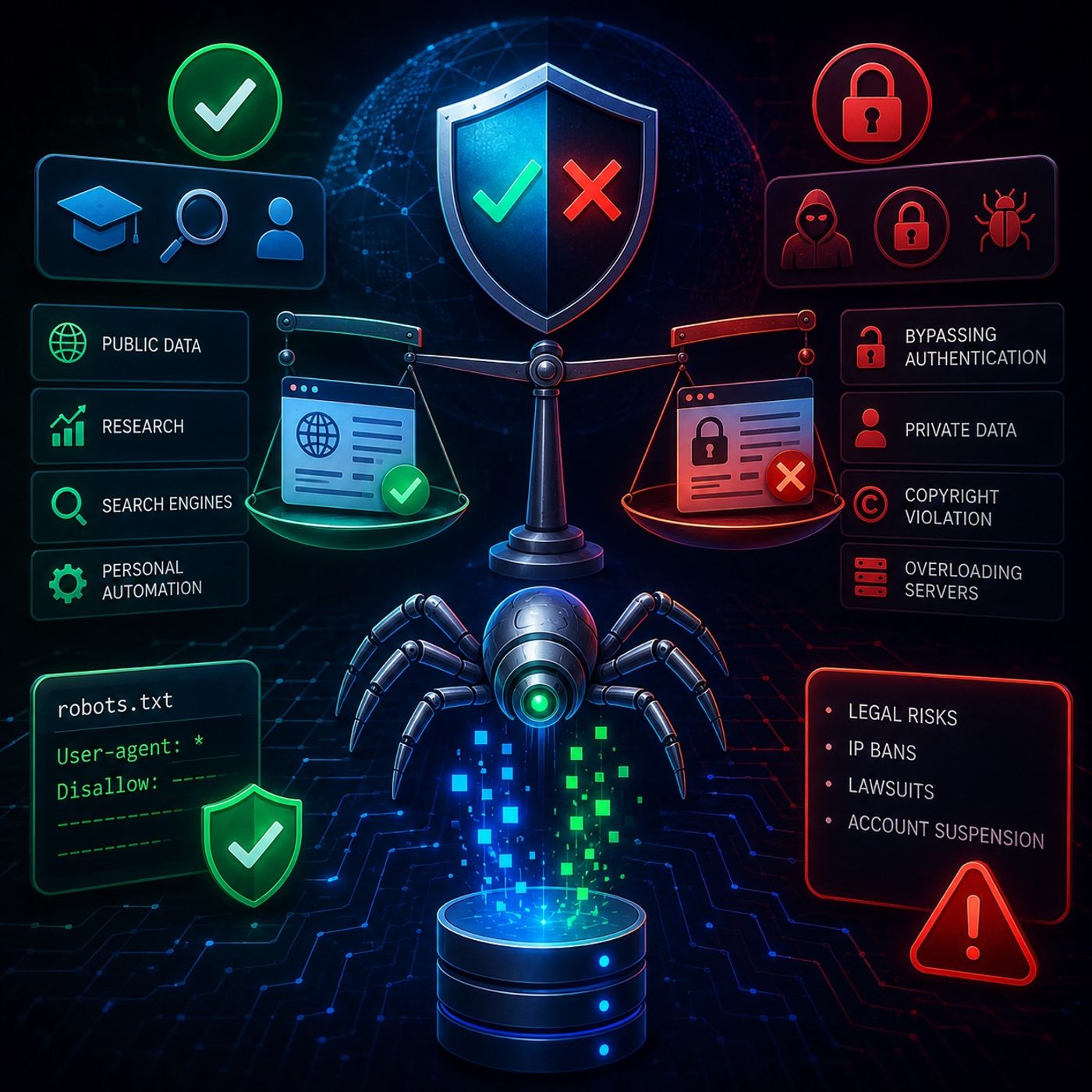
Course 40 - Web Scraping with Python | Episode 4: Ethics, Risks, and the hiQ Precedent
Published 1 month, 1 week ago
Description
In this lesson, you’ll learn about: the legality and ethics of web scraping, the difference between scraping and hacking, and how to stay safe while collecting data1. What is Web Scraping (Revisited)?🔹 Definition:
Web scraping is automated web browsing—using code to collect data just like a human would, but at scale👉 Key Insight
If a human can view and copy it, a script can usually extract it faster2. Ethical Use: “Good Bots” vs “Bad Bots”🔹 Ethical (Good Bot) Use Cases
Search engines rely on scraping to make websites discoverable🔹 Question to Ask Yourself
The line is clear:
Public access = generally safe
Unauthorized access = illegal4. Legal Risks You Should Understand🔹 Generally Safe
Need to bypass security → Not OK👉 Final Takeaway
The internet is becoming a data goldmine, but success in scraping depends on staying ethical, legal, and respectful of boundaries
You can listen and download our episodes for free on more than 10 different platforms:
https://linktr.ee/cybercode_academy
Web scraping is automated web browsing—using code to collect data just like a human would, but at scale👉 Key Insight
If a human can view and copy it, a script can usually extract it faster2. Ethical Use: “Good Bots” vs “Bad Bots”🔹 Ethical (Good Bot) Use Cases
- Academic research (e.g., studying bias or trends)
- Search engine indexing
- Personal automation projects
Search engines rely on scraping to make websites discoverable🔹 Question to Ask Yourself
- Am I harming the website?
- Am I violating user privacy?
- Am I redistributing someone else’s content unfairly?
- Accessing publicly available data
- No bypassing authentication
- No system exploitation
- Breaking into protected systems
- Bypassing login/authentication
- Exploiting vulnerabilities
The line is clear:
Public access = generally safe
Unauthorized access = illegal4. Legal Risks You Should Understand🔹 Generally Safe
- Scraping public pages
- Personal or educational use
- Ignoring Terms of Service
- Scraping behind login pages
- Republishing copyrighted data
- Overloading servers (DoS-like behavior)
- Lawsuits
- IP bans
- Account suspension
- HiQ scraped public LinkedIn profiles
- LinkedIn tried to block them
- Courts ruled scraping public data is not hacking
- Set a major precedent for scraping legality
- Tracking prices on marketplaces
- Hobby data collection
- Small-scale scripts
- Scraping large platforms like
- Amazon
- Strong legal teams
- Strict enforcement
- High financial stakes
- Respect robots.txt (when applicable)
- Avoid sending too many requests (rate limiting)
- Don’t scrape private or sensitive data
- Don’t bypass authentication systems
- Don’t republish copyrighted content
- A tool for innovation
- Not a shortcut for exploitation
Need to bypass security → Not OK👉 Final Takeaway
The internet is becoming a data goldmine, but success in scraping depends on staying ethical, legal, and respectful of boundaries
You can listen and download our episodes for free on more than 10 different platforms:
https://linktr.ee/cybercode_academy