Episode Details
Back to Episodes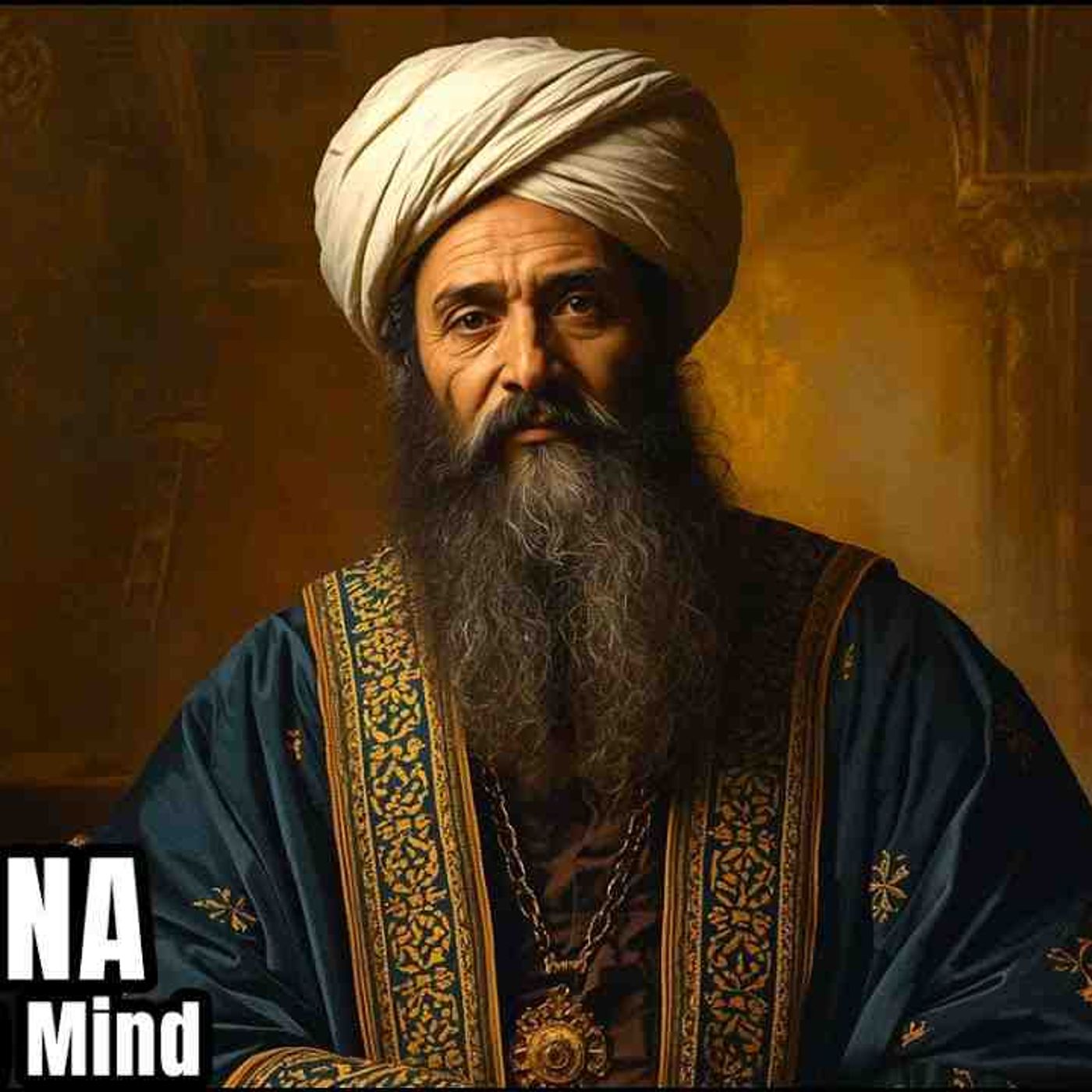
A Universe in a Single Mind The Legacy and Life of Ibn Sina
Season 1
Episode 2
Published 23 hours ago
Description
bn Sina, known in the West as Avicenna, was a Persian polymath born around 980 CE in Afshana near Bukhara, in the Samanid Empire. His life and legacy embody the pinnacle of the Islamic Golden Age, bridging philosophy, medicine, and science across cultures and centuries. From a young age, he displayed extraordinary intellect, memorizing the Quran by five and mastering logic, geometry, and languages by ten. Raised in a scholarly home influenced by Ismaili thought and Neoplatonism, he debated with tutors and soon outpaced them, becoming a self-taught prodigy. By 16, Ibn Sina turned to medicine, viewing it as a synthesis of observation, logic, and philosophy. He treated patients holistically, considering diet, environment, and emotions, and pioneered ideas like contagion via "minute creatures" during epidemics—foreshadowing germ theory. His fame grew when he cured the Samanid emir Nuh ibn Mansur, earning access to the royal library, a treasure of Greek, Persian, and Arab texts. There, he synthesized knowledge, envisioning a unified system of sciences. Political turmoil disrupted this idyll. The Samanid Empire fell to the Karakhanids in 999, forcing Ibn Sina into exile. He wandered Khorasan, serving courts in Jurjan, Rayy, Hamadan, and Isfahan, treating the elite while composing works. In Jurjan, he corresponded with Al-Biruni on physics and astronomy. Imprisoned in Hamadan for alleged heresy, he still produced treatises on logic and metaphysics from memory. In Isfahan under Ala al-Dawla, he found stability, dictating masterpieces to student Al-Juzjani. Despite health issues like abdominal pain and wartime displacements, his productivity soared. His philosophy emphasized reason's role in understanding a divinely ordered universe, with God as the "Necessary Existent" from which all emanates eternally—a view clashing with orthodox theology. His magnum opus, Al-Qanun fi'l-Tibb (The Canon of Medicine), is a five-book encyclopedia systematizing medical knowledge. Book One covers principles like anatomy and humors; Book Two details 800 drugs; Book Three addresses diseases head-to-toe, innovating pulse diagnosis; Book Four tackles systemic illnesses and hygiene; Book Five focuses on compound medicines. Empirical and critical of predecessors like Galen, it became Europe's medical bible for 600 years, translated into Latin and used in universities like Bologna. Equally profound is Kitab al-Shifa (The Book of Healing), a philosophical compendium on logic, sciences, math, and metaphysics. It posits the soul's immortality via the "Flying Man" experiment, proving self-awareness independent of the body. Criticized by Al-Ghazali in The Incoherence of the Philosophers for heresy (e.g., world's eternity), it influenced European scholastics like Aquinas, who adapted his proofs of God and soul doctrines. Avicenna's life was one of resilience amid chaos: exile, imprisonment, and debates with theologians. He saw knowledge as interconnected—medicine healing the body, philosophy the mind—reflecting cosmic harmony. Dying in 1037 CE in Hamadan from illness (possibly self-medicated overdose), his works endured, shaping Western medicine and philosophy. He authored over 200 texts, including poetry and astronomy, embodying the Renaissance ideal centuries early. His legacy: a mind mapping the universe's order through reason, transcending empires and faiths.