Episode Details
Back to Episodes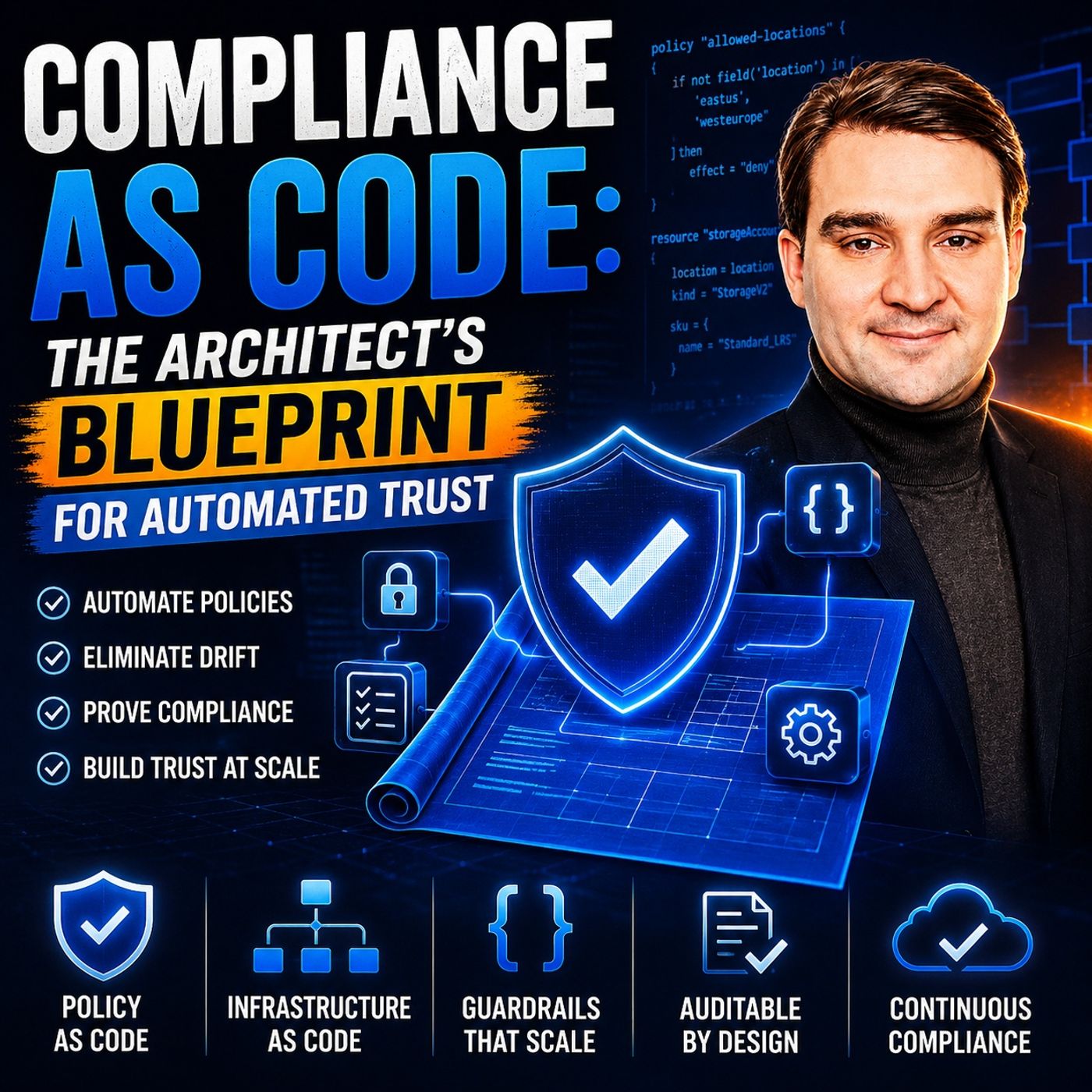
Compliance as Code: The Architect’s Blueprint for Automated Trust
Season 2
Published 4 weeks ago
Description
Compliance has traditionally been treated as documentation. Policies live in PDFs, access reviews sit in spreadsheets, and governance depends on people remembering to follow processes. But cloud environments evolve every minute, making manual compliance impossible to maintain at enterprise scale. In this episode of the M365 FM Podcast, host Mirko Peters explores why the future of governance isn't more paperwork—it's Compliance as Code. This episode provides a complete architectural blueprint for building automated trust across Microsoft Azure and Microsoft 365 using Azure Policy, RBAC, Microsoft Entra ID Governance, Privileged Identity Management (PIM), Managed Identities, Azure Key Vault, Microsoft Purview, Infrastructure as Code, and Zero Trust principles. Rather than slowing developers down with manual approval processes, you'll learn how modern cloud platforms embed governance directly into infrastructure, allowing organizations to move faster while improving security and auditability.
WHY MANUAL GOVERNANCE ALWAYS FAILS
Traditional governance simply cannot keep pace with cloud deployment velocity. Developers deploy infrastructure within minutes while governance processes often require days of manual approvals. This gap creates configuration drift, excessive permissions, shadow IT, and security risks that remain invisible until an audit or security incident exposes them. The episode explains why compliance documents don't create compliance—automated enforcement does. Topics include:
One of the most misunderstood concepts in Azure governance is the relationship between RBAC and Azure Policy. RBAC answers one question: "Who is allowed to perform an action?" Azure Policy answers a completely different question: "What resources are allowed to exist?" The episode explains why confusing these two technologies creates fragile governance models that appear secure but fail in production. You'll learn how authorization and compliance work together to create layered security rather than overlapping controls.
BUILDING THE GOVERNANCE STACK
Modern governance isn't a single tool—it's an integrated architecture. The discussion walks through the complete governance stack, combining identity management, authorization, policy enforcement, monitoring, and continuous compliance into one cohesive platform. Key technologies include:
MANAGED IDENTITIES, KEY VAULT & ZERO TRUST
One of the biggest security risks in modern cloud environments is long-lived credentials. The episode explores why Service Principals with client secrets are becoming obsolete and how Managed Identities eliminate entire categories of credential management problems. You'll discover how Azure Key Vault becomes the trust anchor for enterprise architectures by combining secret management, hardware-backed encryption, RBAC authorization, private endpoints, automated rotation, and policy enforcement. The discussion also explains why Zero Trust is no longer just a security framework—it is the operating model that governs every workload, identity, API, and deployment throughout the cloud platform.
POLICY AS CODE & CONTINUOUS COMPLIANCE
Compliance should never depend on someone logging into the Azure Portal. Inste
WHY MANUAL GOVERNANCE ALWAYS FAILS
Traditional governance simply cannot keep pace with cloud deployment velocity. Developers deploy infrastructure within minutes while governance processes often require days of manual approvals. This gap creates configuration drift, excessive permissions, shadow IT, and security risks that remain invisible until an audit or security incident exposes them. The episode explains why compliance documents don't create compliance—automated enforcement does. Topics include:
- Configuration drift
- Shadow IT
- Manual approvals
- Audit readiness
- Governance debt
- Cloud compliance
- Security posture
- Continuous validation
- Automation
- Infrastructure governance
One of the most misunderstood concepts in Azure governance is the relationship between RBAC and Azure Policy. RBAC answers one question: "Who is allowed to perform an action?" Azure Policy answers a completely different question: "What resources are allowed to exist?" The episode explains why confusing these two technologies creates fragile governance models that appear secure but fail in production. You'll learn how authorization and compliance work together to create layered security rather than overlapping controls.
BUILDING THE GOVERNANCE STACK
Modern governance isn't a single tool—it's an integrated architecture. The discussion walks through the complete governance stack, combining identity management, authorization, policy enforcement, monitoring, and continuous compliance into one cohesive platform. Key technologies include:
- Microsoft Entra ID Governance
- Azure RBAC
- Azure Policy
- Resource Locks
- Azure Monitor
- Log Analytics
- Management Groups
- Landing Zones
- Policy Initiatives
- Continuous Compliance
MANAGED IDENTITIES, KEY VAULT & ZERO TRUST
One of the biggest security risks in modern cloud environments is long-lived credentials. The episode explores why Service Principals with client secrets are becoming obsolete and how Managed Identities eliminate entire categories of credential management problems. You'll discover how Azure Key Vault becomes the trust anchor for enterprise architectures by combining secret management, hardware-backed encryption, RBAC authorization, private endpoints, automated rotation, and policy enforcement. The discussion also explains why Zero Trust is no longer just a security framework—it is the operating model that governs every workload, identity, API, and deployment throughout the cloud platform.
POLICY AS CODE & CONTINUOUS COMPLIANCE
Compliance should never depend on someone logging into the Azure Portal. Inste