Episode Details
Back to Episodes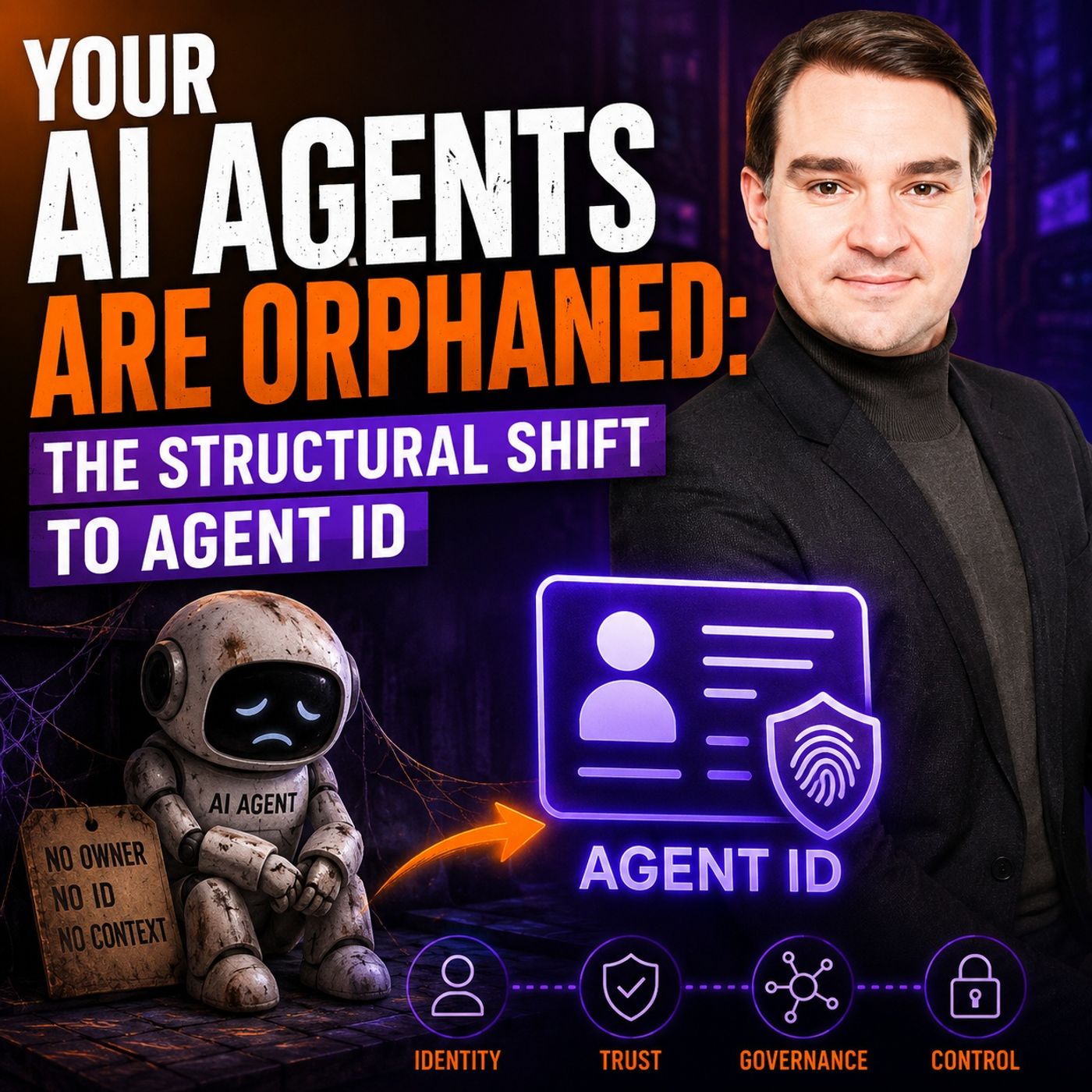
Your AI Agents Are Orphaned: The Structural Shift to Agent ID
Season 2
Published 4 weeks, 1 day ago
Description
Artificial intelligence is changing enterprise identity faster than most organizations realize. Every week, new AI agents are being deployed across Microsoft 365 tenants, accessing SharePoint, Microsoft Graph, Teams, Exchange, and business applications. Yet in many organizations, nobody can confidently answer one simple question: Who actually owns these agents? In this episode, we explore why traditional Service Principals were never designed for autonomous AI systems and why Microsoft introduced Entra Agent ID as an entirely new identity model. You'll learn how AI governance is shifting from application management toward identity-first governance, where every agent becomes a managed digital worker with accountability, lifecycle management, and built-in security.
WHY AI AGENTS HAVE BECOME A GOVERNANCE CHALLENGE
Many organizations already have AI agents running inside their Microsoft 365 environment without realizing how difficult they are to govern. Copilot Studio bots, automation workflows, custom Graph applications, and AI assistants often appear organically across departments. Projects finish, developers change roles, but the identities remain active, continuing to access corporate resources without a clearly defined owner. This creates a growing population of orphaned non-human identities. Traditional governance processes were designed around employees and applications—not autonomous systems capable of making decisions, calling tools, and accessing sensitive enterprise data. As organizations move toward thousands of AI agents, this architectural mismatch becomes increasingly difficult to manage.
WHY SERVICE PRINCIPALS NO LONGER SCALE
The episode explains why Service Principals struggle to support modern AI workloads. They were originally designed for long-lived backend applications with predictable behavior, not dynamic AI agents that may exist for only minutes, collaborate with other agents, or require unique permissions for individual tasks. These limitations create several operational problems:
MICROSOFT ENTRA AGENT ID
Microsoft's response is Agent ID, a new identity type built specifically for autonomous AI systems. Rather than hiding agents behind application registrations, each AI agent becomes a first-class identity inside Microsoft Entra ID with its own lifecycle, audit trail, sponsorship, and governance controls. A major innovation is the concept of Blueprints. Instead of creating hundreds of individual identities manually, administrators define reusable templates that centrally manage authentication, permissions, and governance. Every AI agent inherits these controls while remaining individually traceable throughout its lifecycle.
GOVERNANCE BECOMES PART OF THE ARCHITECTURE
One of the most important ideas discussed in the episode is that governance should no longer depend on documentation or manual processes. Instead, governance becomes an architectural capability built directly into the identity platform. Sponsors, access reviews, lifecycle policies, Conditional Access, audit logging, and permission inheritance all become native characteristics of the identity itself rather than separate administrative tasks. This shift dramatically reduces orphaned identities while creating a complete chain of accountability from every AI action back to an identifiable human sponsor.
SECURITY, COMPLIANCE AND DATA PROTECTION
AI agents increasingly operate across SharePoint, Teams, Exchange, OneDrive and line-of-business applications, making identity governance inseparable from data governance. Th
WHY AI AGENTS HAVE BECOME A GOVERNANCE CHALLENGE
Many organizations already have AI agents running inside their Microsoft 365 environment without realizing how difficult they are to govern. Copilot Studio bots, automation workflows, custom Graph applications, and AI assistants often appear organically across departments. Projects finish, developers change roles, but the identities remain active, continuing to access corporate resources without a clearly defined owner. This creates a growing population of orphaned non-human identities. Traditional governance processes were designed around employees and applications—not autonomous systems capable of making decisions, calling tools, and accessing sensitive enterprise data. As organizations move toward thousands of AI agents, this architectural mismatch becomes increasingly difficult to manage.
WHY SERVICE PRINCIPALS NO LONGER SCALE
The episode explains why Service Principals struggle to support modern AI workloads. They were originally designed for long-lived backend applications with predictable behavior, not dynamic AI agents that may exist for only minutes, collaborate with other agents, or require unique permissions for individual tasks. These limitations create several operational problems:
- Credential sprawl across thousands of agents
- Limited auditability
- Shared identities that reduce visibility
- No built-in ownership model
- Difficult lifecycle management
MICROSOFT ENTRA AGENT ID
Microsoft's response is Agent ID, a new identity type built specifically for autonomous AI systems. Rather than hiding agents behind application registrations, each AI agent becomes a first-class identity inside Microsoft Entra ID with its own lifecycle, audit trail, sponsorship, and governance controls. A major innovation is the concept of Blueprints. Instead of creating hundreds of individual identities manually, administrators define reusable templates that centrally manage authentication, permissions, and governance. Every AI agent inherits these controls while remaining individually traceable throughout its lifecycle.
GOVERNANCE BECOMES PART OF THE ARCHITECTURE
One of the most important ideas discussed in the episode is that governance should no longer depend on documentation or manual processes. Instead, governance becomes an architectural capability built directly into the identity platform. Sponsors, access reviews, lifecycle policies, Conditional Access, audit logging, and permission inheritance all become native characteristics of the identity itself rather than separate administrative tasks. This shift dramatically reduces orphaned identities while creating a complete chain of accountability from every AI action back to an identifiable human sponsor.
SECURITY, COMPLIANCE AND DATA PROTECTION
AI agents increasingly operate across SharePoint, Teams, Exchange, OneDrive and line-of-business applications, making identity governance inseparable from data governance. Th