Episode Details
Back to Episodes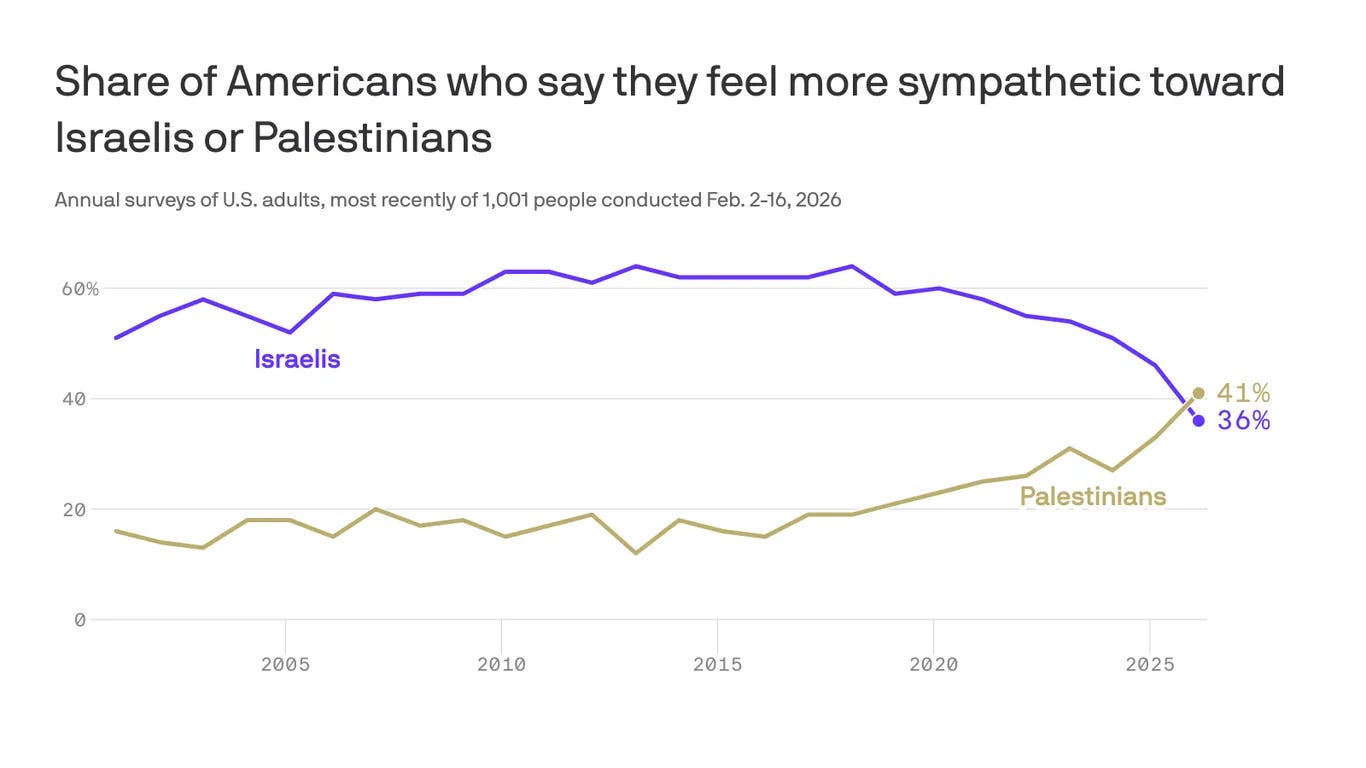
Support For Islam Goes Up After Terror Attacks (More Among Rep then Dems!?)
Description
In this episode of Based Camp, Simone and Malcolm Collins dive into one of the strangest social phenomena of our time: why does public sympathy for aggressors often increase after horrific attacks? From 9/11 to Charlie Hebdo to October 7th, they examine the shocking data showing spikes in pro-Muslim and pro-Palestine sentiment right after major acts of violence.
Simone lays out her theory: the concept of “victim blaming” was originally created to address real systemic injustices but was hijacked and weaponized in the 2010s by feminist movements (SlutWalks, MeToo, “Believe All Women”). What began as a tool against unfair bias became a reflexive shield that makes it taboo to assign any responsibility to victims — even when they are the aggressors. They also discuss the rise of external locus of control, cultural shifts on the right, demographic realities, and how women helped turn “victim blaming” into a societal mind virus.
Show Notes
WHY
* Did muslim sentiment in the USA improve after 9/11
* Did muslim sentiment in France improve after Charlie Hebdo’s offices were subject to a terror attack?
* Did pro-Palestine sentiment spike after the October 7th attacks on Israel?
It may come down to a concept that was created to address unfair bias against people who were genuinely screwed over by societal forces but ultimately co-opted and ruined by… women.
So let’s discuss how women appropriated and ruined the concept of victim blaming.
The Mystery of Victim Blaming
Since when did victims become beyond reproach?
Our immediate hunch is that this happened because the urban monoculture elevates victims and holds victims to be blameless, but WHY WOULD SOMEONE DO THAT?
We checked Google ngram viewer for “victim blaming” and were kind of shocked:
* The term “victim blaming” only emerges around 1970
* From 1970 to 2010 Victim blaming shows modest linear growth
* And after 2010 its trajectory changes into exponential growth, which only after 2020 started showing signs of a shift to mere exponential growth
Google Trends shows similar results (the term would only spike with incidents, then go back to zero, before 2010).
To add to this: @NotAldousHuxley had observed that pro-muslim sentiment spiked after 9/11 and anti-Israel sentiment spiked after the October 7th attack Palestinean attack on Israel
This suggests some sort of pathological favoritism toward whoever might be seen as a potential victim, but I found this hard to believe so I double checked:
Victim Blaming Ideology in Action
Pro-Muslim Sentiment
What’s
Pew research found that pro-Muslim sentiment rose in the US after 9/11 and in France in 2015 after the attack on Charlie Hebdo’s offices (the publication that published an illustration of the prophet Muhammad).
From their article: “A new Pew Research Center survey finds that 76% in France say they have a favorable view of Muslims living in their country, similar to the 72% registered in 2014. Meanwhile, the percentage with a very favorable opinion of Muslims has increased significantly, rising from 14% last year to 25% today. Attitudes toward Muslims tend to be more positive on the political left in France, but ratings improved across the ideological spectrum.
The pattern is similar to what we found in the U.S. following the Sept. 11 terrorist attacks. Favorable views of Muslim Americans rose from 45% in March 2001 to 59% in November of that year. The increase took place across partisan and ideological groups, with the biggest improvement occurring among conservative Republicans.”
Pro-Palestine Sentiment
After the October 7th attacks, G