Episode Details
Back to Episodes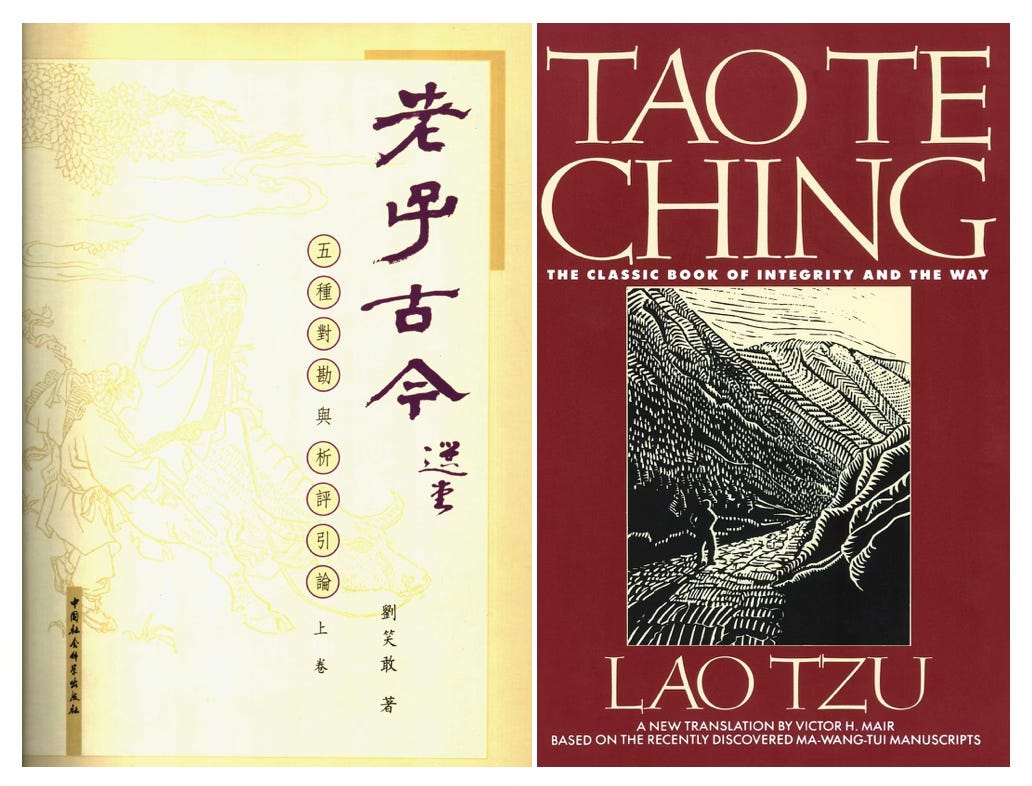
Bao Pu | China and the West: Heading towards different modernities?
Description
The original article is in English. The Chinese translation is provided below.
China and the West: Heading towards different modernities?
By Bao Pu
Reviewed:
1. Tao Te Ching: The Classic Book of Integrity and The Way, by Victor H. Mair 梅維恆; Bantam Books
2. Laozi Ancient and Modern《老子古今 五種對勘與析評引論》, by Liu Xiaogan 劉笑敢; China Social Sciences Press中國社會科學出版社
NOTE: “Dao De Jing”, “Tao Te Ching” and “Laozi” all refer to the same thing: 道德經the Chinese ancient text by Laozi老子. “Tao” and “Dao” are different transliterations of the same concept.
Two respected scholars of the ancient Chinese classic Dao De Jing were born within four years of each other and died within two days of each other in the last week June 2026. One was American, the other Chinese. Victor Henry Mair 梅維恆, an American Sinologist and professor of Chinese at the University of Pennsylvania, was born in 1943 and died on June 28. Liu Xiaogan 劉笑敢, a professor of Daoist philosophy at Beijing Normal University, was born in 1947 and died on June 30. Each had made significant breakthroughs within his intellectual tradition, and each was well known within their scholarly communities.
The quiet public reactions to their deaths in both countries is a reflection of the broader public’s limited awareness of their specialized fields. Yet this relative silence points to a precarious condition shared by their respective countries: while the threat of a catastrophic and world-changing armed conflict between them looms, cultural and civilizational exchange takes place largely in obscurity.
The apparent similarity in the final moments of their careers disguises a deeper and increasingly urgent problem, one that has become a major source of international anxiety. The idea of “multiple modernities,” proposed with renewed force at the turn of the twenty-first century[1] , does appear to describe a real emerging condition. Contemporary China is increasingly showing signs that its idea of “modernity” differs profoundly from that of the West. As scholars of the same generation, Mair and Liu offer a revealing illustration of how “modernization” could progress along separate intellectual paths, even when those paths overlapped around the same ancient text.
The point of convergence in their scholarly lives may be traced back to 1972. That year, President Richard Nixon visited the People’s Republic of China and met Mao Zedong, marking the beginning of Sino-American rapprochement in the midst of the Cold War. In the United States, a New Age rendition of the Tao Te Ching appeared on the Christmas gift list of Time Magazine, signaling the ancient Chinese text’s emergence as a durable element of Western popular spirituality. In China that same year, archaeologists opened the Mawangdui tombs, which belonged to an aristocratic family of the early Western Han Dynasty (206 BCE–9 CE). As the excavation continued over the following months, Tomb No. 3 was found to contain two silk manuscripts of the Dao De Jing, the Mawangdui silk manuscripts known as Manuscript A and Manuscript B(帛書版道德經 甲本 乙本)dating to approximately 168 BCE. These manuscripts were at least five centuries older than the commonly transmitted versions of the text.
In 1972, neither Mair nor Liu’s intellectual path had taken definitive shape. The photographic plates of the two restored silk manuscripts, together with full textual transcriptions, were first made available to scholars and the wider public in monographic form in 1976. At the time, Mair was pursuing Chinese studies at Harvard and completed his Ph.D. that year. Liu’s scholarly path was delayed more profoundly by historical circumstance. Being a native Chinese scholar in the latter half of the twentieth century did not necessarily bring him closer to the ancient Chinese text. On the contrary, Liu received