Episode Details
Back to Episodes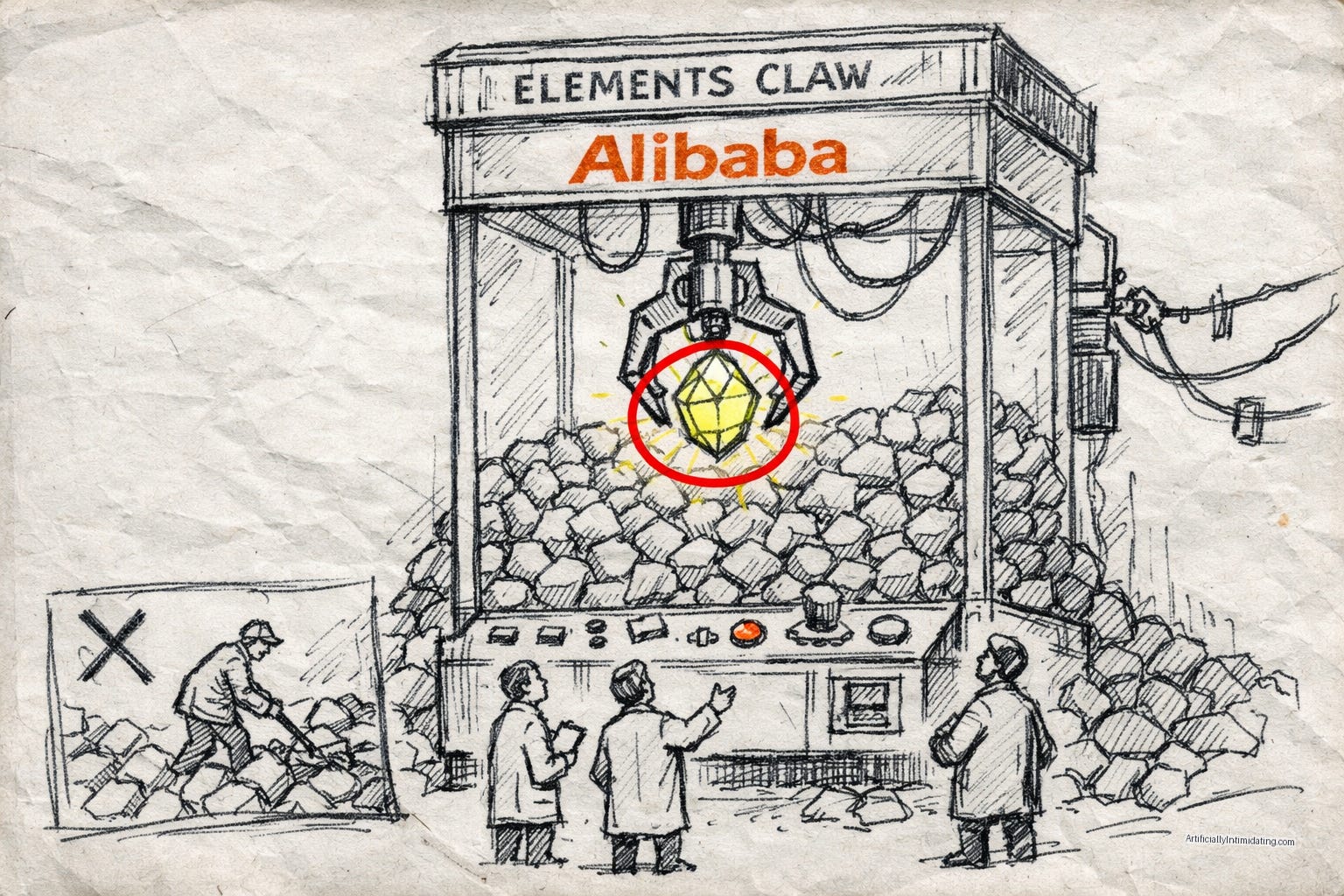
Alibaba's Claw Machine Just Grabbed Four New Superconductors -- AI Brief July 4
Description
Good day, humans. While America argues over grill technique, Alibaba's AI agent quietly discovered four new superconductors — real ones, verified in real labs. Also in today's Context Window: Hollywood ships its most AI-made movie ever while suing over the same technology, and Peter Thiel calls the Pope a communist. The 250th-birthday fireworks are, for once, not the wildest thing happening.
The Claw Machine That Does Science
Source: SCMP
What happened: Alibaba's research arm, DAMO Academy, unveiled Elements Claw — billed as the first AI agent built to hunt superconductors, the materials that carry electricity with zero energy loss. It screened 2.4 million crystal structures in just 28 GPU-hours, flagged 68,000 candidates, and four brand-new compounds were then synthesized and verified in physical labs.
Why it matters: Superconductors power MRI machines, quantum computers, and maglev trains, and finding a new one has historically taken decades of trial and error. The same week, the international SuperC consortium announced two more superconductors found via machine learning. AI-driven materials science just went from party trick to production line.
What everyone's saying: DAMO's researchers call these "the first superconducting materials discovered by an AI agent and validated experimentally," and the full database has been open-sourced for academics. The discourse: AI agents are graduating from booking your flights to doing your postdoc.
My read between the lines: One of the four "discoveries" was a compound whose crystal structure had simply been misrecorded in a database — so part of AI's scientific genius is cleaning up humanity's filing errors. And note that Alibaba was last in this newsletter accused of copying Claude's brain; discovering physics is a much better look. The claw, it turns out, was rigged all along — in science's favor.
📖 Further reading: Claude Tag vs Viktor: which one do you hire? — because AI agents doing actual jobs, postdoc or coworker, is no longer hypothetical.
An AI agent just spent 28 GPU-hours discovering superconductors. Yours could spend tonight building your Q3 report. Viktor is an AI agent that lives in Slack, connects to 3,000+ tools, and delivers finished work — reports, dashboards, code, campaigns — while you're off the clock. Not a chatbot; a coworker. New readers get $50 off their first month. Hire Viktor →
Agents Learn on the Job — Predictably
Source: ByteDance Seed (GitHub)
What happened: ByteDance's Seed research team released EdgeBench, a benchmark of 134 marathon tasks — 12 to 72+ hours each, spanning science, systems engineering, formal math, and games — that measures whether an AI agent gets better while it works. After nearly 38,000 logged hours of agent runs, they found improvement follows a log-sigmoid curve with an R² of 0.998 — an almost perfect fit.
Why it matters: Most benchmarks test what a model knows on day one; this one tests whether it improves like an employee. Expert humans averaged 57.2 hours per task, with the hardest demanding 320. And per the team's paper, frontier agents' learning speed has been doubling roughly eve