Episode Details
Back to Episodes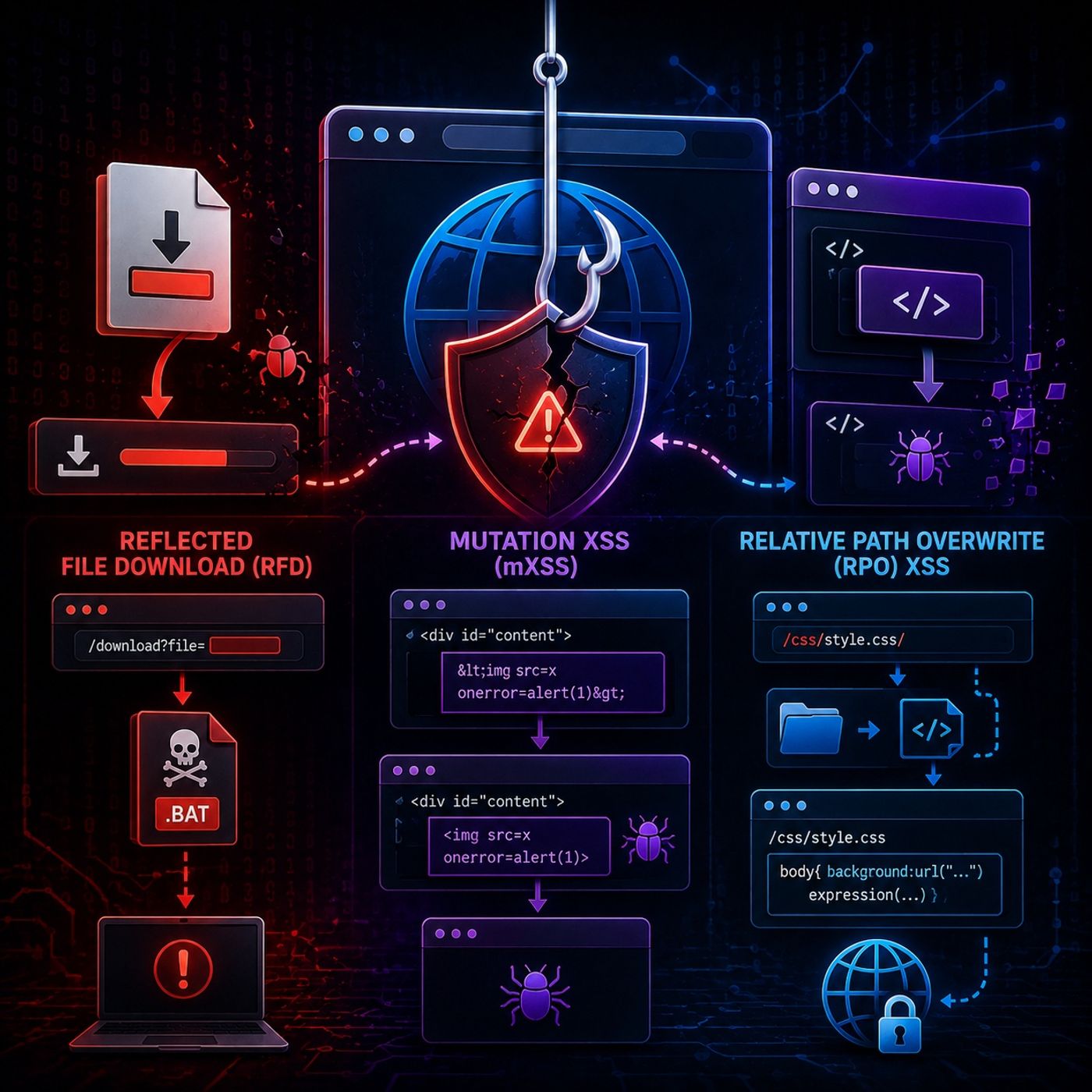
Course 38 - Web Security Known Web Attacks | Episode 3: RFD, Mutation XSS, and RPO
Published 1 month, 3 weeks ago
Description
In this lesson, you’ll learn about: Reflected File Download (RFD), Mutation XSS (mXSS), and Relative Path Overwrite (RPO) XSS1. Reflected File Download (RFD)🔹 Definition:
The attack relies more on social engineering than pure technical exploitation2. Why RFD is Dangerous🔹 Core risk:
Trust in the source (domain) is what makes this attack effective3. Advanced RFD Scenario🔹 More dangerous variant:
RFD can act as an entry point for deeper compromise4. Mutation XSS (mXSS)🔹 Definition:
The payload is not dangerous initially—it becomes dangerous after parsing5. How mXSS HappensUsing JavaScript:🔹 Scenario:
Security filters can fail due to DOM re-parsing behavior6. Why mXSS Is Tricky🔹 Challenges:
mXSS exploits differences between sanitization and rendering7. Relative Path Overwrite (RPO) XSS🔹 Definition:
Path confusion can lead to unexpected code execution contexts8. How RPO Works (Conceptually)🔹 Attack flow:
Small URL changes can completely alter resource loading behavior9. CSS-Based Execution (Legacy Behavior)🔹 In older browsers:
RPO relies heavily on legacy browser features10. Common Theme Across All Attacks🔹 These vulnerabilities exploit:
The browser itself becomes part of the attack surface11. Why These Attacks Still Matter🔹 Even if partially outdated:
Old vulnerabilities often evolve into new exploitation techniques12. Prevention Strategies🔹 General defenses:
- A vulnerability where user input is reflected into a response that the browser treats as a downloadable file
- Attacker crafts a URL
- Server reflects input into response
- Browser downloads it as a file (e.g., .bat, .cmd)
The attack relies more on social engineering than pure technical exploitation2. Why RFD is Dangerous🔹 Core risk:
- User executes a malicious file thinking it’s legitimate
- File appears trusted (same domain)
- Filename can be manipulated
- Content may contain system commands
Trust in the source (domain) is what makes this attack effective3. Advanced RFD Scenario🔹 More dangerous variant:
- Malicious script modifies browser behavior
- Weakens browser protections
- Enables further data access
RFD can act as an entry point for deeper compromise4. Mutation XSS (mXSS)🔹 Definition:
- A type of XSS where safe input becomes dangerous after browser processing
- Browser mutates (transforms) HTML internally
The payload is not dangerous initially—it becomes dangerous after parsing5. How mXSS HappensUsing JavaScript:🔹 Scenario:
- Application inserts sanitized input into DOM
- Browser reinterprets it via innerHTML
- Encoded content becomes executable
Security filters can fail due to DOM re-parsing behavior6. Why mXSS Is Tricky🔹 Challenges:
- Payload looks harmless
- Bypasses traditional filters
- Depends on browser quirks
mXSS exploits differences between sanitization and rendering7. Relative Path Overwrite (RPO) XSS🔹 Definition:
- Exploits how browsers resolve relative paths
- Trick browser into loading wrong resource (e.g., HTML as CSS)
Path confusion can lead to unexpected code execution contexts8. How RPO Works (Conceptually)🔹 Attack flow:
- Modify URL structure (e.g., add /)
- Break relative path resolution
- Force browser to load unintended resource
Small URL changes can completely alter resource loading behavior9. CSS-Based Execution (Legacy Behavior)🔹 In older browsers:
- CSS supported dynamic expressions
- Injected content could execute scripts through CSS parsing
RPO relies heavily on legacy browser features10. Common Theme Across All Attacks🔹 These vulnerabilities exploit:
- Browser parsing logic
- Trust assumptions
- Inconsistent handling of content
The browser itself becomes part of the attack surface11. Why These Attacks Still Matter🔹 Even if partially outdated:
- Legacy systems still exist
- Misconfigurations can reintroduce risk
- Techniques inspire modern attack methods
Old vulnerabilities often evolve into new exploitation techniques12. Prevention Strategies🔹 General defenses:
- Strict input validation and output encoding
- Avoid reflecting raw user input
- Use absolute paths instead of relative ones
- Set c