Episode Details
Back to Episodes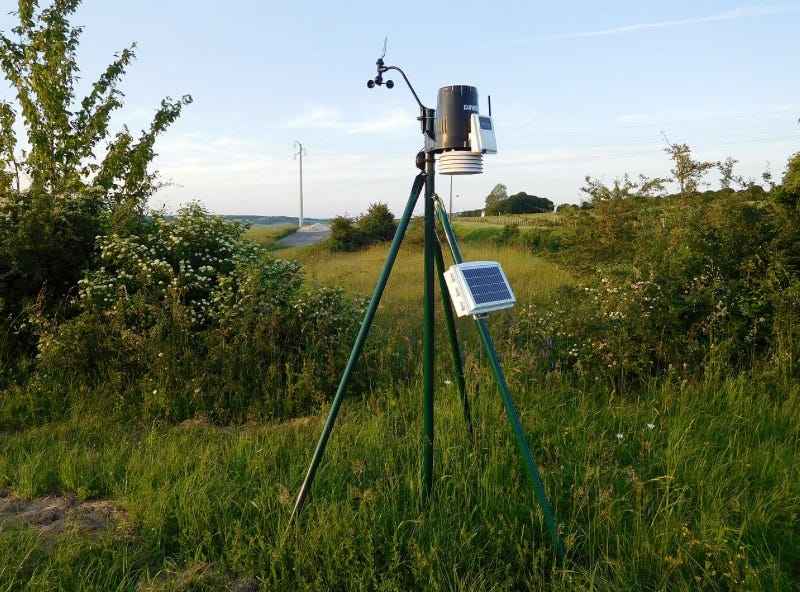
Home Weather Station Setup for Gardeners
Description
Today’s newsletter podcast is a special treat for readers and listeners of the Beyond the Garden Basics newsletter/podcast who might also be weather nerds…and what gardener isn’t? It’s an interview with climate scientist Daniel Swain, who, besides being a University of California Ag and Natural Resources employee at the California Institute for Water Resources, is well known on social media. Swain runs the Weather West website as well as his frequent presentations talking about extreme weather conditions in California and the west on YouTube, Bluesky, and other social media outlets.
The interview focuses on how gardeners can measure weather conditions more accurately in their own yards. We discuss the limits of simple thermometers and the value of weather stations that measure temperature, humidity, wind, rainfall, soil temperature, and other variables, emphasizing that equipment placement is important for getting readings that reflect actual garden conditions.
Swain explains that temperature measurements depend heavily on location. A thermometer in direct sun, near asphalt, dirt, or a house wall can read much hotter or colder than the standard shade temperature used by weather services. He says the official comparison temperature is usually taken about two meters (78 inches) above the ground, in shade, and that exposed thermometers can produce misleading highs and lows.
The conversation then turns to frost protection in gardens and orchards. Swain says the relevant temperature depends on the plant and its height, because vertical microclimates can differ significantly within a few feet. He explains that cold air can settle near the ground, while higher air may be warmer, and that this matters for citrus, vineyards, tomatoes, and fruit trees. He also notes that irrigation and soil moisture can change daytime and nighttime temperatures.
Discussing wind measurement, Swain says rooftop-mounted wind sensors often do not measure ambient wind well because the house creates turbulence and eddies. He explains that spinning-cup anemometers are vulnerable to dirt, rust, and wear, while sonic anemometers have fewer moving parts and can be more reliable. For wind, he recommends placing sensors away from tall obstacles and in open areas.
Among the main points in the podcast:
* Don’t rely on a thermometer mounted outside your kitchen window; it won’t reflect real conditions in your garden or orchard, which can differ by 6–8°F or more.
* Test any temperature sensor in several yard locations before committing to a permanent spot; look for where it runs coldest and where it gets the most sun.
* Keep thermometers out of direct sunlight and off dark, heat-absorbing surfaces (asphalt, concrete, bare dirt). These cause false highs by day and false lows at night.
* For frost/freeze protection on citrus, hang the sensor at the height you’re actually trying to protect (e.g., ~2 feet, in the canopy shade), not high on a wall or pole.
* Remember that a few feet of vertical height can matter more than many feet of horizontal distance, since cold air pools near the ground at night (temperature inversion).
* If protecting a ground crop vs. a citrus tree, measure separately near the canopy top and under the canopy. Conditions differ significantly.
* Use inexpensive multi-sensor stations (one indoor display, several remote probes) to monitor several yard zones at once rather than a single point.
* Consider planting on gentle slopes or hillsides when possible. Cold air drains downhill, giving lower spots more frost risk and slopes a degree or two of protection.
* Irrigated soil and plant tissue hold heat longer than