Episode Details
Back to Episodes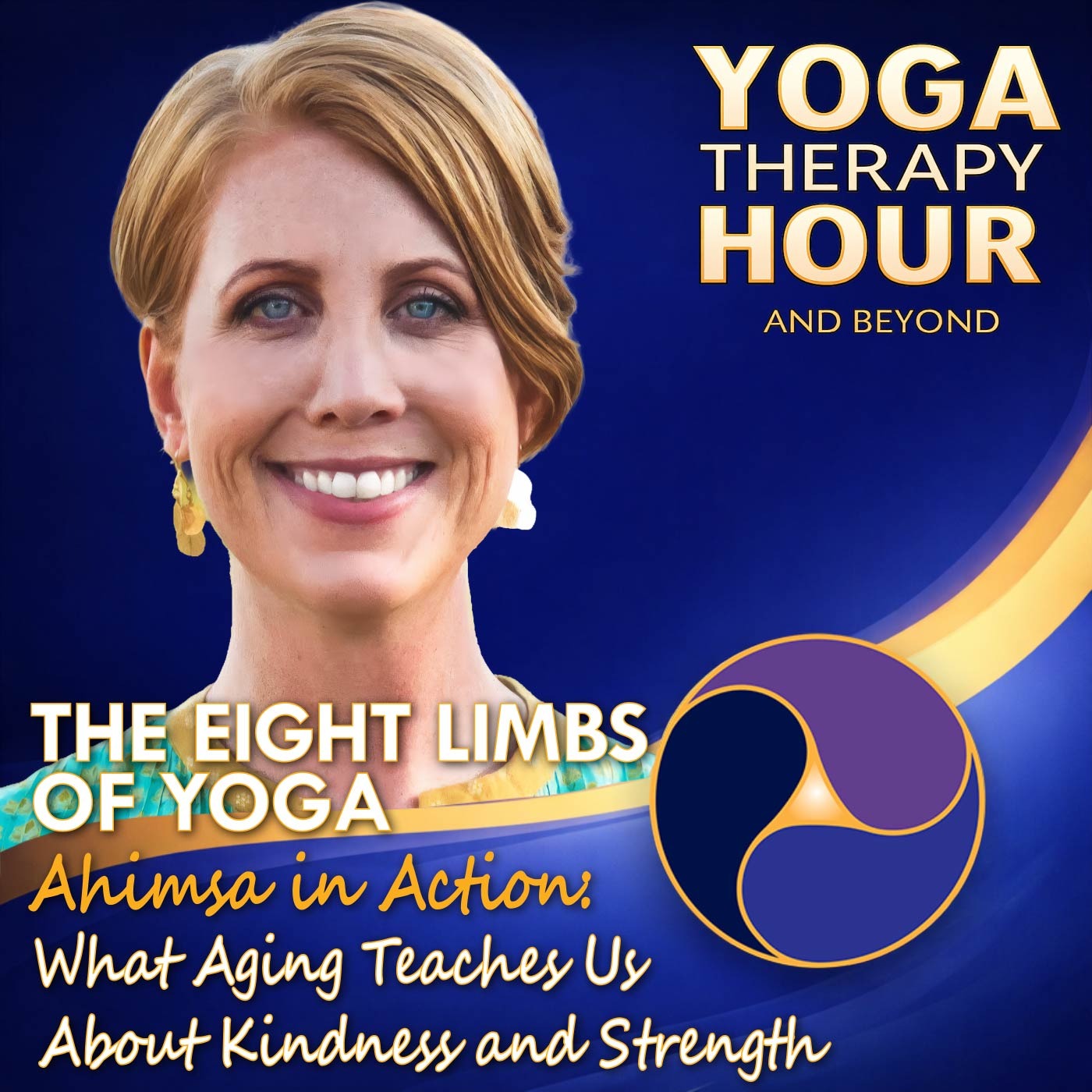
Ahimsa in Action: What Aging Teaches Us About Kindness and Strength
Description
Episode Overview
In this conversation, Amy Wheeler sits down with yoga therapist and educator Ashley McKeachie to explore the lived experience of ahimsa—non-harming—as it unfolds in real time with aging bodies and evolving nervous systems.
Ashley shares how her work with older adults (ages 55–95+) has reshaped her understanding of yoga therapy, shifting from performance and outcomes toward presence, pacing, and relational care. What emerges is a grounded and practical view of yoga as a system that supports resilience, dignity, and connection across the lifespan.
This episode offers a clear lens into how yoga philosophy becomes actionable—not as theory, but as daily practice.
About Ashley McKeachie
Ashley McKeachie is a yoga therapist, educator, and department chair at Saddleback College’s Emeritus Institute in Southern California. She teaches large-scale classes in yoga, balance, mobility, and wellness for older adults, integrating yoga therapy, breathwork, and philosophy into accessible, community-based education.
Her work centers on helping individuals build confidence, regulate their nervous systems, and maintain independence through thoughtful, adaptable practices.
Key Themes in This Episode
Ahimsa as a Lived Practice
Ahimsa moves beyond the idea of “non-violence” and becomes a daily inquiry:
- How am I treating myself right now?
- Am I pushing, or am I listening?
- Is this choice supporting stability or creating strain?
For Ashley’s students, ahimsa often begins with self-permission—to slow down, to rest, and to shift lifelong patterns of over-effort.
Aging and the Nervous System
Working with a population ranging from their 50s to mid-90s, Ashley highlights:
- The persistence of “push through” mentalities
- The challenge of changing patterns that have “worked” for decades
- The opportunity to reintroduce softness, pacing, and awareness
Rather than decline, she often observes:
- Increased strength and balance
- Improved confidence and posture
- Greater emotional regulation and clarity
Breath as a Foundational Tool
One of the most consistent takeaways from her students:
“You’ve taught me how to breathe.”
Breath becomes:
- A tool for managing medical procedures and stress
- A way to regulate the nervous system in real time
- A lifelong skill that extends far beyond the classroom
The Role of Sangha (Community)
Ashley emphasizes that community is not secondary—it is essential.
In her classes:
- Students learn each other’s names
- Group work is intentionally structured
- Social connection is actively facilitated
For many older adults facing isolation, this becomes a primary source of:
- Belonging
- Emotional support
- Continued engagement with life
Slowing Down as a Therapeutic Strategy
Ashley’s teaching approach prioritizes:
- Slow pacing
- Choice and autonomy
- Exploration rather than performance
This creates:
- A sense of safety
- Reduced fear of movement
- Increased willingness to participate
A Dream Unplanned
Ashley reflects on her professional path—from training younger yoga students to working with older adults—and describes her current role as:
“A dream I didn’t even know I had.”
Her experience highlights an important thread:
- Direction matters
- Effort matters
- And there are moments where something larger organizes the path forward