Episode Details
Back to Episodes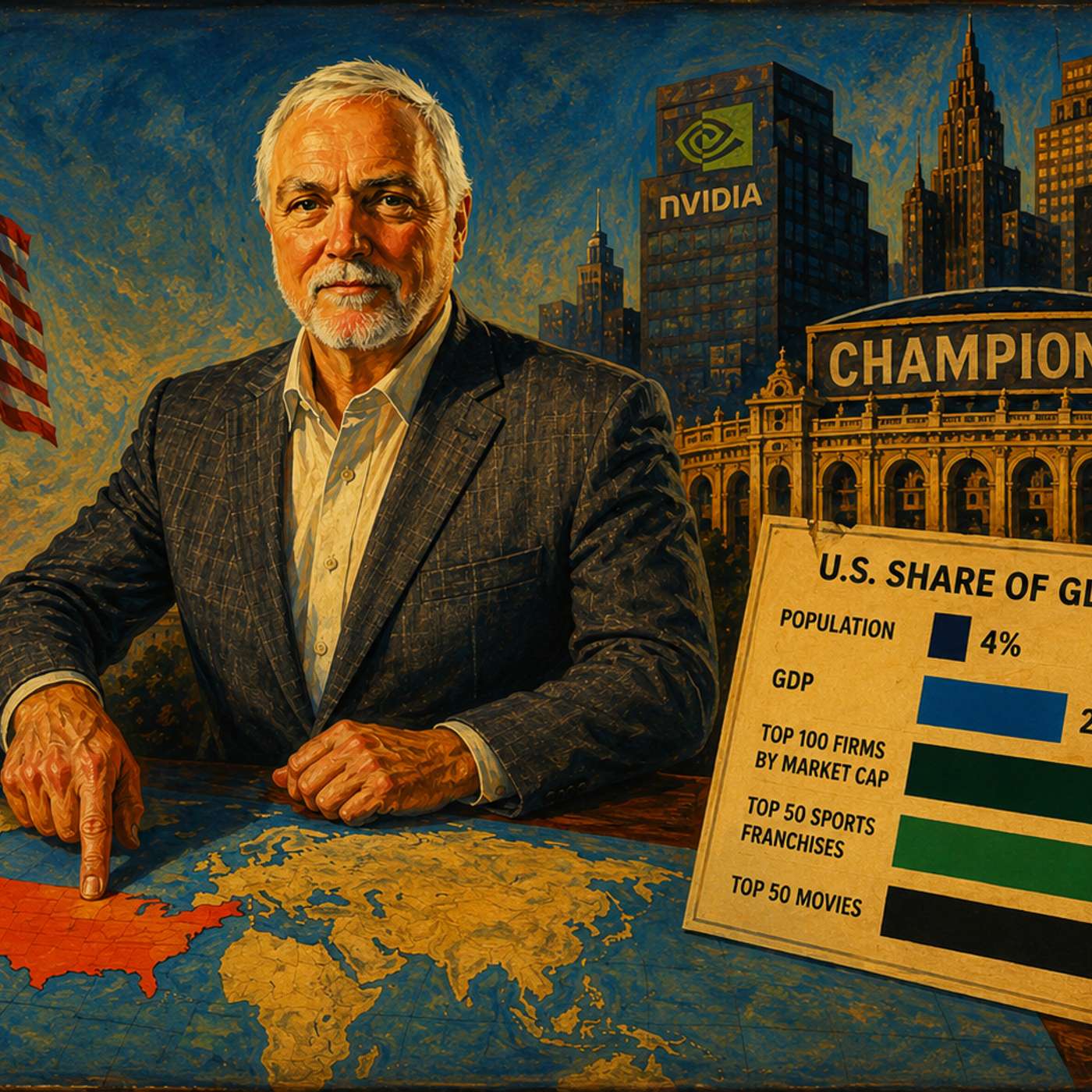
The 4% on July 4th
Description
Paul Grant Truesdell, Sr.
Paul Grant Truesdell | Founder & CEO
The Truesdell Companies
The Truesdell Professional Building
200 NW 52nd Avenue
Ocala, Florida 34482
212-433-2525 - Switchboard
paul@truesdell.net - General Email
Websites
truesdellwealth.com
ttruesdell.net
paulTruesdell.com
The Long Bet
Two and a half million souls, a wild coast, and the wager that built an empire
Picture the whole country in 1776. Every man, woman, and child who called this new place home — you could have gathered them all up, and you still wouldn't have filled a big modern stadium twice over. Two and a half million people. That was it.
They were strung out along the eastern rim of a wild continent, their backs to the ocean and their faces to a wilderness nobody had mapped. No army worth the name. No treasury. No factories humming in the night. By every measure the world used to keep score back then, they were nobody.
And you and I both know how that story turned out.
Now, the land itself was a character in this tale — maybe the leading one. Endless timber. Rivers that ran like highways before anybody laid a road. Black soil that went down and down. Coal and iron, and one day oil, sitting in the ground like a promise nobody had cashed yet. A man could stand at the tree line and look west, and see not an ending but a beginning.
But here's the thing worth sitting with. Plenty of places on this earth had rich dirt and deep forests and did nothing with them. Gold in the ground never lifted a nation on its own. What these people had that most of the world did not — was a piece of paper.
Riches in the ground don't lift a nation. What these people had that most of the world did not was a piece of paper — and the nerve to live by it.
In 1787, in a hot room in Philadelphia, a handful of arguing men wrote down a set of rules. The Constitution. It doesn't sound like much — rules on paper. But those rules did something quiet and powerful. They said your property was yours. They said a contract meant something a judge would honor. They said if you built a better mousetrap, you'd own it — patents, written right into the founding document. And they knocked down the walls between the states, so the whole country became one great open marketplace.
Then a young fellow named Alexander Hamilton built the plumbing. He made the young nation pay its debts, so the world would trust it enough to lend. He set up a bank. He made America's word good as gold. Dull work — ledgers and interest — but it's the plumbing that makes a house worth living in.
After that, the thing just moved. West. The Louisiana Purchase doubled the country with the stroke of a pen. The Erie Canal opened in 1825, and suddenly grain from the deep interior could reach the sea. Then came the rails — iron laid across prairie and mountain — steamboats churning the rivers, and a new way of building things out of interchangeable parts that let one hand do the work of ten. They called it the Market Revolution, and it earned the name.
Now, I won't sell you a fairy tale. Some of that early wealth — especially in the South — was built on the backs of enslaved men and women. Coerced labor. Cotton picked under the lash and shipped to the world. That's part of the story too, and an honest teller doesn't skip past it. The nation would pay for that sin in blood before it was through.
That reckoning came in 1861. The Civil War tore the country near in two. It ruined the South, and it forged the North into an industrial furnace. When the smoke finally cleared in 1865, the Union stood whole — and it stood ready to build.
And build it did. What came next is one of the great sprints in human history. Steel, from a Scotsman named Carnegie. Oil, from a bookkeeper named Rockefeller. Light itself, tamed and sold, from a tinkerer named Edison. Railroads stitched the markets together. Immigrants poured in by the millions — hungry, willing, full