Episode Details
Back to Episodes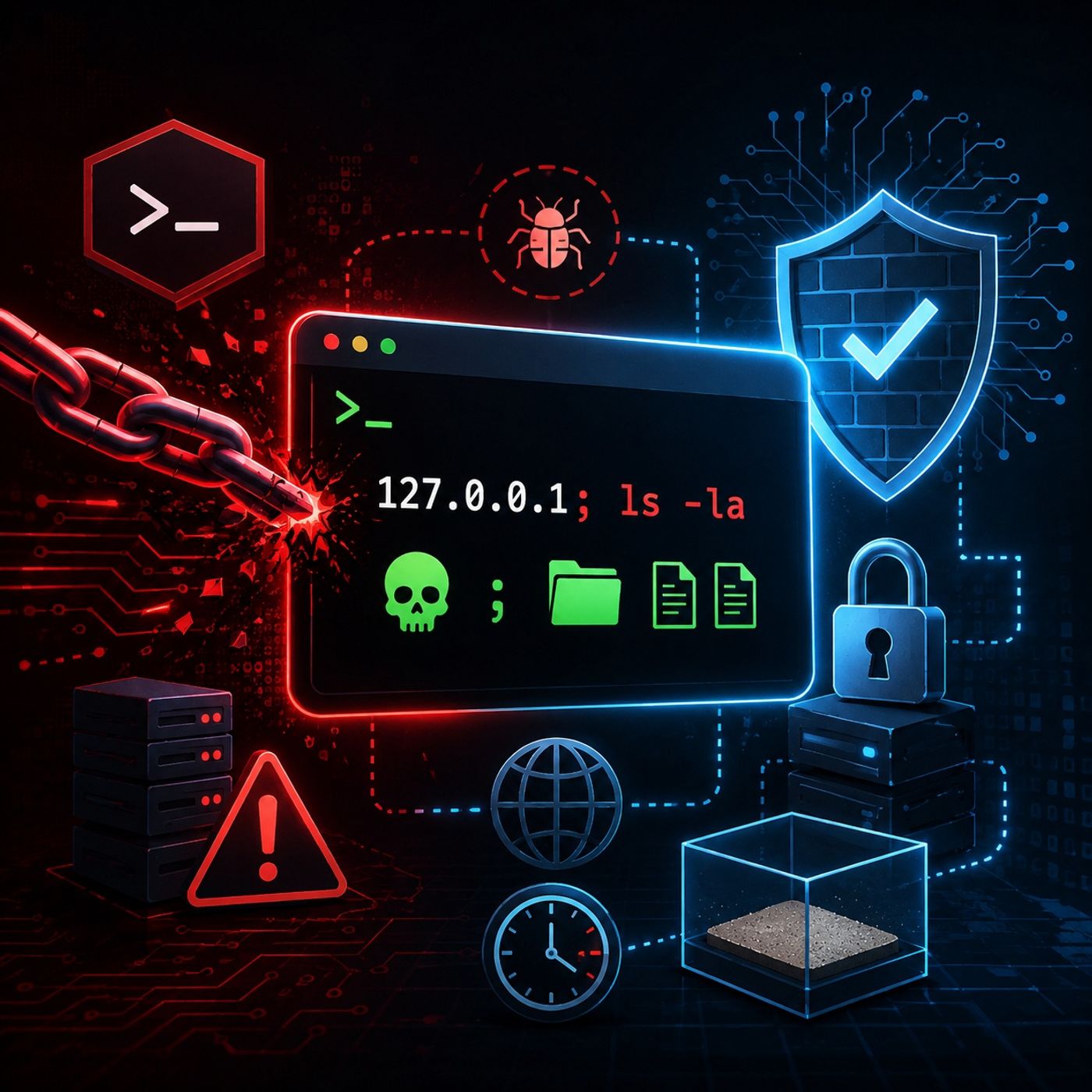
Course 38 - Web Security Known Web Attacks | Episode 1: Guide to Remote Command Injection
Published 1 month, 3 weeks ago
Description
In this lesson, you’ll learn about: Remote Command Execution (RCE), blind exploitation techniques, and defensive strategies against command injection1. What is Remote Command Execution (RCE)🔹 Definition:
RCE = user controls what the server executes2. Root Cause of RCE🔹 Problem:
No validation = full command injection risk3. Command Injection via Delimiters🔹 Common delimiter:
Delimiters allow attackers to chain commands4. Other Command Operators🔹 Logical operators:
Filtering one operator ≠ blocking exploitation5. Blind RCE (No Output Scenario)🔹 Problem:
Time delays = proof of execution6. Detection Strategy🔹 Steps:
Blind RCE ≈ Blind SQL Injection (time-based)7. Filter Evasion Techniques (High-Level)🔹 Problem:
Defense must be comprehensive, not pattern-based8. Injection Context Matters🔹 Input placement:
Exploitation depends on context, not just payload9. Real Risk of RCE🔹 Impact:
RCE is one of the most critical vulnerabilities10. Prevention Strategies🔹 Secure coding practices:
Prevention > detection11. Defense in Depth🔹 Additional protections:
Security should exist in multiple layersKey Takeaways
👉 How to detect hidden vulnerabilities
👉 How to build secure b
- A vulnerability where user input is executed as an OS command
- Python → os.system
- Node.js → exec
- PHP → shell_exec
RCE = user controls what the server executes2. Root Cause of RCE🔹 Problem:
- Untrusted input passed directly into system commands
No validation = full command injection risk3. Command Injection via Delimiters🔹 Common delimiter:
- ; → separates commands
- First command runs
- Second command executes attacker payload
Delimiters allow attackers to chain commands4. Other Command Operators🔹 Logical operators:
- && → run if first succeeds
- || → run if first fails
- & → run in background
- | → pipe output
Filtering one operator ≠ blocking exploitation5. Blind RCE (No Output Scenario)🔹 Problem:
- Application does NOT return command output
- Use timing-based detection
- Response delay confirms execution
Time delays = proof of execution6. Detection Strategy🔹 Steps:
- Inject payload
- Monitor response time
- Compare delays
Blind RCE ≈ Blind SQL Injection (time-based)7. Filter Evasion Techniques (High-Level)🔹 Problem:
- Input filters block simple payloads
- Use alternative separators
- Change encoding (e.g., newline %0A)
- Modify payload structure
Defense must be comprehensive, not pattern-based8. Injection Context Matters🔹 Input placement:
- Beginning of command
- Middle of command
- End of command
Exploitation depends on context, not just payload9. Real Risk of RCE🔹 Impact:
- Full server compromise
- Data exfiltration
- Privilege escalation
RCE is one of the most critical vulnerabilities10. Prevention Strategies🔹 Secure coding practices:
- Never pass raw user input to system commands
- Use safe APIs instead of shell execution
- Apply strict input validation
- Escape arguments properly
- Use parameterized system calls instead of string concatenation
Prevention > detection11. Defense in Depth🔹 Additional protections:
- Least privilege for processes
- Sandboxing
- Monitoring and logging
- Web Application Firewalls (WAFs)
Security should exist in multiple layersKey Takeaways
- RCE happens when user input reaches system execution
- Delimiters and operators enable command injection
- Blind RCE relies on timing-based detection
- Filters alone are not enough
- Secure coding and validation are critical
👉 How to detect hidden vulnerabilities
👉 How to build secure b