Episode Details
Back to Episodes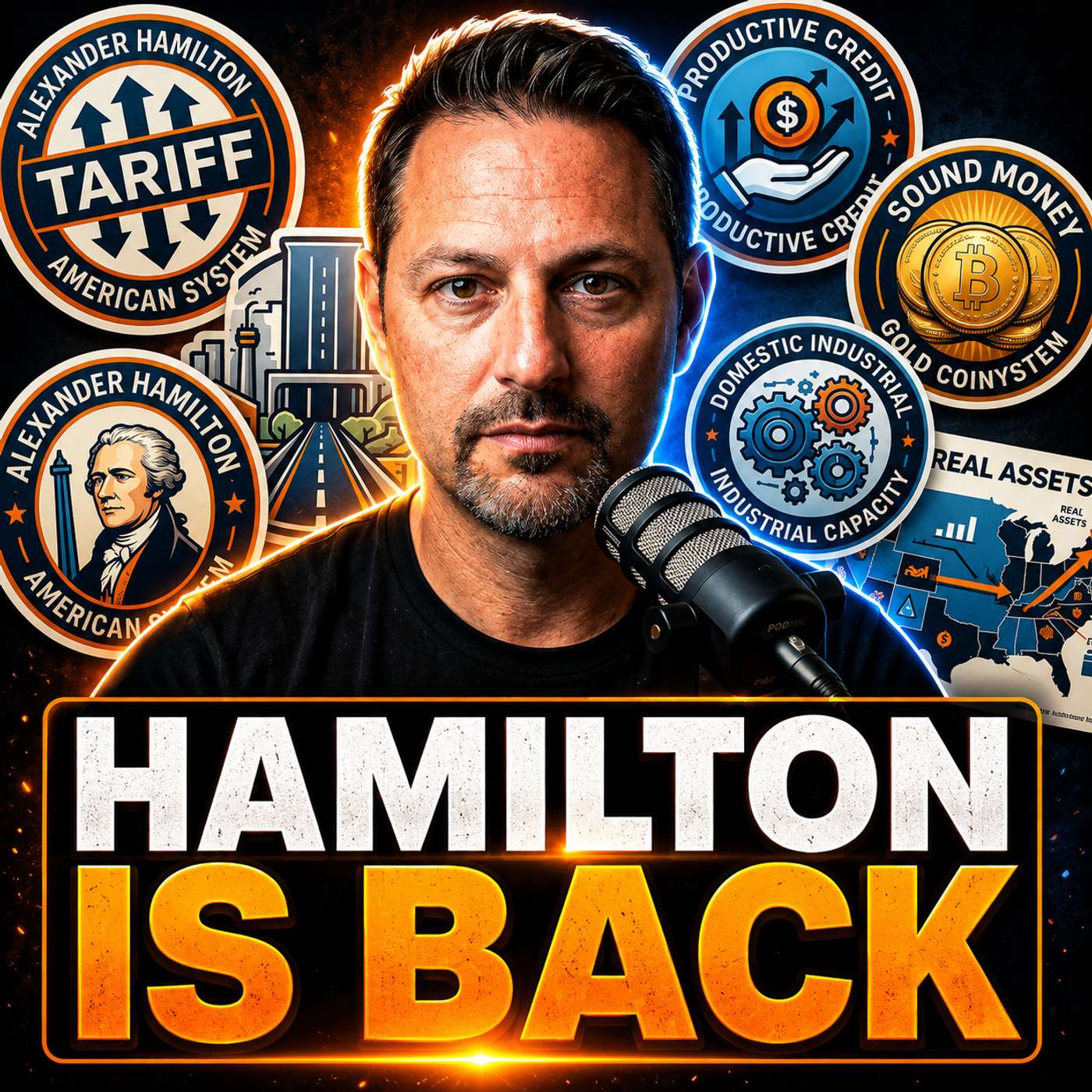
The American System Comeback — Hamilton, Bessent, and the New Investment Thesis
Description
In 1791, Alexander Hamilton wrote that every nation ought to possess within itself all the essentials of national supply. Last week, the sitting Treasury Secretary of the United States quoted those exact words at the Economic Club of New York — the same institution where JP Morgan once had a table, and where the men who designed the Federal Reserve laid their plans. Scott Bessent titled his speech "American Economic Statecraft in the 21st Century." He said explicitly that globalization and financialization are being reversed. That's not a policy adjustment. That's a repudiation of 113 years of financial architecture.
In this episode, Joe Withrow walks through the system Bessent is trying to revive. Hamilton's American System wasn't a collection of separate policies — it was one coherent architecture: tariffs, infrastructure, productive credit, and sound money, designed to interlock. Tariffs without productive credit just creates protected oligarchs. Productive credit without sound money turns into inflation and speculation. Sound money without infrastructure leaves you with a stable currency and a limited economy.
The pillars had to work together, and Hamilton understood that in 1791 in a way that most economists today do not. That system was built over the 19th century, attacked, partially rebuilt, and ultimately dismantled — and the three presidents who most explicitly championed it, Lincoln, Garfield, and McKinley, were the only sitting presidents assassinated before JFK.
Joe maps Bessent's five principles onto Hamilton's original pillars, notes what the Treasury Secretary committed to and what he carefully left unresolved on sound money, and then builds the investment thesis for the economic climate that follows. If some version of the American System is coming back, investors need exposure to the things that build and support American productive capacity — and Joe makes the case for exactly what that looks like in a portfolio today.
In this episode:
- The four pillars of Hamilton's American System — and why they had to interlock to work
- The assassination pattern: Lincoln, Garfield, McKinley — the only presidents shot before JFK, all American System champions
- How the Federal Reserve and the income tax in 1913 completed the dismantling of Hamilton's vision
- Bessent's five principles — and how each one maps back to Hamilton's original architecture
- "Dollar dominance and dollar soundness are not the same thing" — what Bessent committed to, and what he didn't
- Gold-backed Treasury bonds and the Strategic Bitcoin Reserve as early signals of a returning sound money conversation
- Why Lloyd's of London refusing to insure Strait of Hormuz shipping — and Bessent immediately pledging American capacity — is the clearest window into this administration's worldview
- The investment thesis: domestic energy infrastructure, nuclear and uranium, critical minerals, copper, rare earths, semiconductors, and world-class property & casualty insurance
- How to distill the entire macro thesis into three words
New episodes every week. Subscribe on Apple Podcasts, Spotify, YouTube, or wherever you listen — and join the Phoenician League newsletter at phoenicianleague.com for weekly macro investing analysis and real asset research.