Episode Details
Back to Episodes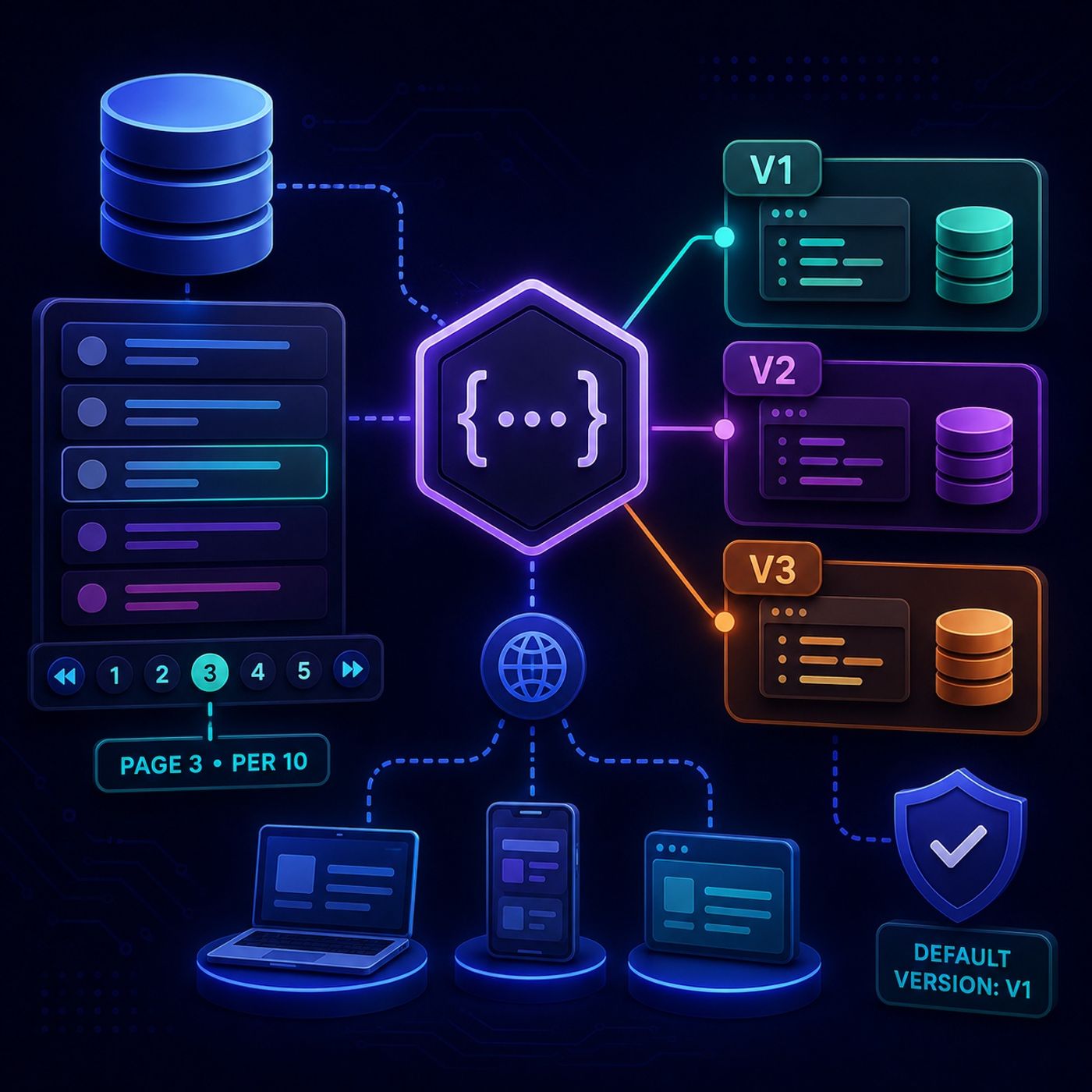
Course 37 - Building Web Apps with Ruby On Rails | Episode 17:Mastering Versioning and Pagination
Published 1 month, 4 weeks ago
Description
In this lesson, you’ll learn about: API pagination, versioning strategies, and building scalable Rails APIs1. Why Pagination Is EssentialUsing Ruby on Rails APIs:🔹 Problem:
Pagination improves performance, speed, and user experience2. How Pagination Works (Limit & Offset)🔹 Core idea:
Pagination is just controlled slicing of data3. Pagination in Rails🔹 Basic example:@users = User.limit(10).offset(20) 🔹 With params:@users = User.limit(params[:limit]).offset(params[:offset]) 👉 Key Insight
You can fully control pagination from the client4. Using Pagination Gems🔹 Popular tools:
Gems simplify pagination logic and add helpers5. Benefits of Pagination🔹 Advantages:
Small responses = faster APIs6. Introduction to API Versioning🔹 Problem:
Versioning protects backward compatibility7. Content Negotiation (Accept Header)🔹 Client request:Accept: application/vnd.myapp.v1+json 🔹 Server behavior:
Client specifies the version, server adapts8. Versioning with Namespaces🔹 Structure:/app/controllers/v1/users_controller.rb /app/controllers/v2/users_controller.rb 🔹 Example:module V1 class UsersController < ApplicationController end end 👉 Key Insight
Each version has isolated logic9. Routing with Version Constraints🔹 Example:namespace :v1 do resources :users end 👉 Advanced:
Routing determines which version is executed10. Default API Version🔹 Problem:
Always ensure API still works without explicit version11. Pagination + Versioning Together🔹 Example:/api/v1/users?page=2&per_page=10 👉 Key Insight
Combine both for scalable and flexible APIsKey Takeaways
You can listen and download our episodes for free on more than 10 different platforms:
https://linktr.ee/cybercode_academy
- Returning large datasets (thousands of records)
- Slow responses + heavy database load
- Break data into pages (chunks)
Pagination improves performance, speed, and user experience2. How Pagination Works (Limit & Offset)🔹 Core idea:
- limit → how many records per page
- offset → where to start
- Skip first 20 records
- Return next 10
Pagination is just controlled slicing of data3. Pagination in Rails🔹 Basic example:@users = User.limit(10).offset(20) 🔹 With params:@users = User.limit(params[:limit]).offset(params[:offset]) 👉 Key Insight
You can fully control pagination from the client4. Using Pagination Gems🔹 Popular tools:
- will_paginate
- Kaminari
Gems simplify pagination logic and add helpers5. Benefits of Pagination🔹 Advantages:
- Faster database queries
- Reduced memory usage
- Better frontend performance
Small responses = faster APIs6. Introduction to API Versioning🔹 Problem:
- APIs evolve over time
- Changes can break old clients
- Maintain multiple API versions
Versioning protects backward compatibility7. Content Negotiation (Accept Header)🔹 Client request:Accept: application/vnd.myapp.v1+json 🔹 Server behavior:
- Detect version
- Return matching response
Client specifies the version, server adapts8. Versioning with Namespaces🔹 Structure:/app/controllers/v1/users_controller.rb /app/controllers/v2/users_controller.rb 🔹 Example:module V1 class UsersController < ApplicationController end end 👉 Key Insight
Each version has isolated logic9. Routing with Version Constraints🔹 Example:namespace :v1 do resources :users end 👉 Advanced:
- Use constraints to switch versions dynamically
Routing determines which version is executed10. Default API Version🔹 Problem:
- Client doesn’t specify version
- Set fallback version (e.g., V1)
Always ensure API still works without explicit version11. Pagination + Versioning Together🔹 Example:/api/v1/users?page=2&per_page=10 👉 Key Insight
Combine both for scalable and flexible APIsKey Takeaways
- Pagination reduces load and improves speed
- Use gems like Kaminari or will_paginate
- Versioning prevents breaking existing clients
- Use namespaces and routing constraints
- Always provide a default version
You can listen and download our episodes for free on more than 10 different platforms:
https://linktr.ee/cybercode_academy