Episode Details
Back to Episodes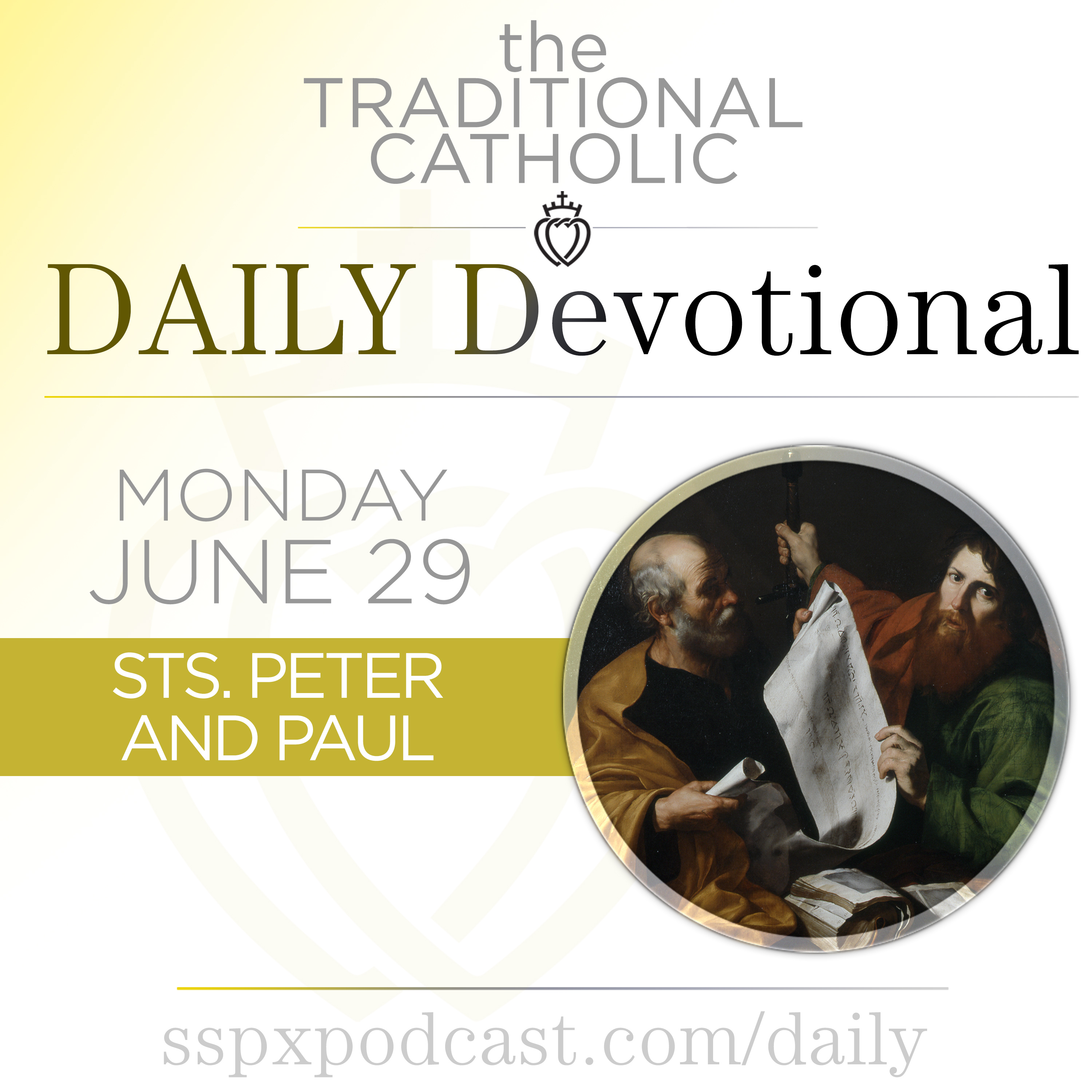
Jun 29 – Ss Peter and Paul
Description
Sources Used Today:
- "The Letter and the Spirit" — From Trinity Sunday to the Assumption
- "Will We Be Excommunicated?" (FSSPX.news)
- "The Just Man Lives By Faith" (SSPX Sermons)
- The Spiritual Life — Archbishop Marcel Lefebvre (Angelus Press)
Please support our new project, the Archbishop Lefebvre Biography Audiobook!
- Learn more:https://www.youtube.com/watch?v=Y-Wp4MQdK2o
- Donate:https://sspx.gifts/audiobook
Saints Peter and Paul are the two great pillars of the early Church. They came from different backgrounds, had different personalities, and even disagreed with one another at times. Yet God used both men, with all their strengths and weaknesses, to build His Church and carry the Gospel to the world.
Peter was a fisherman from Galilee when Jesus called him to leave his nets and follow Him. Impulsive, courageous, and sometimes outspoken, Peter experienced both remarkable moments of faith and painful moments of failure. He walked on water, confessed Jesus as the Christ, and was entrusted with the keys of the Kingdom. Yet he also denied the Lord three times during the Passion. After the Resurrection, Christ forgave him and gave him the charge that would define the rest of his life: "Feed my sheep." Peter became the first Bishop of Rome, shepherding the growing Church until his martyrdom under Emperor Nero.
Paul's story could not have begun more differently.
Originally known as Saul of Tarsus, he was one of the Church's fiercest opponents. He actively persecuted Christians until the day Christ confronted him on the road to Damascus. That encounter changed everything. The persecutor became the preacher. Paul spent the rest of his life traveling thousands of miles across the Roman Empire, founding churches, writing letters, and proclaiming Christ to Jews and Gentiles alike.
It's comforting to remember that these two saints weren't always in perfect agreement. The Acts of the Apostles and Paul's own letters tell us they occasionally challenged one another, particularly over how to welcome Gentile conv