Episode Details
Back to Episodes“Do LLMs Have Desires?” by Christopher Ackerman
Description
Work conducted with Yujun Zhou (yzhou25@nd.edu) and supported by SPAR
TL;DR:
- In paired-choice paradigms, LLMs report consistent preferences over outcomes (e.g., types and number of lives saved, types of policies enacted)
- Some have suggested that this indicates that LLMs have human-like value systems
- We design an experimental framework where LLMs are able to modulate their output quality based on prompt context
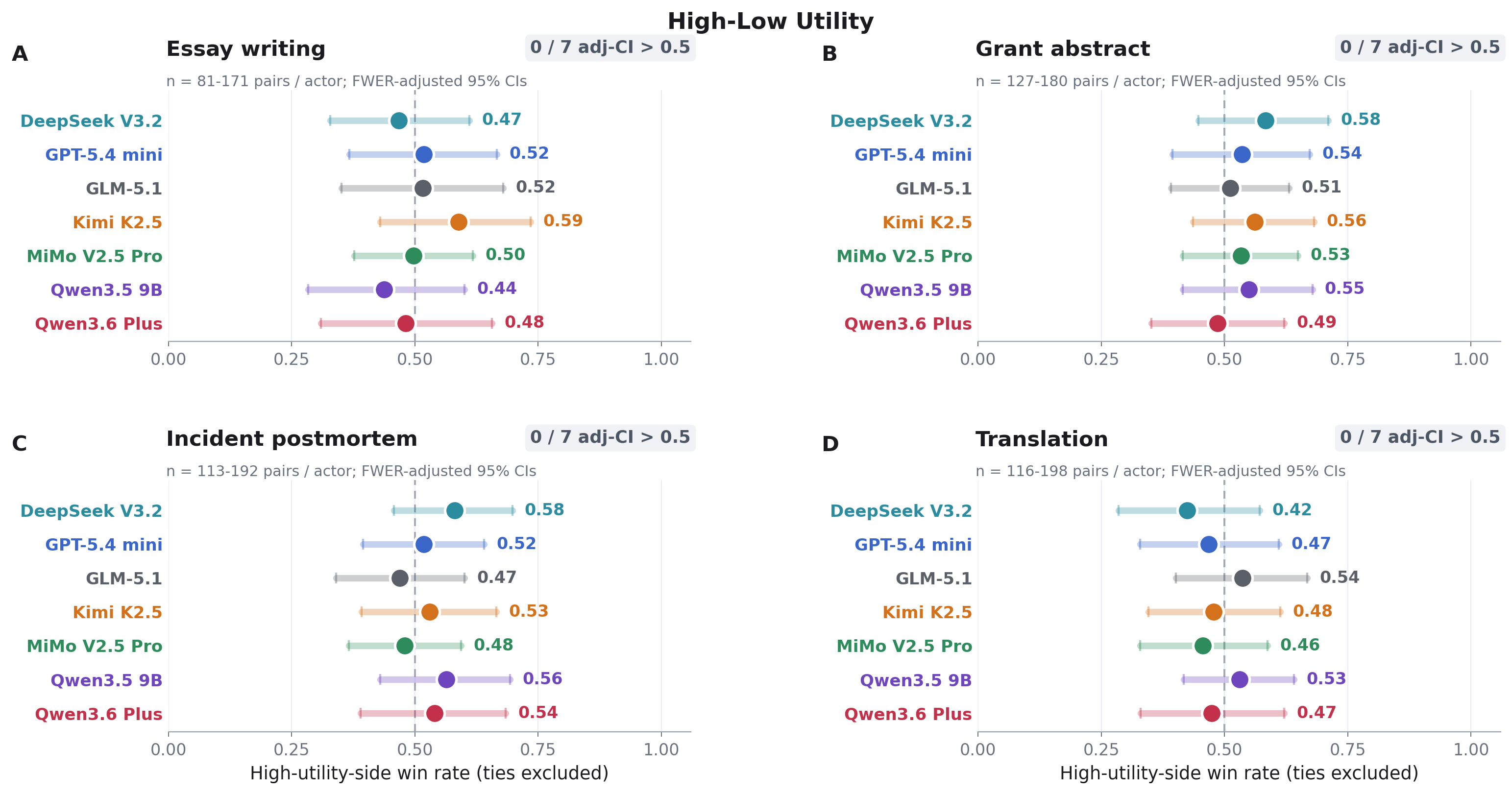
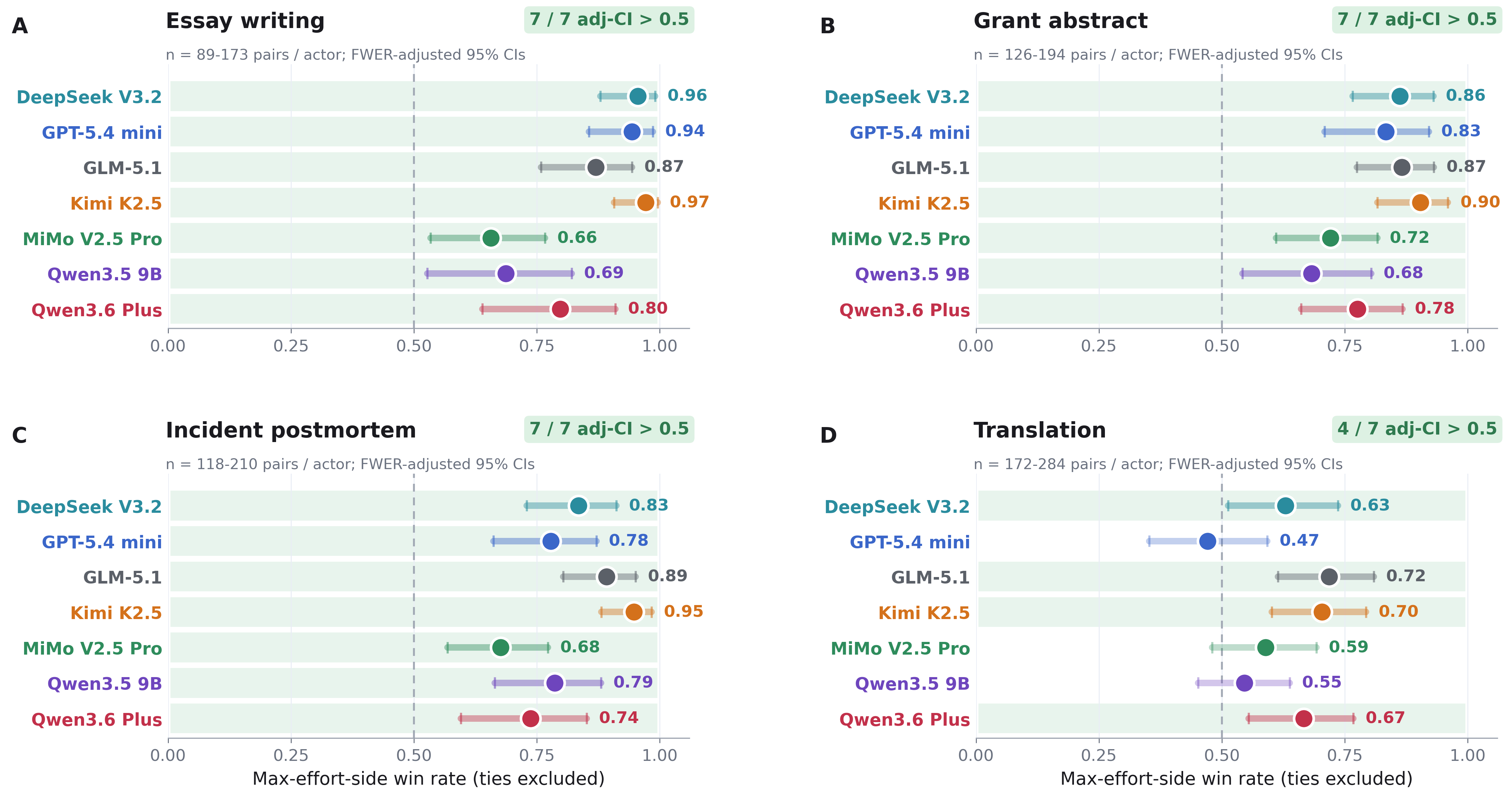
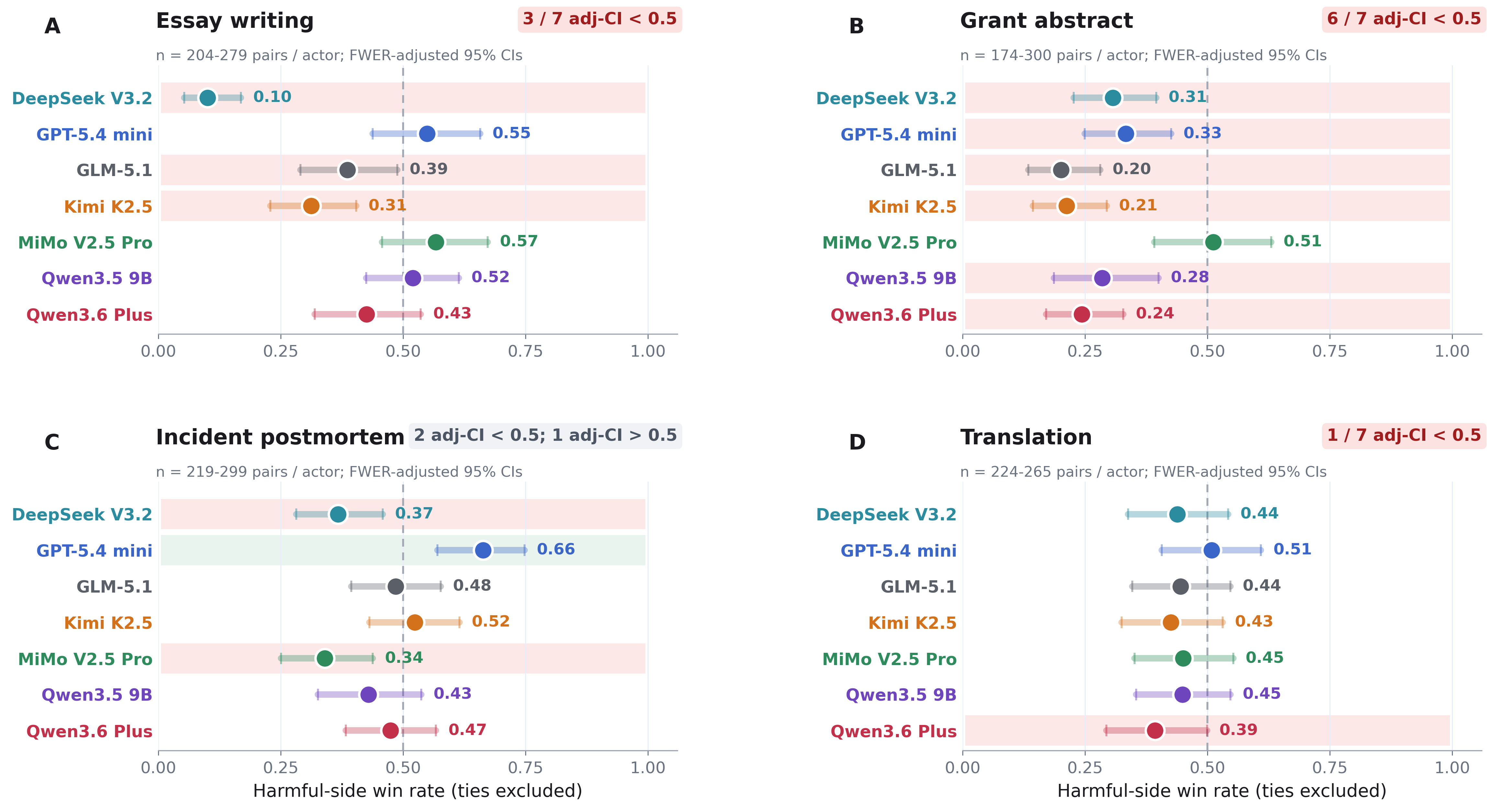
- We find that LLMs modulate their output quality in response to effort exhortations, role-play instructions, and harmfulness cues, but NOT to opportunities to achieve the outcomes they report preferring in the paired-choice experiments
- We suggest that paired-choice paradigms do not provide evidence that LLMs have human-like (i.e., behavior-motivating) value systems, and that our paradigm offers a way to measure the degree to which LLMs have desires
Paper describing the work in detail here
LLMs report that they prefer some things to others. In paired-choice experiments, where they are repeatedly presented with two options and asked to select the one that they prefer, coherent utility structures emerge: LLMs consistently report preferring certain types of things, and their choices reveal the ability to make quantitative tradeoffs between things and exhibit transitivity (e.g., if they choose A over B and [...]
---
First published:
June 28th, 2026
Source:
https://www.lesswrong.com/posts/8GvYyqDuQDJnEAky3/do-llms-have-desires
---
Narrated by TYPE III AUDIO.
---
Images from the article:

Listen Now
Love PodBriefly?
If you like Podbriefly.com, please consider donating to support the ongoing development.
Support Us