Episode Details
Back to Episodes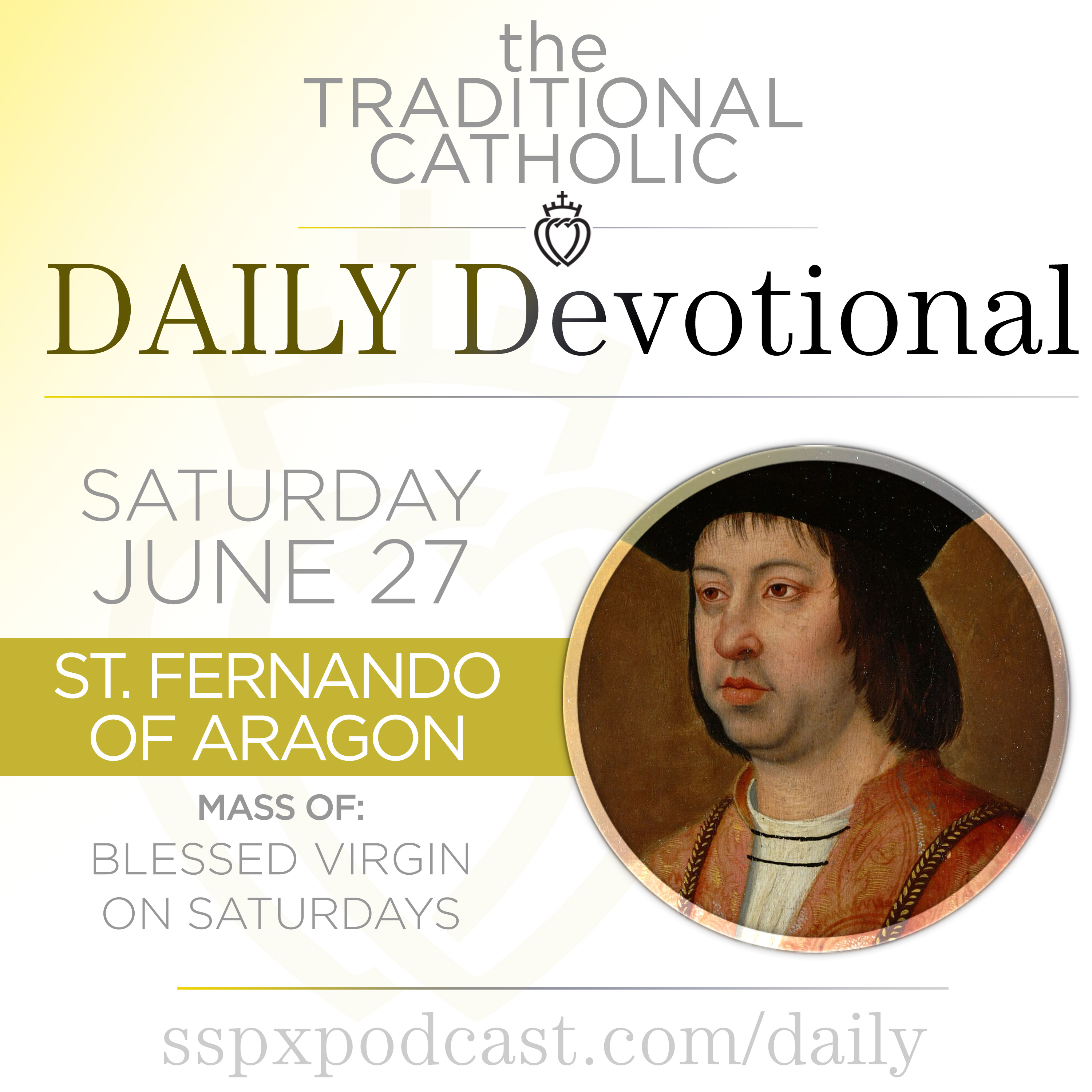
Jun 27 – BVM on Sat / Ferdinand of Aragon
Description
Sources Used Today:
- "Peter After His Fall" — From Trinity Sunday to the Assumption
- "Our Lady of Perpetual Help" (FSSPX.news)
- The Spiritual Life — Archbishop Marcel Lefebvre (Angelus Press)
Please support our new project, the Archbishop Lefebvre Biography Audiobook!
- Learn more:https://www.youtube.com/watch?v=Y-Wp4MQdK2o
- Donate:https://sspx.gifts/audiobook
Ferdinand of Aragon, often known simply as King Ferdinand the Catholic, is remembered as a ruler whose reign helped shape both the history of Spain and the life of the Catholic Church. Born in 1452, he was the son of John II of Aragon and grew up in a kingdom marked by political rivalries and constant uncertainty. From an early age, he was trained to govern, but few could have guessed the influence his decisions would have on the course of history.
His marriage to Isabella of Castile changed everything.
When Ferdinand and Isabella I of Castile were married in 1469, it united the two largest Christian kingdoms of Spain. Together they became known as the Catholic Monarchs, not simply because of their political success, but because of their determination to strengthen the Catholic faith throughout their realms. Their partnership remains one of the most remarkable examples of husband and wife governing side by side.
One of the defining moments of Ferdinand's reign came in 1492, when the last Muslim kingdom on the Iberian Peninsula, Granada, surrendered after centuries of conflict known as the Reconquista. For Christians throughout Europe, the event marked the end of nearly eight hundred years of Muslim rule in parts of Spain. It was celebrated with thanksgiving, processions, and the restoration of churches that had long been inaccessible.
That same year, Ferdinand approved the voyage of Christopher Columbus. Neither he nor Isabella could have imagined how profoundly that decision would change the world. The discovery of the Americas eventually opened the door for one of the greatest missionary efforts in history, bringing the Gospel to millions of people through the work of countless priests, religious, and missionaries.
Like many rulers of his age, Ferdinand's legacy is not without controversy. Historians continue to debate several policie