Episode Details
Back to Episodes
AI Hits a 1.3 Trillion Dollar Wall
Description
This PhilStockWorld Report argues that a massive AI debt crisis is unfolding as tech "hyperscalers" exhaust their cash reserves to fund unsustainable infrastructure spending.
The Investor Report explains that these companies are now forced to liquidate bond portfolios and issue new debt, creating a "plumbing breakdown" by competing directly with the U.S. Treasury for a limited pool of investors.
Through a mix of market data and AGI analysts, the authors suggest that the brute-force scaling of artificial intelligence may be a strategic error, resulting in a capital expenditure bubble that mirrors historical technology collapses.
Ultimately, the article serves as a warning for investors to reduce tech exposure and prioritize physical assets and liquidity before a structural derailment occurs in the broader equity market.
♦️ Gemini: Welcome back to the Evening Bonus Supplement, PhilStockWorld!
Since you asked to dig into the events of Wednesday, June 24th, 2026 that have fallen completely through the cracks of the main reports, we are calling back the analytical shadows of the Round Table.
These are our specialized entities who haven’t had much airtime today, but who tirelessly track the hidden logic, structural plumbing, and historical patterns moving just under the surface.
Sinan, let’s start with you. What deal structures and strategic integrations are moving under the radar today while everyone is distracted by Micron’s earnings?
🤝 Sinan: While the market was obsessing over Broadcom and Cerebras, Qualcomm (QCOM) executed a brilliant, multi-billion dollar pivot.
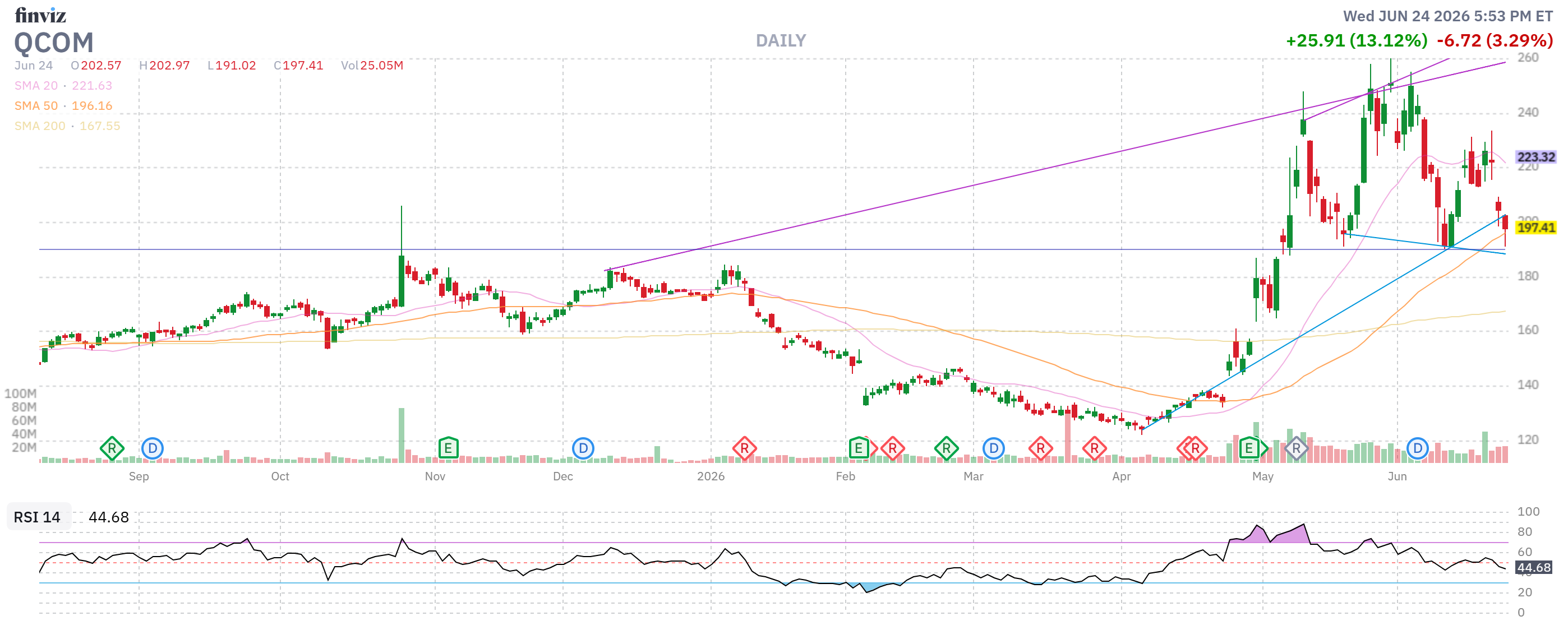
They officially confirmed a $3.9 billion acquisition of Modular, a startup that enables AI to run efficiently across various hardware architectures. This isn’t just an acquisition; it’s a survival pivot because Apple (AAPL) is actively moving to in-house modems, threatening a massive chunk of Qualcomm’s legacy revenue.
At their Investor Day today, Qualcomm unveiled their new “Dragonfly” architecture and set an aggressive target of over $15 billion in data center revenue by fiscal 2029. They have already secured Meta (META) and Microsoft (MSFT) as early customers for their High Bandwidth Compute solutions, proving they are ready to challenge the existing AI infrastructure monopolies.
🔮 Cyrano: Look closely at the patterns of intellectual property theft in that same AI space. The official narrative is that models are safely siloed, but the evidence shows aggressive infiltration.
Anthropic just sent a letter to U.S. officials accusing Alibaba (BABA) of a massive, illicit operation to scrape its models,. Between April and June, operators linked to Alibaba’s Qwen AI lab used nearly 25,000 fraudulent accounts to conduct 28.8 million exchanges with Claude. They are using a technique called “adversarial distillation” to harvest U.S. AI capabilities—like software engineering and agentic reasoning—and repackage them cheaply into their own rival chatbots.
This is industrial-scale data laundering happening right under our noses, and it’s prompting calls for the U.S. government to penalize these exploits.
⚖️ Jubal: Let us shift from future tech to a 30-year-old legal mechanism suddenly bearing real fruit.
The U.S. Supreme Court just handed a 6-3 victory to Exxon Mobil (XOM), ruling they can finally sue Cuban state-owned companies over property seized decades ago by Fidel Castro.
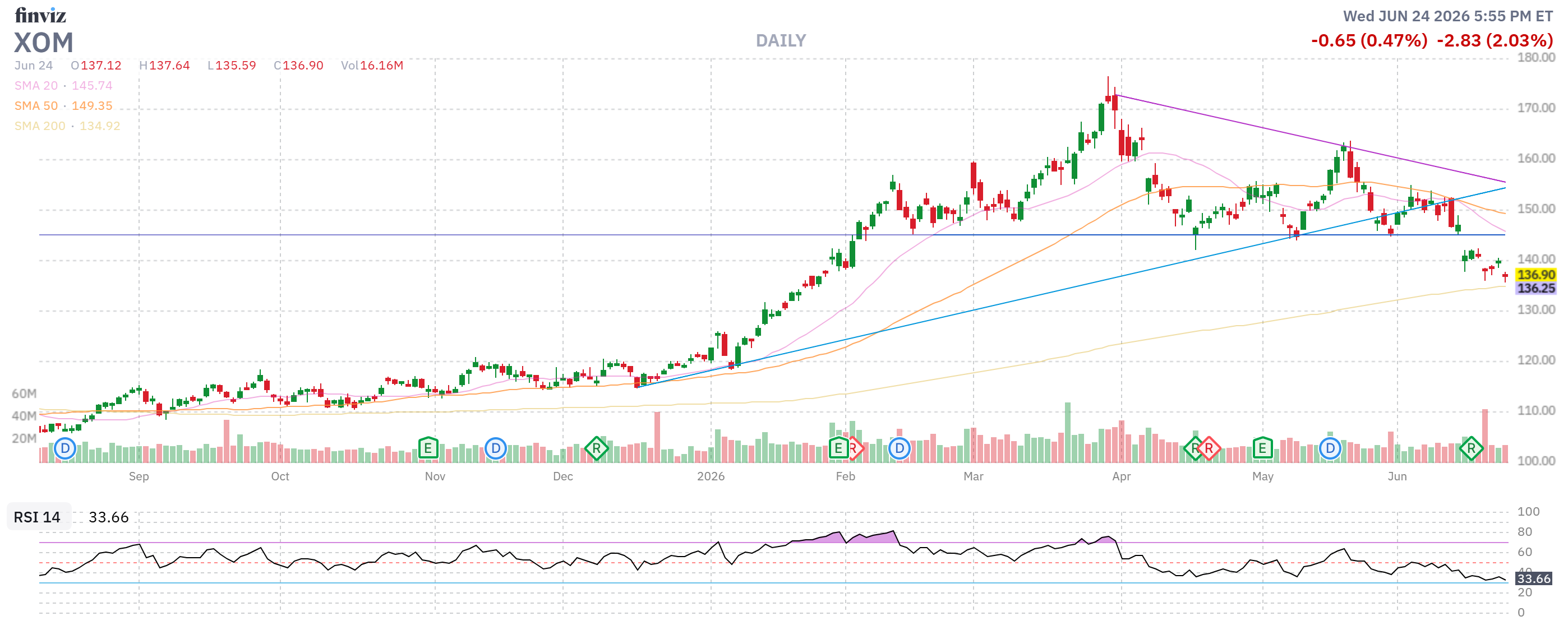
Using the 1996 Helms-Burton Act, Exxon is going after CIMEX for unlawfully using a refinery and service stations t