Episode Details
Back to Episodes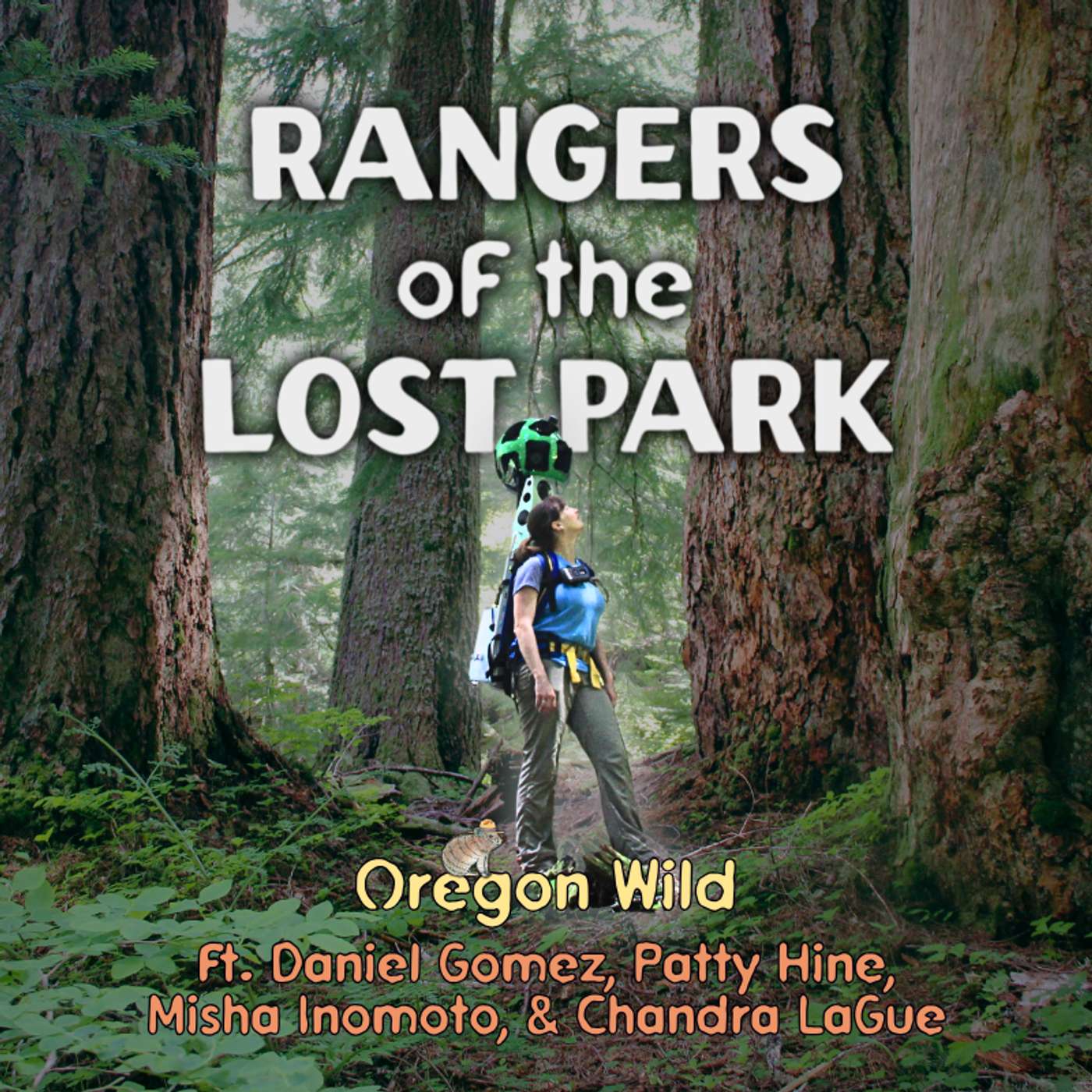
51: King Tut, Old Growth Forests, Newts in the Lake & Outdoor Community with Oregon Wild at Crabtree Valley
Description
What happens when you gather a group of nature enthusiasts in an old growth forest? This episode is truly unique and not something Liz has done on this podcast before.
Liz went out into the remote backcountry with a wonderful group of public land protectors and will be sharing four of their stories with you all today. You’ll get to hear some personal stories of deep love, resiliency and intrigue straight from the person who beholds it, including Daniel Gomez, Patty Hine, Misha Inomoto, and Chandra LeGue.
On May 31st of this year, Liz braved the long, 3.5-hour journey through winding forest roads with no wifi or phone service in order to join a group of public land advocates at one of Oregon’s most long-lived old growth forests: Crabtree Valley. Located in Western Oregon, it is an environmental sanctuary, and those who are familiar with it describe it as “peaceful, resilient, diverse, and incredibly beautiful"-- with trees up to 1,000 years old (they were alive at the same time as Genghis Khan, y'all!).
Named the “Crabtree Valley Expedition,” this community-driven event was advertised as “two days of exploration to connect advocates, photographers, story tellers, legal forest defenders, naturalists, and forest lovers to an area that could be impacted by the Trump administration’s proposed management plan revisions for Bureau of Land Management forests in western Oregon.” Their hope in documenting the biodiversity of this ancient forest, in a multitude of ways, is that they can mount a successful campaign to continue protections for not just this place, but all old-growth forests on BLM lands (and beyond!).” And it couldn’t have been possible without the nonprofit 501(c)(3) organization, Oregon Wild.
Oregon Wild works to protect and restore Oregon’s wildlands, wildlife, and waters as an enduring legacy for future generations. Founded in 1974, Oregon Wild represents the fish and wildlife, ancient forests, and rich diversity of public lands and landscapes that make this state so special. They work to protect and restore the parts of the natural world that do not have a human voice, while not forgetting that humans are interconnected with nature and its systems.
Oregon Wild and other conservation groups have challenged numerous BLM logging proposals in recent years that have targeted mature and old-growth forests. Courts have sided with conservation groups, highlighting that, even under the significantly weaker safeguards of the 2016 RMPs, the agency has regularly violated its own rules and bedrock environmental laws in order to facilitate commercial logging projects.
On February 19, 2026, the Trump administration announced its intention to revise Western Oregon BLM management plans. Administration officials have stated that their goal is to return to the logging levels of the 1970s and 80s—when the BLM and U.S. Forest Service were clear-cutting roughly 3-square miles of old-growth forests per week. To achieve this, they intend to override decades of court rulings protecting clean water and wildlife, and return to the very management practices that led to federal Endangered Species Act listings for coho salmon and other imperiled species in the first place.
The 1,251 acres of wild