Episode Details
Back to Episodes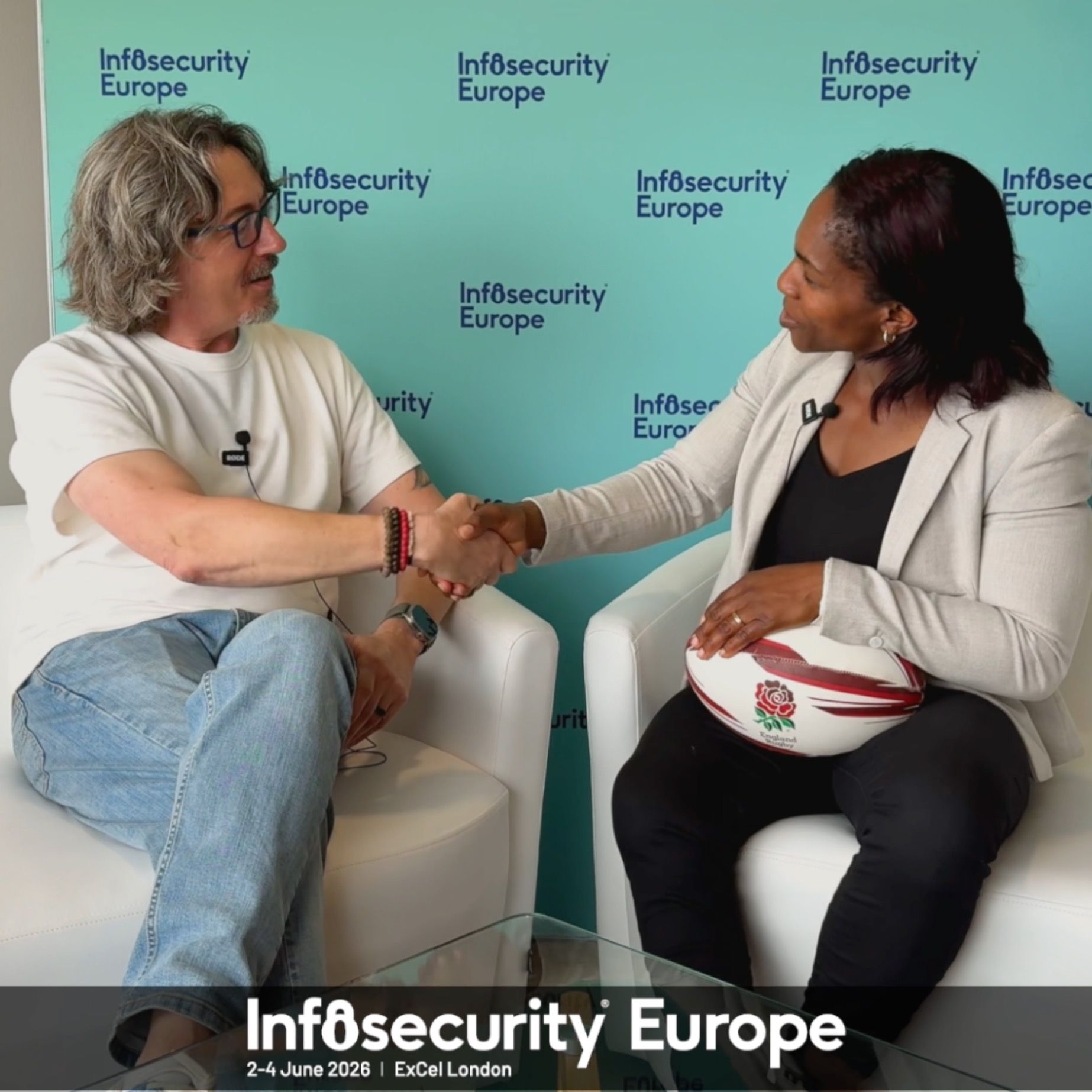
Who Gets to Tell Your Story? Maggie Alphonsi on Strength, Resilience & Owning the Narrative | An Analog Brain In A Digital Age With Marco Ciappelli — On Location at Infosecurity Europe 2026
Description
A rugby World Cup winner walks into a room full of people who defend networks for a living. Maggie Alphonsi joins me to talk about breaking barriers, leading with your strengths, and what changed the day athletes stopped waiting for the back page and started telling their own stories.
📺 Watch | 🎤 Listen | marcociappelli.com
Maggie Alphonsi has spent her life refusing to let other people decide who she is. She grew up on a north London council estate, born with a club foot, handed a stack of stereotypes she wanted no part of and surrounded, in her words, by people whose ambition pointed down instead of up. Then a PE teacher pointed her toward a rugby pitch, and she found the place where her strength was the whole point — where what her body could do mattered far more than how anyone thought it should look. That teacher didn't just change her life, she told me. She saved it, because the other road was right there and easy to take.
I sat with Maggie at Infosecurity Europe 2026 — a Rugby World Cup winner speaking to a hall full of people who defend networks for a living. It sounds like a strange pairing until you hear her, and then it isn't strange at all. She wasn't there to explain rugby. She was there to talk about who gets to decide what your strengths are worth, which is a question the people in that room, many of them women in a field still run mostly by men, live with every day.
My obsession, the thing this whole show keeps circling, is who holds the pen. For years women's sport got something like a tenth of one percent of media coverage — two sentences at the bottom of the back page, if that. Someone else decided whether you existed. Then the phone in everyone's pocket changed whose hand was on the pen. Maggie watched athletes start telling their own stories and building their own audiences with nobody's permission. She pointed to Ilona Maher, a rugby player now more famous around the world than almost any man in the game, famous because she controls her own narrative one post at a time.
I love this, and I don't fully trust it, and neither does Maggie. The same platform that let her broadcast her strength also filled her feed with sexist garbage about a woman daring to commentate on men's rugby. She showed the crowd some of the worst of it, the misspelled cruelty, and then explained how she turns it into fuel. The tool is neutral. The hand on it is not.
We talk about technology as the thing that amplifies a voice, and it does. But the voice itself — the strength, the scars, the single mother who worked herself to the bone, the years of being told to play it down — none of that is digital. It is as analog as a muddy pitch. Maggie has two books out now, an autobiography and one for kids who haven't found their sport yet, and both exist for the same reason she stood on that stage: so a young person reads a story and thinks, that could be me.
We are all made of stories. I say it constantly, and this week a rugby player who learned it the hard way said it back to me. The technology decides how far a story travels. It still can't decide whether the story is worth telling. That part is ours.
So before you hand your story to an algorithm to carry, it's worth asking who wrote it — and whether you'd recognize yourself in the version that comes back.
Let's keep thinking.
Maggie's books are linked below. And if you want more conversations like this one, subscribe to the newsletter at marcociappelli.com.
— Marco
Co-Founder ITSPmagazine & Studio C60 | Creative Director | Branding & Marketing Advisor | Personal Branding Coach | Journalist | Writer | Podcast: An Analog Brain In A Digital Age ⚠️ Beware: Pigs May Fly | 🌎 LAX🛸FLR 🌍
More from our Infosecurity Europe 2026 coverage: