Episode Details
Back to Episodes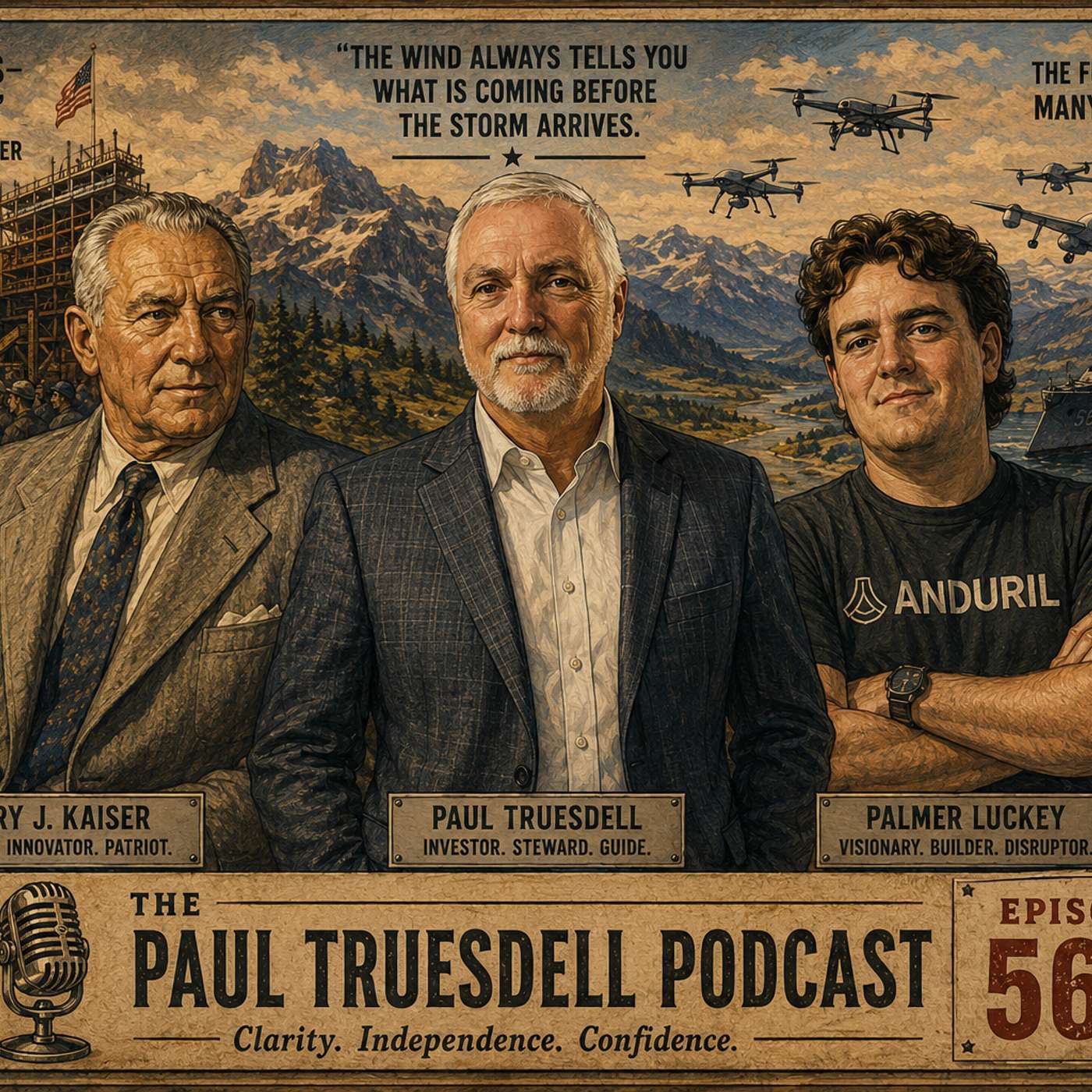
Kaiser's Coffins to Killer Swarms - Why Cheap, Expendable Drones—Not Billion-Dollar Platforms—Will Decide the Next Century of American Power
Description
Kaiser's Coffins to Killer Swarms
Why Cheap, Expendable Drones—Not Billion-Dollar Platforms—Will Decide the Next Century of American Power
Good morning, afternoon, or evening, this is Paul Truesdell and this is the Paul Truesdell Podcast. There is an old truth out in the high country, one that every scout and every hunter and every man who ever read the weather off a ridgeline comes to learn. The wind always tells you what is coming before the storm arrives. You only have to be quiet enough to listen, and honest enough to believe what you hear, even when the sky straight overhead is still blue. I want to talk to you about a storm that is gathering. Not to frighten you, because fear is a poor compass and a worse general. I want to talk about it so that we are ready. Because the United States is in the middle of the largest retooling of its military since the Second World War, and most good people have not yet felt the wind shift. Let me begin where every serious conversation about American power has to begin. With the sea. And with a man most of you have never heard of. His name was Henry J. Kaiser. Today, if his name rings any bell at all, it rings because of a hospital. Kaiser Permanente. But before he ever built a clinic, Henry Kaiser built ships, and he built them the way Henry Ford built automobiles. On an assembly line. In 1942, with the fleet still smoking at Pearl Harbor and our real carriers years away from the water, Kaiser walked into the United States Navy and made a promise that sounded like a tall tale. He said he could turn out aircraft carriers, not in years, but in weeks. Small ones. Cheap ones. Built from prefabricated parts by welders, many of them women, most of them folks who had never built a ship in their lives. The admirals told him no. They wanted gold-plated ships, the big beautiful fleet carriers, and they thought his little flattops were a joke. So Kaiser did what Americans with a good idea and no patience for a closed door have always done. He went over their heads. He took his case straight to President Roosevelt, and Roosevelt ordered the admirals to give him a contract for fifty. They called those ships jeep carriers. Baby flattops. The sailors who crewed them had a darker name. Kaiser's coffins, they called them, because they were small and thin-skinned and the men figured they would burn. Combustible, vulnerable, and expendable, that was the joke. And then those expendable little ships sailed into history. Off the island of Samar, in the Battle of Leyte Gulf, a handful of Henry Kaiser's jeep carriers and their escorts ran headlong into one of the most powerful surface fleets Japan ever put to sea. Including the Yamato, the largest battleship ever built by any nation on earth. By every rule of war those Americans should have been wiped from the ocean. Instead, they turned and fought, and they held, and the great Japanese fleet broke off and ran. Cheap ships. Plain men. American production and American grit. That is the whole story of this country in a single afternoon of fire. I tell you that story because we are standing exactly where Henry Kaiser stood in 1942. We are