Episode Details
Back to Episodes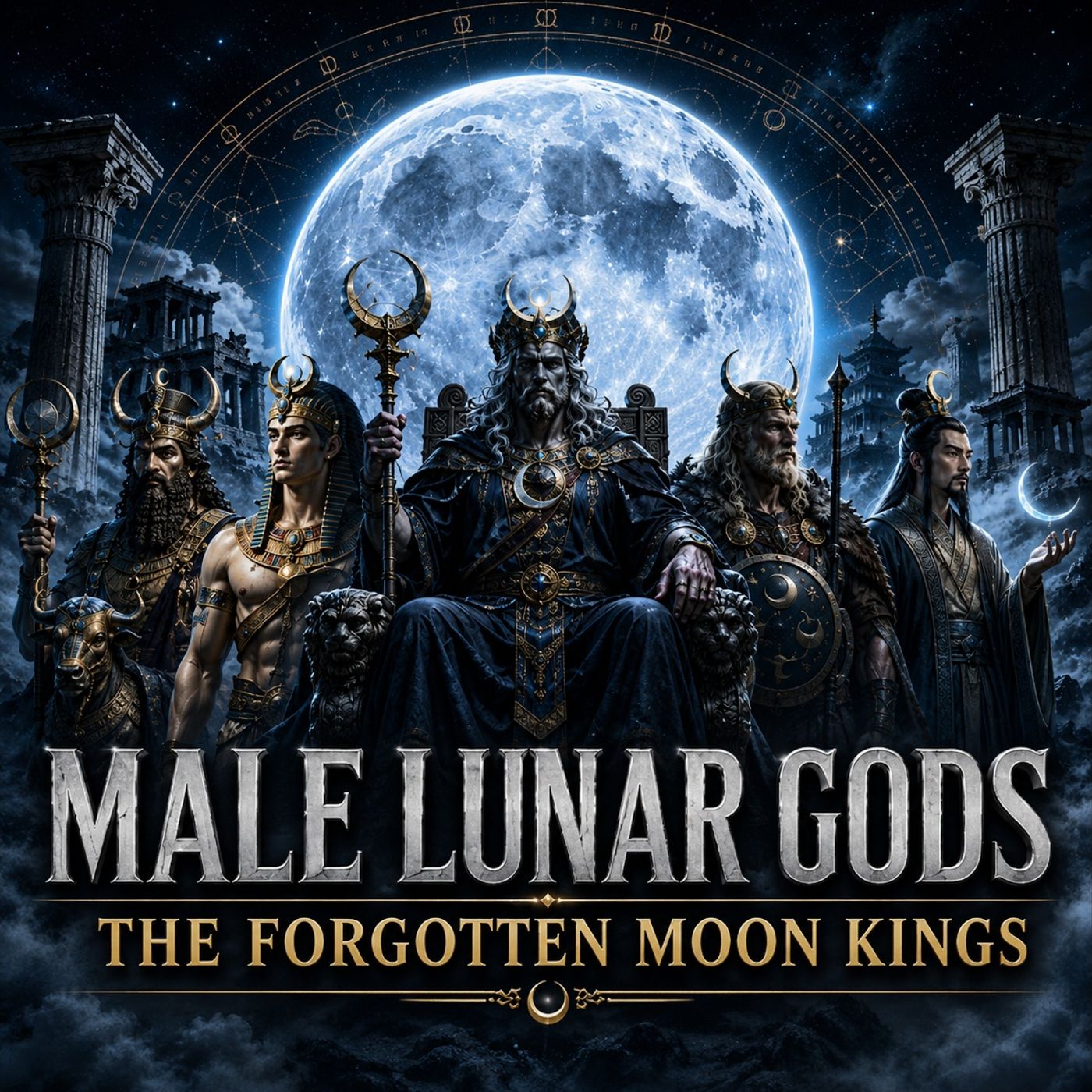
Male Lunar Gods: The Forgotten Moon Kings
Published 4 months ago
Description
If you enjoy this episode, we’re sure you will enjoy more content like this on The Occult Rejects. In fact, we have curated playlists on occult topics like grimoires, esoteric concepts and phenomena, occult history, analyzing true crime and cults with an occult lens, Para politics, and occultism in music. Whether you enjoy consuming your content visually or via audio, we’ve got you covered - and it will always be provided free of charge. So, if you enjoy what we do and want to support our work of providing accessible, free content on various platforms, please consider making a donation to the links provided below.
Thank you and enjoy the episode!
Links For The Occult Rejects
https://linktr.ee/theoccultrejects
Occult Research Institute
https://www.occultresearchinstitute.org/
Cash App
https://cash.app/$theoccultrejects
Venmo
@TheOccultRejects
Buy Me A Coffee
buymeacoffee.com/TheOccultRejects
Patreon
https://www.patreon.com/TheOccultRejects
Core historical / comparative sources
Thank you and enjoy the episode!
Links For The Occult Rejects
https://linktr.ee/theoccultrejects
Occult Research Institute
https://www.occultresearchinstitute.org/
Cash App
https://cash.app/$theoccultrejects
Venmo
@TheOccultRejects
Buy Me A Coffee
buymeacoffee.com/TheOccultRejects
Patreon
https://www.patreon.com/TheOccultRejects
Core historical / comparative sources
- Encyclopaedia Britannica. “moon worship.” Good for the broad comparative frame: lunar symbolism, death-rebirth, hunting vs. agrarian patterns, and why the moon is sometimes male and sometimes female.
- Encyclopaedia Britannica. “The moon,” in Nature Worship: Celestial Phenomena as Objects of Worship or Veneration. Good for lunar phases, magical timing, menstruation/tides, dangerous dark days, eclipse anxiety, and symbolic variation.
- Encyclopaedia Britannica. “Celestial phenomena as objects of worship or veneration,” in Nature Worship. Useful for the broader claim that many hunting and gathering societies, and some pastoral and royal cultures, conceived the moon as male.
- Oracc / Ancient Mesopotamian Gods and Goddesses. “Nanna-Suen.” Best core reference for the identity, names, and cultic status of the Mesopotamian moon god.
- Encyclopaedia Britannica. “Sin.” Best quick reference for Nanna/Sin as moon god, his bull symbolism, Ur, fertility functions, and Nabonidus.
- Encyclopaedia Britannica. “Enheduanna.” Useful if you want to reference the priestly/literary world attached to the cult of Nanna at Ur.
- Encyclopaedia Britannica. “Khonsu.” Strong for Khonsu as youth, moon god, Pyramid Text background, and Karnak.
- Encyclopaedia Britannica. “Thoth.” Strong for Thoth as moon god of reckoning, learning, writing, and later Hermetic importance.
- The Metropolitan Museum of Art. Collections and bulletin material on Iah / Osiris-Iah and Egyptian lunar symbolism. Best for the more specialized lunar material beyond Khonsu and Thoth.
- Encyclopaedia Britannica. “Yarikh.” Best starting point for the Ugaritic / West Semitic moon god and the Nikkal marriage material.
- Encyclopaedia Britannica. “Kushukh.” Best for the Hurrian moon god, oath function, iconography, and Hittite adoption.
- Encyclopaedia Britannica. “Religions of the Hittites, Hattians, and Hurrians,” in Anatolian religion. Best broad source for Arma and the Hittite/Luwian/Hurrian lunar world.
- Encyclopaedia Britannica. “Men.” Best source for the later Anatolian moon god, iconography, and possible tie to Mao.
- Encyclopaedia Britannica. “Arabian religion.” Good for the broad astral background of pre-Islamic Arabian religion.
- Encyclopaedia Britannica. “Pre-Islamic deities,” in Arabian religion. Essential for Wadd, ʿAmm, Ḥawl, and for correcting outdated claims about Almaqah and Syn.
- Encyclopaedia Britannica. “navagraha.” Good for Chandra/Soma in astrology and lived Hindu cosmology.
- Encyclopaedia Britannica. “nakshatra.” Best for lunar mansions, lunar months, and Chandra’s mythic/calendar role.