Episode Details
Back to Episodes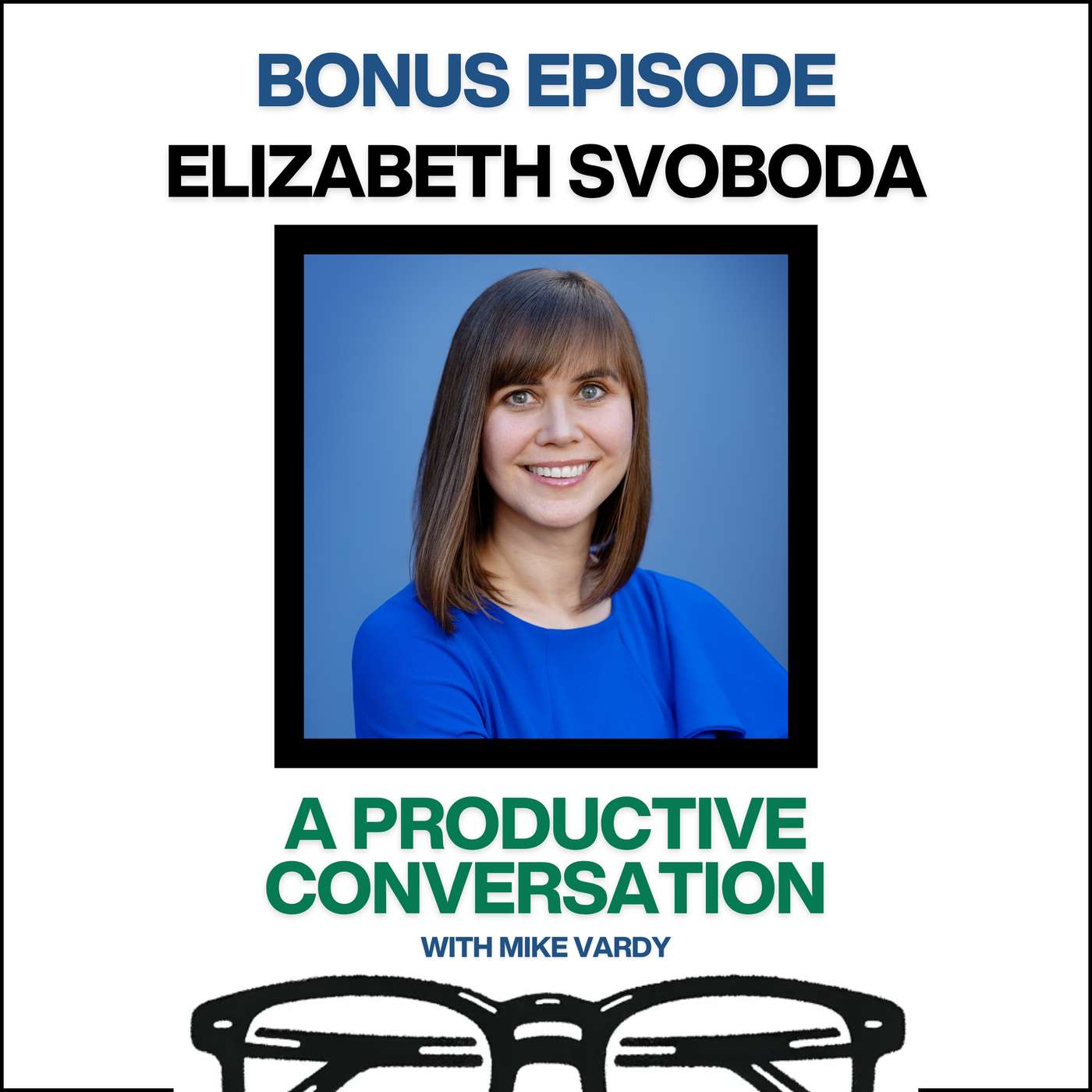
The Art of Pacing: Why Slowing Down Is a Long Game Strategy (with Elizabeth Svoboda)
Description
My book, Productiveness, is now available. It's about the difference between doing more and doing what matters, and how we lost the ability to tell them apart. I'll send the release date the day it's set. Visit https://mikevardy.com/productiveness to learn more and get your copy today.
We spend a lot of time talking about how to do more. What we talk about far less — and what might matter far more — is the question of how to pace yourself while you do it. Not as a wellness concept or a vague self-care suggestion, but as a genuine strategy for sustaining quality, avoiding collapse, and staying aligned with what actually matters to you over time.
Elizabeth Svoboda is the author of The Art of Pacing: A Guide to Balancing Shorter-Term Demands with Long-Term Thriving, and this conversation covers a lot of ground in the best possible way. Elizabeth is a science journalist whose work has appeared in the New York Times, Psychology Today, and many other publications. Her book grew out of a thirty-year reckoning with her own pacing failures — a culture of maximum output with no equivalent emphasis on what you leave to the side. What she built from that is something both research-grounded and deeply practical.
Six Discussion Points
- Pacing without purpose is just slowing down — knowing where you're headed is what makes a deliberate pace possible at all, and this is where most productivity advice quietly falls apart
- The difference between racing and pacing is a single letter, but the difference in outcomes compounds over years — top athletes understand this through tapering, and the rest of us are still catching up
- Burnout is not an event, it's a trajectory — heart rate variability (HRV) tracking and tools like the Maslach Burnout Inventory can help you see the train coming before it hits, shifting you from reactive to proactive
- Rigid, hyper-granular scheduling is brittle by design — adaptability and flexibility aren't the enemies of structure, they're the only way a structure survives contact with real life
- "Restorying" — the hero's journey applied inward — is a surprisingly useful alignment tool: when what you say you want doesn't match how you're spending your time, the story reveals it
- Brief candles, those short moments of focused, selfless attention toward others, can change the entire arc of someone's life and cost almost nothing in terms of time or energy
Three Connection Points
- Elizabeth Svoboda's website: elizabethsvoboda.com — find her book The Art of Pacing and her broader journalism work
- TimeCrafting: The connection between pacing and intentional time use is at the heart of my own framework — if this episode resonated, you might find this useful: Stop Managing Your Time. Start Crafting It.
- The Lantern: My weekly newsletter is where I continue these kinds of conversations outside the podcast — join here at mikevardy.com
Pacing is not the opposite of progress. If this conversation shifted anything for you — even a small recognition that you might be racing when you could be pacing — I'd encourage you to sit with that for a bit before doing anything about it. That's the point. And if you want to go deeper, Elizabeth's book is worth the time.