Episode Details
Back to Episodes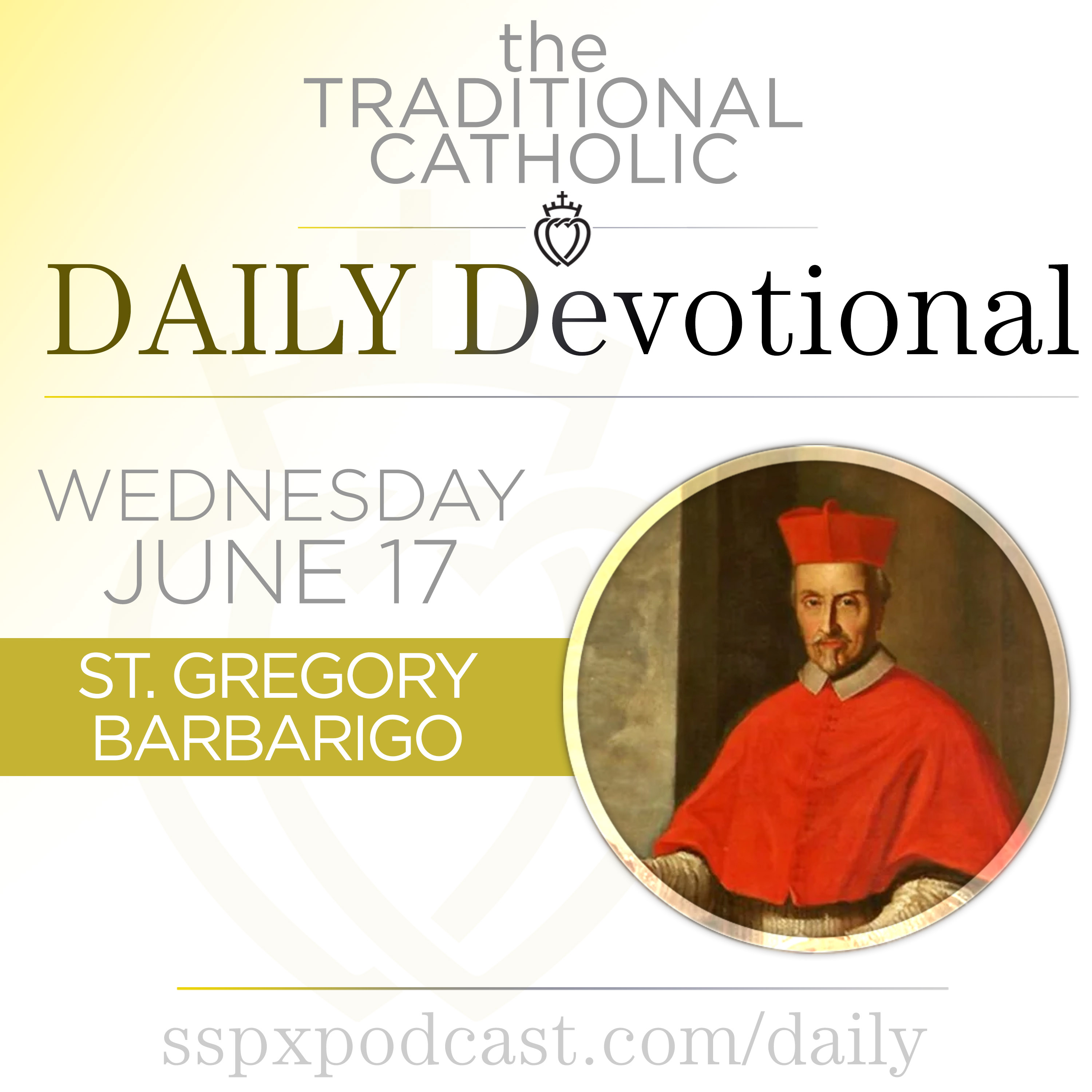
Jun 17 – Feria / S Gregory Barbarigo
Description
Sources Used Today:
- "Love That Heals" — From Trinity Sunday to the Assumption
- "On the Veil Worn by Women at Mass" (FSSPX.news)
- The Spiritual Life — Archbishop Marcel Lefebvre (Angelus Press)
Please support our new project, the Archbishop Lefebvre Biography Audiobook!
- Learn more:https://www.youtube.com/watch?v=Y-Wp4MQdK2o
- Donate:https://sspx.gifts/audiobook
Saint Gregory Barbarigo was one of those saints who proves that administration and holiness are not opposites. In fact, much of his sanctity was lived out through meetings, decisions, schools, libraries, and the daily work of governing a diocese well.
He was born in 1625 in Venice, into a distinguished family connected to both Church and civic life. As a young man, Gregory was intelligent, well educated, and comfortable moving among diplomats, nobles, and churchmen. In many ways, he seemed destined for a successful public career.
Then something happened that changed the direction of his life.
While accompanying a Venetian ambassador to the negotiations that ended the Thirty Years' War, Gregory encountered some of the leading figures of the Church, including Pope Alexander VII, who recognized the young man's talent and character. Gregory began to sense that God was calling him not into politics, but into the priesthood.
After his ordination, he advanced quickly through positions of responsibility. Before long, he was appointed Bishop of Bergamo and later Cardinal and Bishop of Padua. That might sound impressive, but Gregory never approached these offices as honors. He saw them as work.
And there was a lot of work to do.
The Council of Trent had called for major reforms throughout the Church, but many dioceses were still struggling to implement them. Gregory threw himself into the task. He visited parishes personally, improved seminary training, supported Catholic education, and worked tirelessly to ensure that priests were well formed.
If Saint Charles Borromeo had been one of the great reformers of the previous generation, Gregory Barbarigo became on