Episode Details
Back to Episodes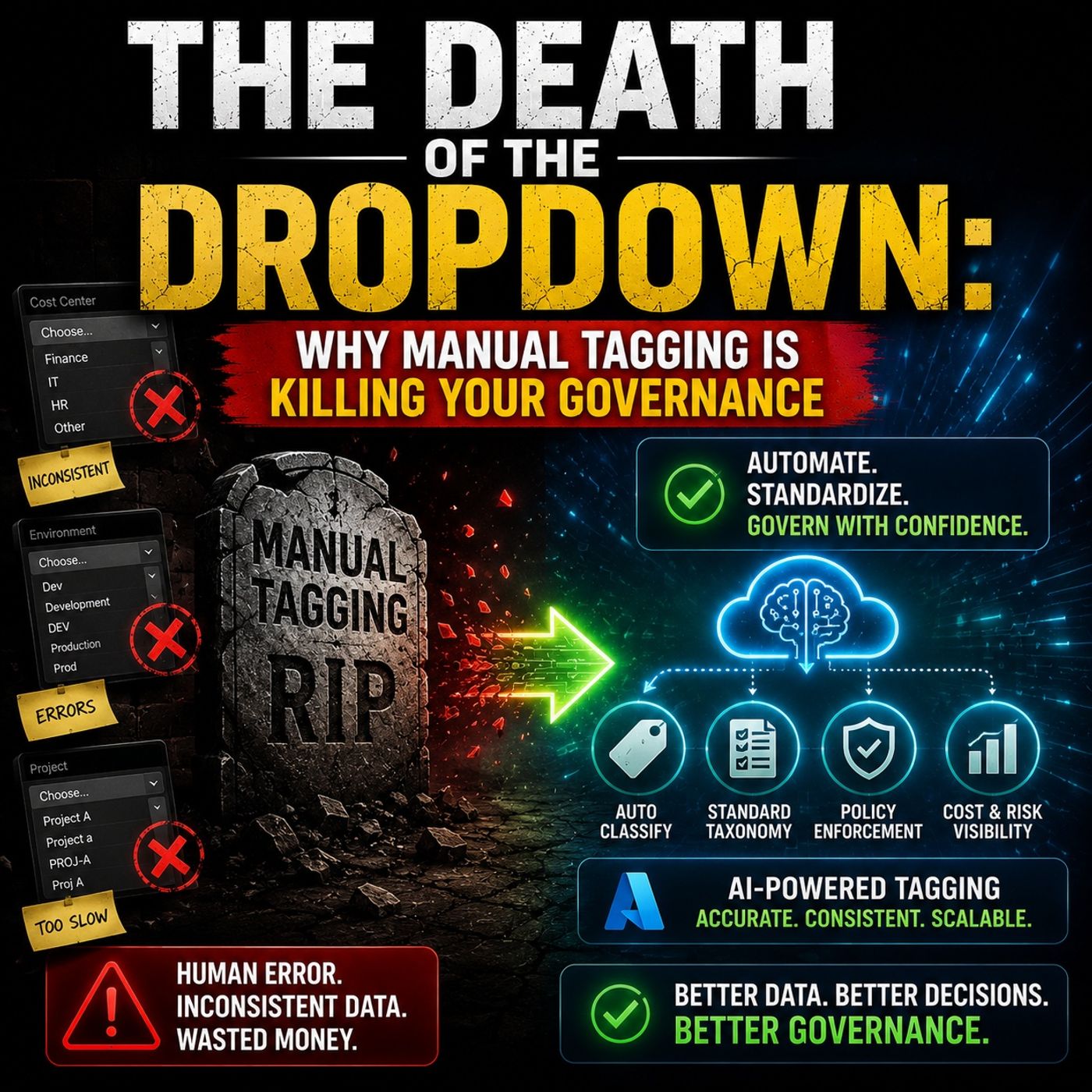
The Death of the Dropdown: Why Manual Tagging is Killing Your Governance
Season 2
Published 1 month, 3 weeks ago
Description
or years, organizations believed metadata governance was a training problem.If users understood the taxonomy better, governance would improve.If the dropdown lists were clearer, metadata quality would improve.If more communication and documentation were provided, compliance would improve.But what if the problem was never the user?What if the real problem is that governance logic was placed in the wrong layer of the architecture entirely?In this episode, we explore why manual metadata tagging has become one of the biggest obstacles to modern governance, compliance, enterprise search, and AI readiness. We examine the collapse of traditional metadata models, the rise of Graph-powered governance, and how organizations are replacing manual tagging with automated classification, contextual intelligence, and real-time metadata injection.If your governance strategy still depends on users selecting values from dropdown menus, this episode may fundamentally change how you think about Microsoft 365 governance.
THE MANUAL METADATA CRISIS
Modern work has changed.Governance models haven't.Content is now created continuously across Teams, SharePoint, OneDrive, Outlook, mobile devices, and third-party integrations. Files arrive at a pace that no human-driven classification model can realistically keep up with.Yet many organizations still rely on users to manually classify:
THE HIDDEN COST OF DARK DATA
Every untagged file creates a governance blind spot.The organization continues paying for:
WHY DROPDOWNS ARE A DESIGN FAILURE
Most governance teams blame users.User experience research tells a different story.Dropdowns were designed to enforce consistency.Instead, they introduce friction.We discuss:
THE COMPLIANCE IMPACT OF BAD TAGGING
Poor metadata quality isn't just inconvenient.It creates regulatory risk.This episode explores how inconsistent classification directly affects:
MICROSOFT GRAPH AS THE ORGANIZATIONAL NERVOUS SYSTEM
Most organizations think Microsoft Graph is simply an API.In reality, it is a live
THE MANUAL METADATA CRISIS
Modern work has changed.Governance models haven't.Content is now created continuously across Teams, SharePoint, OneDrive, Outlook, mobile devices, and third-party integrations. Files arrive at a pace that no human-driven classification model can realistically keep up with.Yet many organizations still rely on users to manually classify:
- Department
- Project
- Content Type
- Sensitivity
- Retention Category
THE HIDDEN COST OF DARK DATA
Every untagged file creates a governance blind spot.The organization continues paying for:
- Storage
- Security
- Backup
- eDiscovery
- Compliance Monitoring
- Search
- Compliance
- Records Management
- Retention
- Analytics
- AI Readiness
WHY DROPDOWNS ARE A DESIGN FAILURE
Most governance teams blame users.User experience research tells a different story.Dropdowns were designed to enforce consistency.Instead, they introduce friction.We discuss:
- Decision fatigue
- Metadata abandonment
- Long taxonomy lists
- User behavior patterns
- Classification inconsistency
- Cognitive overload
THE COMPLIANCE IMPACT OF BAD TAGGING
Poor metadata quality isn't just inconvenient.It creates regulatory risk.This episode explores how inconsistent classification directly affects:
- Microsoft Purview
- Data Loss Prevention (DLP)
- Retention Policies
- eDiscovery
- Records Management
- GDPR Compliance
- HIPAA Controls
MICROSOFT GRAPH AS THE ORGANIZATIONAL NERVOUS SYSTEM
Most organizations think Microsoft Graph is simply an API.In reality, it is a live