Episode Details
Back to Episodes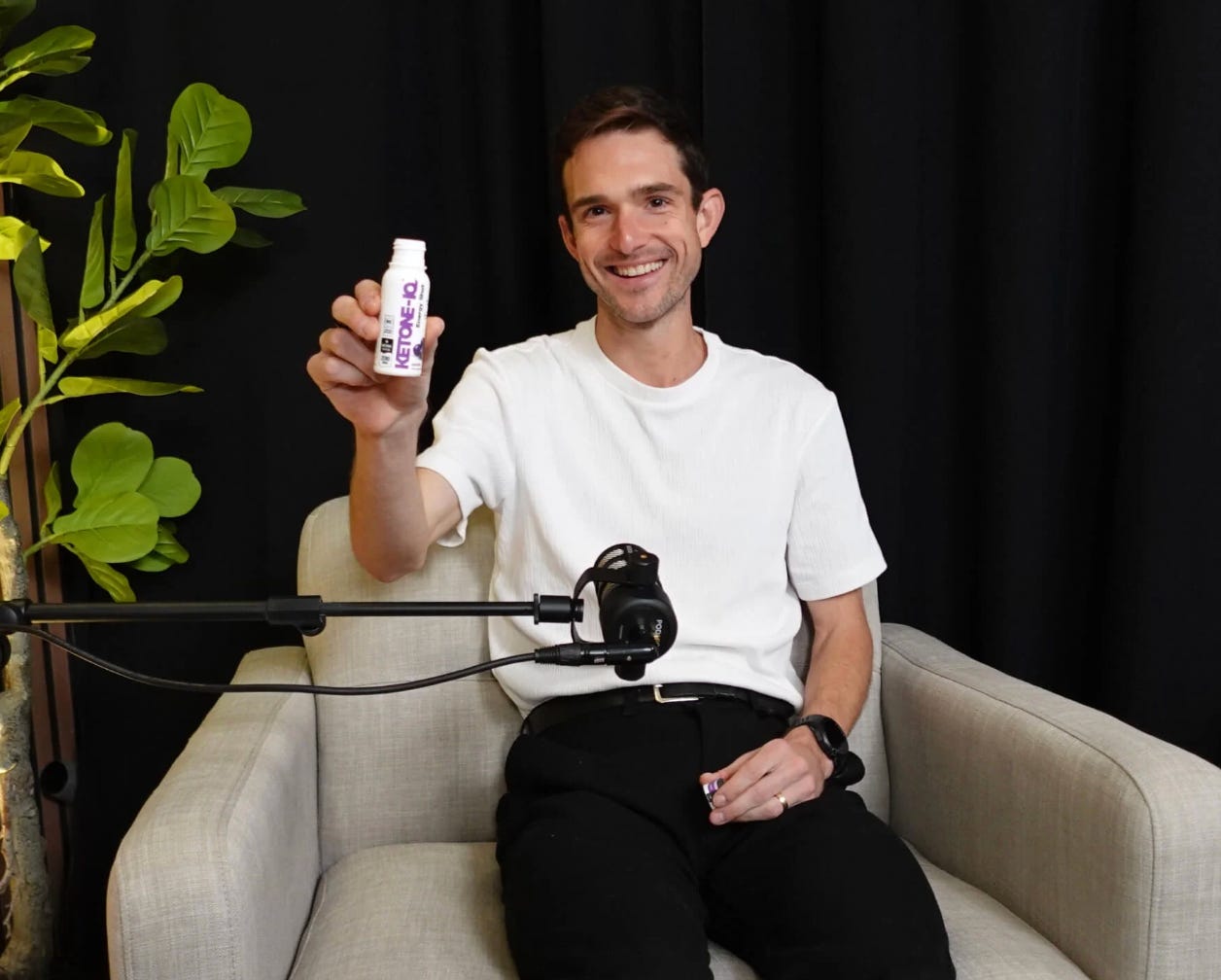
The Ketone Study I've Been Waiting For...
Description
Greetings!
I’m incredibly excited to share this video with you for this week’s edition of the newsletter.
I sat down with Dr. Latt Mansor of Ketone-IQ to dive deep into a brand-new study in cyclists showing that taking ketones after exercise enhances beneficial blood vessel responses and increases EPO production during recovery. I’ve provided the study abstract and summary below, but we get into all the details in the video.
What excites me so much about this study is that they used Ketone-IQ (rather than ketone esters, which have dominated the research to date). It’s the ketone supplement I’ve been using for my own training, so seeing these effects validated in the research is huge.
Full disclosure… I’m part of the science advisory board at Ketone-IQ, and I’m an affiliate for their products, but it’s for a good reason. They have become the brand I trust, and their team is dedicated to advancing the science of ketones.
Try some for yourself: Unlock sharper focus and support long-term brain health and exercise recovery with Ketone-IQ — Get 30% off your subscription.
Abstract
Regular physical activity improves vascular function and promotes angiogenesis and erythropoiesis, which are further augmented by hypoxia. Early evidence suggests that long-term exogenous ketosis (EK) can enhance vascular function and angiogenesis. However, the acute responses and underlying mechanisms remain unknown. Moreover, acute and prolonged EK may increase blood erythropoietin (EPO) concentrations in normoxia. Nonetheless, whether this effect is additive to hypoxia is unclear, as an EK-mediated attenuation of blood deoxygenation may counteract the [EPO] increase. In a randomized, placebo-controlled, crossover design, 13 male and two female participants completed four experimental sessions. Each included a high-intensity interval training session, followed by recovery either in normoxia or normobaric hypoxia (3000 m simulated altitude, : 14.5%), supplemented with placebo or the commercial ketone precursor Ketone-IQ®. Macro- and microvascular function were assessed throughout a vascular occlusion protocol, using femoral artery blood flow and muscle oxygenation, respectively, after 2.5 and 5.5 h recovery. Additionally, serum EPO and endothelin-1 (ET-1) concentrations, and skeletal muscle expression of pro-angiogenic and vascular integrity markers were evaluated. In normoxia and hypoxia, EK increased post-occlusion blood velocity (+15%) and muscle reoxygenation rate (+9%). Furthermore, muscle expression of pro-angiogenic and vascular integrity markers (including vascular endothelial growth factor, peroxisome proliferator-activated receptor γ coactivator 1α, and angiopoietin-1) as well as serum [EPO] (+15%) increased with EK, while serum [ET-1] was reduced (−13%). EK appears as a promising strategy to enhance vascular function and integrity, angiogenic signalling, and circulating [EPO] in response to exercise and hypoxia, thereby facilitating beneficial adaptive responses.
This is a public episode. If you'd like to discuss this with other subscribers or get access to bonus episodes, visit www.physiologicallyspeaking.com/subscribe