Episode Details
Back to Episodes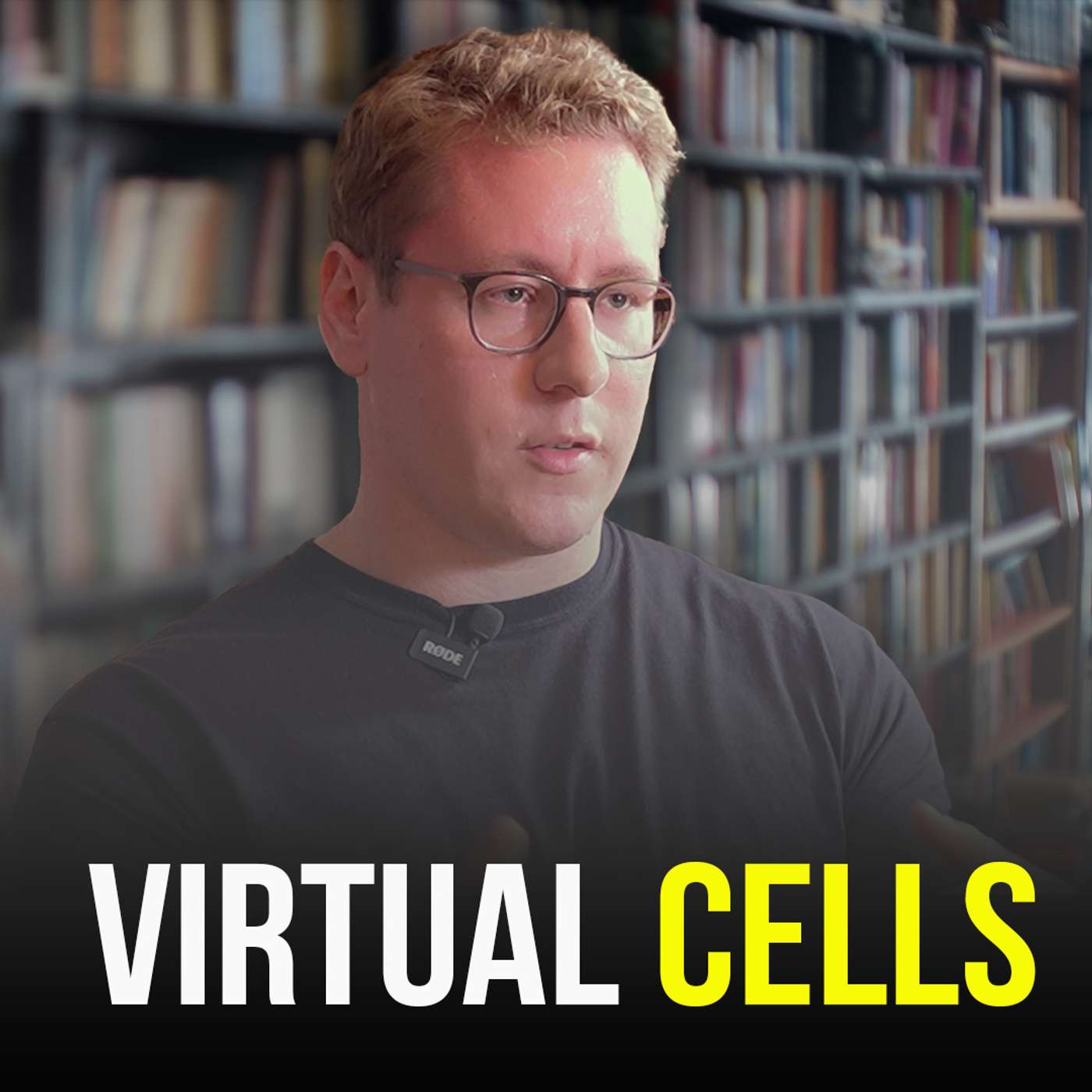
The Bitter Lesson for Biology — Adam Green on Virtual Cells and Scaling Laws
Description
Markov Biosciences, a startup in San Francisco, is betting that biology is about to have its GPT moment. In this episode, founder Adam Green explains the "bitter lesson" for biology, the idea borrowed from Richard Sutton that large unbiased datasets and the right training objective tend to outcompete models with hard-coded rules and human priors. Adam thinks, in particular, that the virtual cell field took a wrong turn by spending hundreds of millions of dollars collecting expensive perturbation data. Green’s counterargument is that the data needed to train useful virtual cells is not limiting, but rather compute (and the loss function) are. By treating single-cell RNA-seq as a ranking problem rather than raw counts (a century-old idea traceable to a 1927 psychophysics paper), they found that virtual cells pre-trained on plain observational data show clean scaling laws, getting monotonically better at predicting unseen perturbations as the models grow, and beating a state-of-the-art model built specifically for that task.
00:00 - Cold open and introduction
01:58 - The first clinical prediction from a virtual cell
05:38 - What is a "virtual cell," really?
08:01 - Single-cell RNA-seq biases and the urns analogy
23:29 - The bitter lesson for biology
30:55 - Geometric Plackett-Luce: the right loss function
59:26 Trop2 deep dive
1:11:16 - Top-down vs. bottom-up biology, mechinterp, and control as the goal
Readings and mentions:
- Markus Covert — A Whole-Cell Computational Model Predicts Phenotype from Genotype
- Markov's ADC-predictions thread (Adam Green)
- Scannell et al. (2012), "Diagnosing the decline in pharmaceutical R&D efficiency" (Eroom's Law)
- Adam Green on the Bitter Lesson
- Adam Green on RNA-seq issues
- Arc Institute — STATE model (Adduri et al., 2025)
- GPT-1: Radford et al. (2018), "Improving Language Understanding by Generative Pre-Training"
- Rich Sutton, "The Bitter Lesson" (2019)
- Yann LeCun's "cake" analogy (explainer)
- Markov paper — Generative ranking / Geometric Plackett–Luce (the GPL paper)
- Thurstone (1927), "A Law of Comparative Judgment"
- scBaseCount (Youngblut et al., 2025)
- CZ CELLxGENE Discover (data portal)
- X-Cell (Xaira Therapeutics), Wang et al. (2026)
- Adam Green / Markov, "A Future History of Biomedical Progress" (biocompute)
- Decoding TROP2 in breast cancer: significance, clinical implications, and therapeutic advancements
- Bunne et al. (2024), "How to build the virtual cell with artificial intelligence: Priorities and opportunities," Cell
Listen Now
Love PodBriefly?
If you like Podbriefly.com, please consider donating to support the ongoing development.
Support Us