Episode Details
Back to Episodes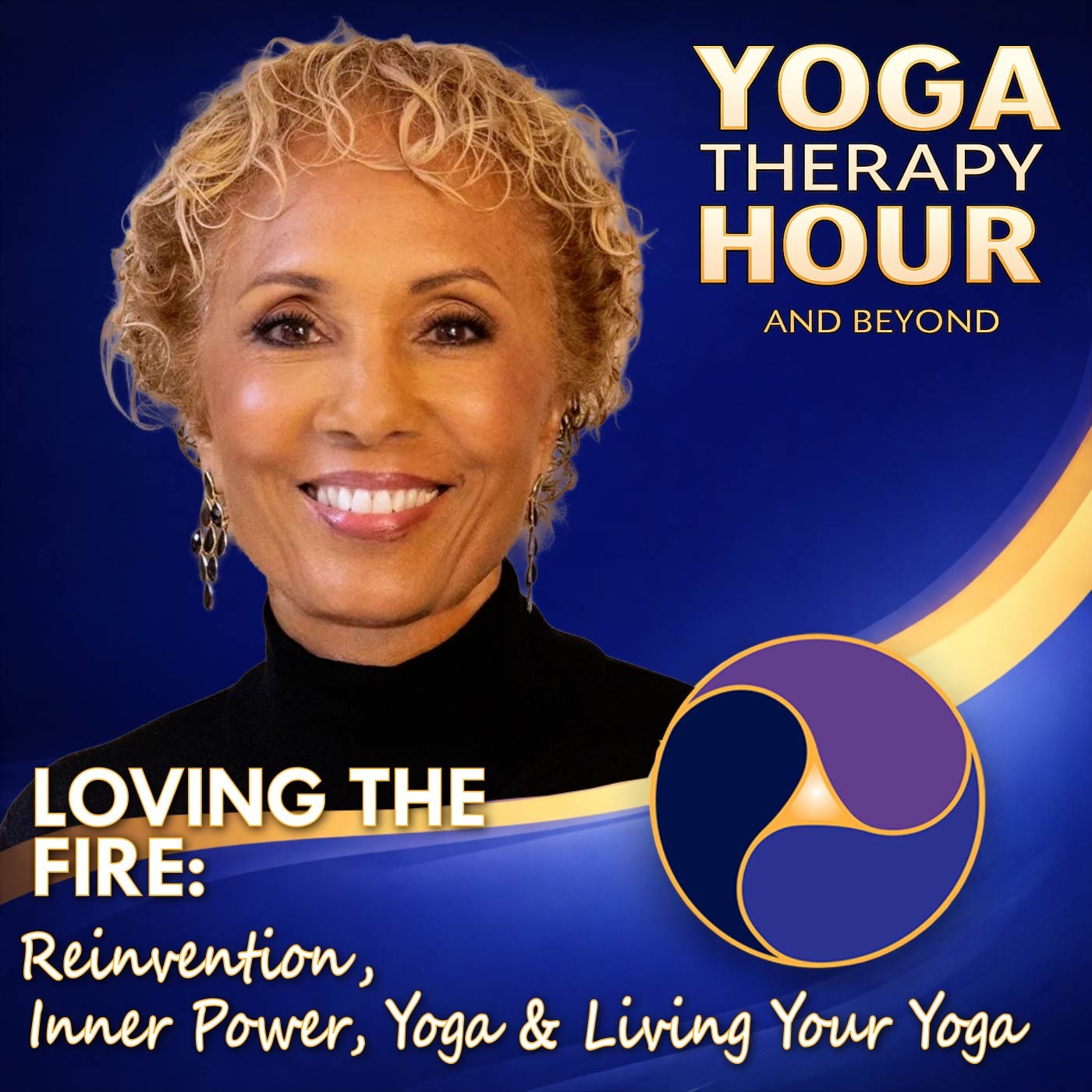
Loving the Fire: Reinvention, Inner Power, and Living Your Yoga
Description
In this episode, Amy sits down with Deborah Santana—author, philanthropist, and lifelong spiritual practitioner—for a conversation that explores what it means to live from inner sovereignty.
While many may recognize her through her 34-year marriage to Carlos Santana, this conversation clarifies something more essential: Deborah Santana has lived a deeply self-directed life shaped by spiritual inquiry, service, and the willingness to begin again.
Her memoir, Loving the Fire, becomes the thread through which we explore transformation—not as an abstract idea, but as a lived experience of loss, identity shift, and conscious rebuilding.
Key Themes Explored
1. Early Life and the Roots of Inner Strength
Deborah reflects on her upbringing in San Francisco, shaped by a family that quietly modeled independence and devotion.
Her father, Saunders King, was a respected musician who chose presence over fame—offering an early model of values rooted in family rather than recognition.
Her childhood was also grounded in spiritual diversity, moving between Pentecostal, Lutheran, and contemplative spaces. This early exposure created a foundation of spiritual curiosity that would later evolve into a lifelong meditation practice.
2. Identity, Culture, and Awareness
Deborah shares her experience growing up in a multicultural environment, where belonging felt natural—until moments of racism revealed deeper social realities.
These experiences did not define her, but they did shape her awareness. Over time, they became part of the “fire” she would learn to walk through rather than avoid.
3. The Fire: Loss, Transition, and Reinvention
A central moment in Deborah’s life—and in this conversation—is her decision to leave a long-term marriage and step into the unknown.
She describes this period with clarity:
- A sudden shift from a full, externally defined life into silence
- The loss of roles, identity, and structure
- The necessity of sitting with herself, without distraction
Rather than rushing to rebuild, she allowed a period of stillness:
- Studying the work of Wayne Dyer and Thich Nhat Hanh
- Engaging in self-inquiry through Al-Anon principles
- Returning to yoga and meditation as stabilizing practices
This was not framed as breakdown, but as disassembly for the purpose of reorganization.
4. Loving the Fire: A Different Relationship to Challenge
The central teaching of Deborah’s memoir is simple, but not easy:
Life is not happening to us—it is happening for us.
She describes fire not as destruction, but as a condition for renewal. Like a forest that regenerates after burning, human life can reorganize into something more aligned—if we stay present through the process.
This reflects a core principle in yoga therapy:
- We do not eliminate discomfort
- We change our relationship to it
- We allow it to inform growth
5. Spiritual Practice as a Stabilizing Force
Deborah has maintained a meditation practice since her early twenties. During times of transition, this inner relationship became her anchor.
She describes moments of:
- Deep peace in solitude
- Heightened perception in nature
- A sense of connection beyond identity
These are not framed as extraordinary experiences, but as natural outcomes when external roles fall away and attention returns inward.
6. Rebuilding with Intention
Following this period of reflection, Deborah began to rebuild her life in alignment with her values:
- Founded the nonprofit Do A Little, inspired by Desmond Tutu
- Produced d