Episode Details
Back to Episodes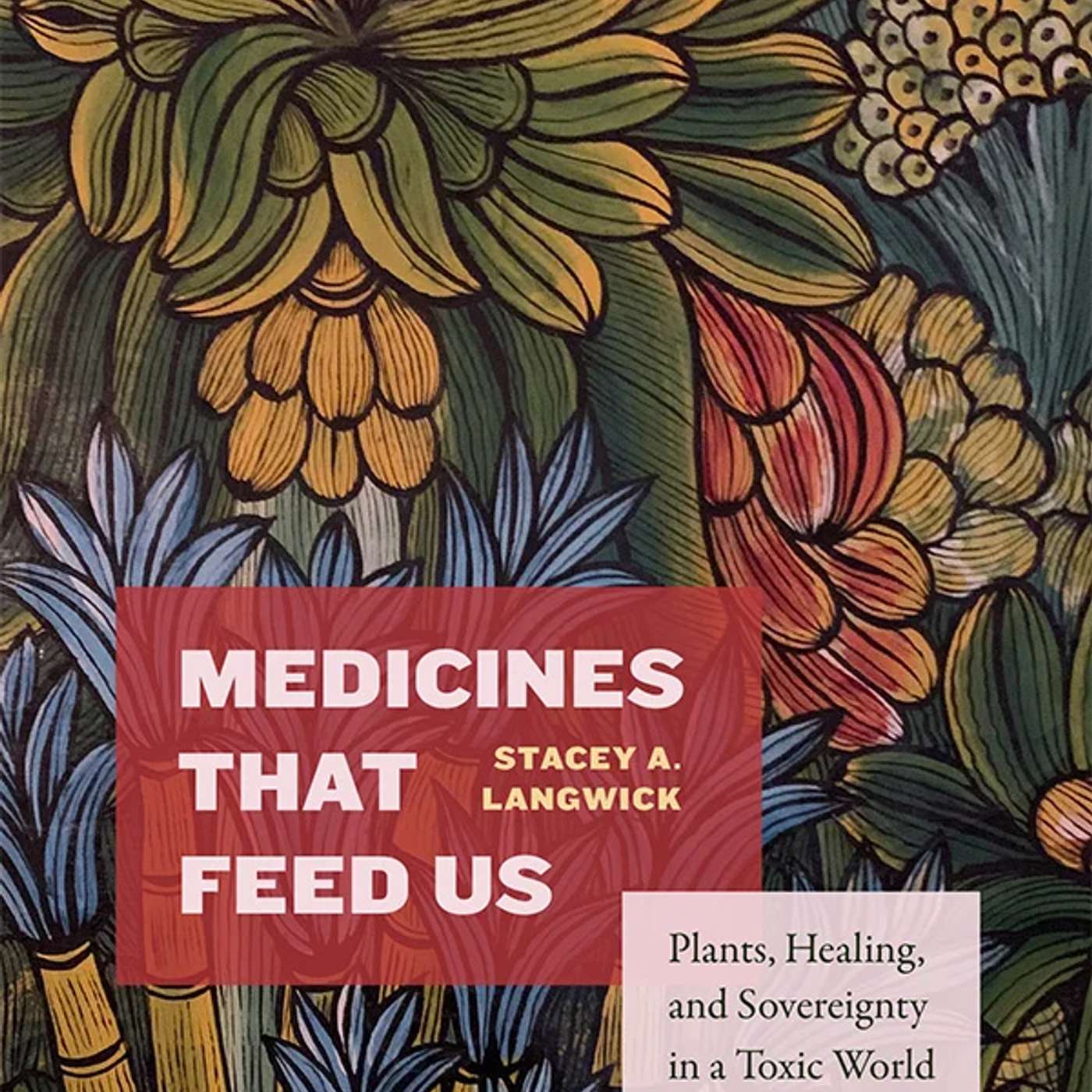
Stacey A. Langwick on Medicines That Feed Us: Plants, Healing, and Sovereignty in a Toxic World
Description
Stacey Langwick, MPH, PhD, is a cultural and medical anthropologist in the Department of Anthropology at Cornell University. Her research, writing, teaching and program building have focused on healing, medicine and the body in East Africa. She is author of Bodies, Politics and African Healing: The Matter of Maladies in Tanzania (2011) and co-editor of Medicine, Mobility and Power in Global Africa (2012). Her articles and essays have appeared in American Ethnologist, Cultural Anthropology, Current Anthropology, Science, Technology and Human Values, and Medical Anthropology, as well as a number of edited volumes.
Her work is driven by a conviction that struggles over health are simultaneous struggles over the politics of knowledge, questions of evidence, and possibilities of care. Most recently, her work has taken up these themes through a range of interlocking issues including the science of traditional medicine in Africa, the afterlives of botanical colonization, the problem of toxicity, the politics of intellectual property, questions of bodily and territorial sovereignty, the work of chronicity and the rise chronic disease, and the possibilities of gardens as sites of medical education.
In today’s conversation, we discuss her latest monograph, Medicines That Feed Us: Plants, Healing and Sovereignty in a Toxic World (2026) where she examines the relationship between toxicity and remedy in the face of the intertwined health and environmental crises that are shaping life in the twenty-first century. Medicines That Feed Us examines the Through ethnographic work with organizations that use plant-based healing and sustainable farming practices in Tanzania, Stacey A. Langwick asks what it means to heal in a toxic world.
Currently, Langwick is experimenting with ways in which anthropology might fuel experiments in healing (as) land relations. I co-founded the Uzima Collective, which brings together diverse scholars, medical professionals, and community leaders from both Tanzania and the United States to reimagine healing in the face of intertwined environmental and health challenges. At the heart of this work is a two-acre anticolonial teaching, research, and healing garden at Kilimanjaro Christian Medical Center—a space for medical training, patient care, and collective repletion, inspiration, and healing. In an interlinked project with the Tanzanian non-governmental organization TRMEGA (Training, Research, Monitoring and Evaluation on Gender and AIDS), she is exploring what it means to "eat well" amid rising rates of chronic disease, climate change, expanding social inequality, and the intensification of property regimes that support the enclosure of land and plant life.