Episode Details
Back to Episodes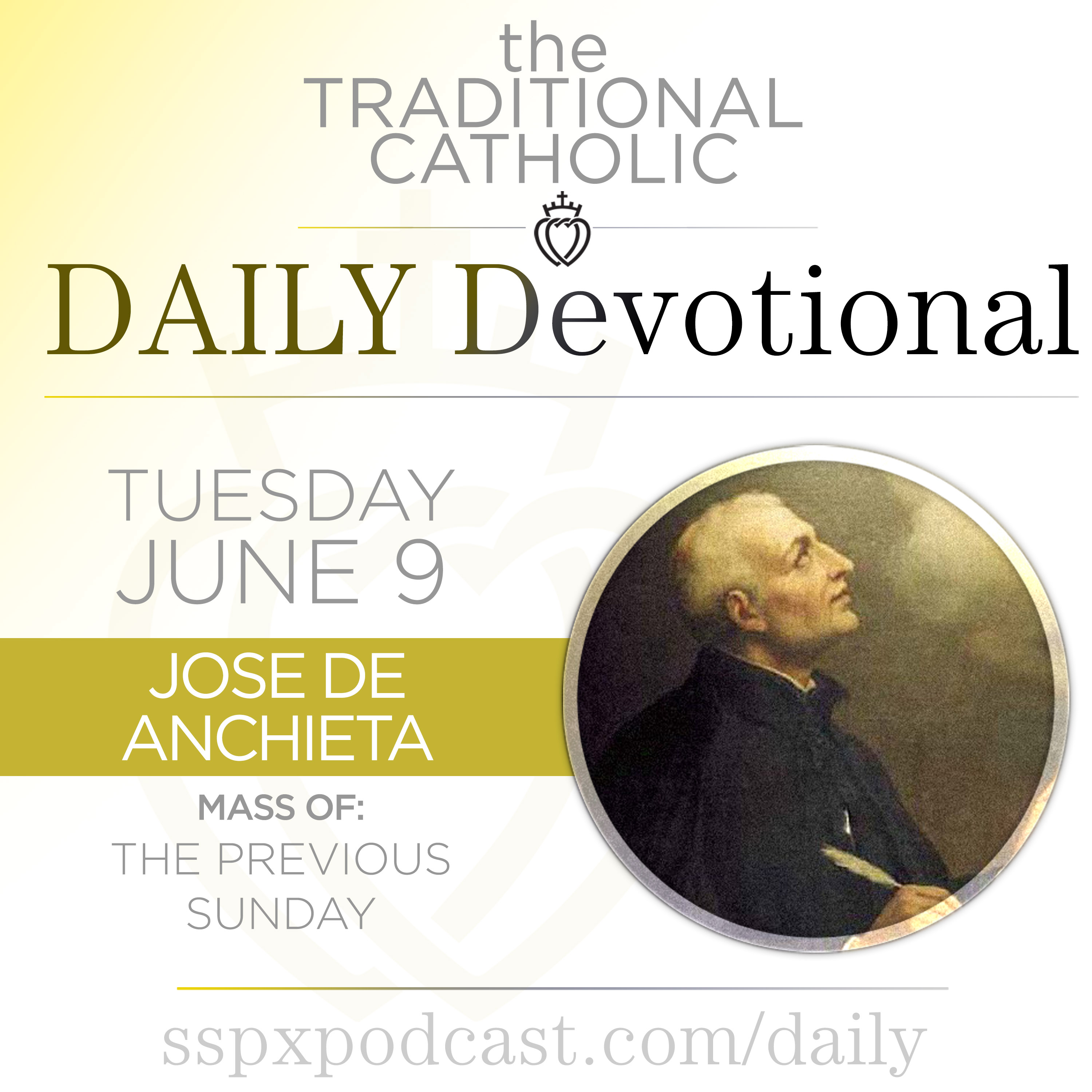
Jun 9 – Feria / Jose of Anchieta
Description
Sources Used Today:
- "Jesus, Our Food" — From Trinity Sunday to the Assumption
- "TRADITIO – Part I: A Work of Faith" (FSSPX.news)
- The Spiritual Life — Archbishop Marcel Lefebvre (Angelus Press)
Please support our new project, the Archbishop Lefebvre Biography Audiobook!
- Learn more:https://www.youtube.com/watch?v=Y-Wp4MQdK2o
- Donate:https://sspx.gifts/audiobook
Saint José de Anchieta was a missionary, educator, linguist, and poet whose life helped lay the foundations of the Catholic Church in Brazil. He was born in 1534 on the island of Tenerife in the Canary Islands, then part of the Spanish Empire. Though physically frail and plagued by health problems throughout his life, José possessed remarkable determination and a deep desire to serve God. As a young man, he traveled to Portugal to study and soon entered the newly founded Society of Jesus, inspired by the missionary zeal of the Jesuits.
At just nineteen years old, Anchieta was sent to Portuguese Brazil, a vast and largely undeveloped mission territory. The journey itself was difficult, but it was only the beginning of a lifetime of sacrifice. Upon arriving, he devoted himself to learning the languages and customs of the indigenous peoples. Unlike many Europeans of his time, he sought not merely to govern or instruct, but to understand those he served.
Anchieta became one of the great missionaries of the New World. He traveled enormous distances through forests, mountains, and coastal settlements, preaching the Gospel, teaching children, and caring for both settlers and native communities. His mastery of local languages allowed him to compose catechisms, prayers, and instructional materials that helped spread the faith more effectively. He is often called the father of Brazilian literature because of the works he produced in Portuguese, Spanish, Latin, and indigenous languages.
One of the most famous episodes of his life occurred when he volunteered to remain as a hostage among a hostile native tribe during peace negotiations. While awaiting the outcome, he reportedly composed a long poem in honor of the Blessed Virgin Mary, writing verses in the sand and committing them to memory. This Marian devotion remained a hallmark of his spirituality throughout his life.
The Church also remembers Anchieta for his efforts to defend indigenous peoples from exploitati